

Why “Prime Vs Non Prime” Behavior Deserves Its Own Playbook
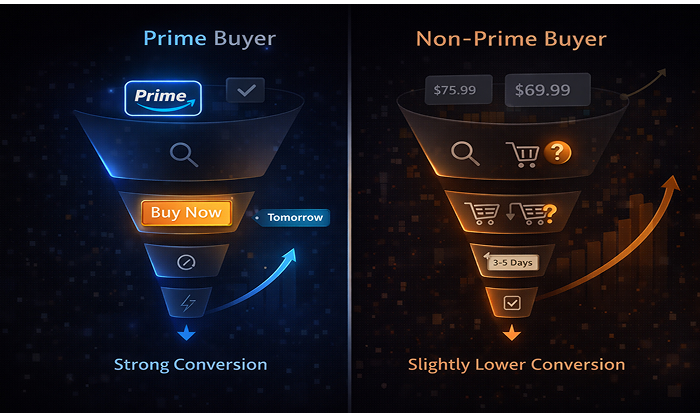
Not every Amazon User shops the same way. Some log in, tap “Buy Now,” and barely glance at shipping details because they know it’s covered. Others compare prices, hunt for coupons, and hesitate when they see delivery fees.
A huge part of that split comes down to Amazon Prime Vs Non Prime behavior. Amazon Prime Subscribers pay for speed, convenience, and bundled benefits, while non‑Prime shoppers tend to treat Amazon more like a traditional marketplace where price and shipping costs are front and center.
For a data‑driven brand using Sellerite, treating these groups as one blended audience is a missed opportunity. A smarter approach is to understand the typical patterns of an Amazon Prime User vs a non‑Prime user and adjust your offers, messaging, and fulfillment strategy accordingly.
Prime Vs Non Prime: Core Behavioral Differences
Spending power, frequency, and mindset
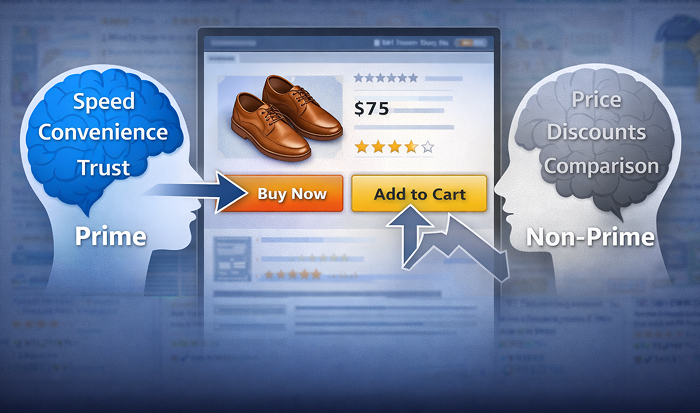
In broad terms, Amazon Prime Subscribers behave like committed members of an ecosystem, not one‑off shoppers:
- They visit more often, check Amazon first, and buy more frequently than non‑Prime users.
- They’re more likely to accept slightly higher item prices when they see Prime badges and fast, “free” delivery attached.
- They tend to behave like “all‑in” Amazon Prime User cohorts—streaming, shopping, and using multiple Prime benefits over time.
Non‑Prime shoppers often approach Amazon with a different lens:
- They focus on total out‑of‑pocket cost, including shipping.
- They’re more likely to compare Amazon against other online stores, marketplaces, or local retail before completing a purchase.
- They may shop less frequently, but often with a more value‑oriented mindset.
The result: Prime-heavy audiences often deliver higher lifetime value, but they also expect the full Prime experience—speed, reliability, and frictionless checkout.
How Shipping And Benefits Shape Prime Vs Non Prime Behavior
Prime users: speed and convenience as baseline
For an Amazon Prime User, the psychology is simple: “I’ve already paid for membership—so I expect the Prime treatment.”
That usually means:
- They strongly prefer products that show Prime eligibility and fast delivery promises.
- They’re more likely to buy from FBA offers with clear “Prime” and fast‑shipping badges.
- They can be more forgiving on small price differences if the offer looks convenient and trustworthy overall.
In the Amazon Prime Vs Non Prime comparison, Prime buyers often think in terms of time saved and reliability, not just raw item cost.
Non‑Prime buyers often behave differently:
- They weigh the item price plus any visible shipping fees.
- They may stretch delivery windows to avoid paying more.
- They’re likely to switch sellers or platforms if they see a better all‑in deal.
This is why the same listing can convert very differently for Prime vs non‑Prime audiences, even before you touch pricing or images.
Conversion, Loyalty, And Repeat Purchases
Prime: shorter path, higher trust
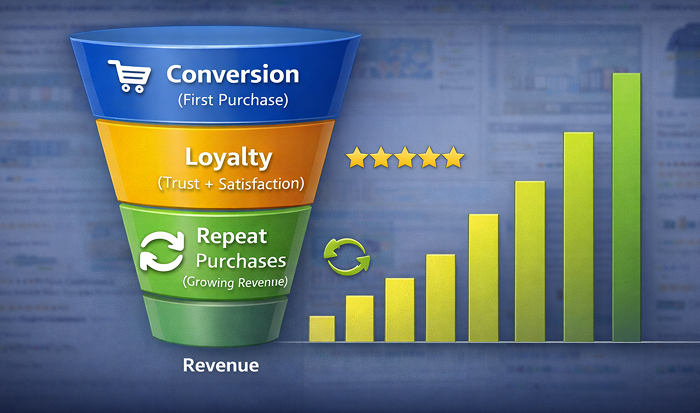
Because Amazon Prime Subscribers typically see “free” fast shipping, one‑click checkout options, and strong customer protections, they tend to:
- Move faster from search to purchase.
- Be more willing to try new brands if reviews and delivery look solid.
- Come back to the same seller or product if the first experience matches expectations.
Over time, this leads to stronger brand‑level loyalty from Prime cohorts, especially in categories like household essentials, beauty, and repeat‑purchase consumables.
Non‑Prime: more friction, more comparison
Non‑Prime Amazon User groups often:
- Spend more time evaluating alternatives, both on and off Amazon.
- React more strongly to promotions, discounts, and visible free‑shipping offers.
- Take longer between first touch and final purchase on non‑urgent items.
They can absolutely be profitable, but the levers that move them are different—value clarity and total cost often matter more than raw speed or ancillary benefits.
Prime Vs Non Prime At A Glance
Key behavioral benchmarks
The table below summarizes some common behavioral differences between Amazon Prime Subscribers and non‑Prime shoppers at a high level, based on typical marketplace patterns and industry observations:
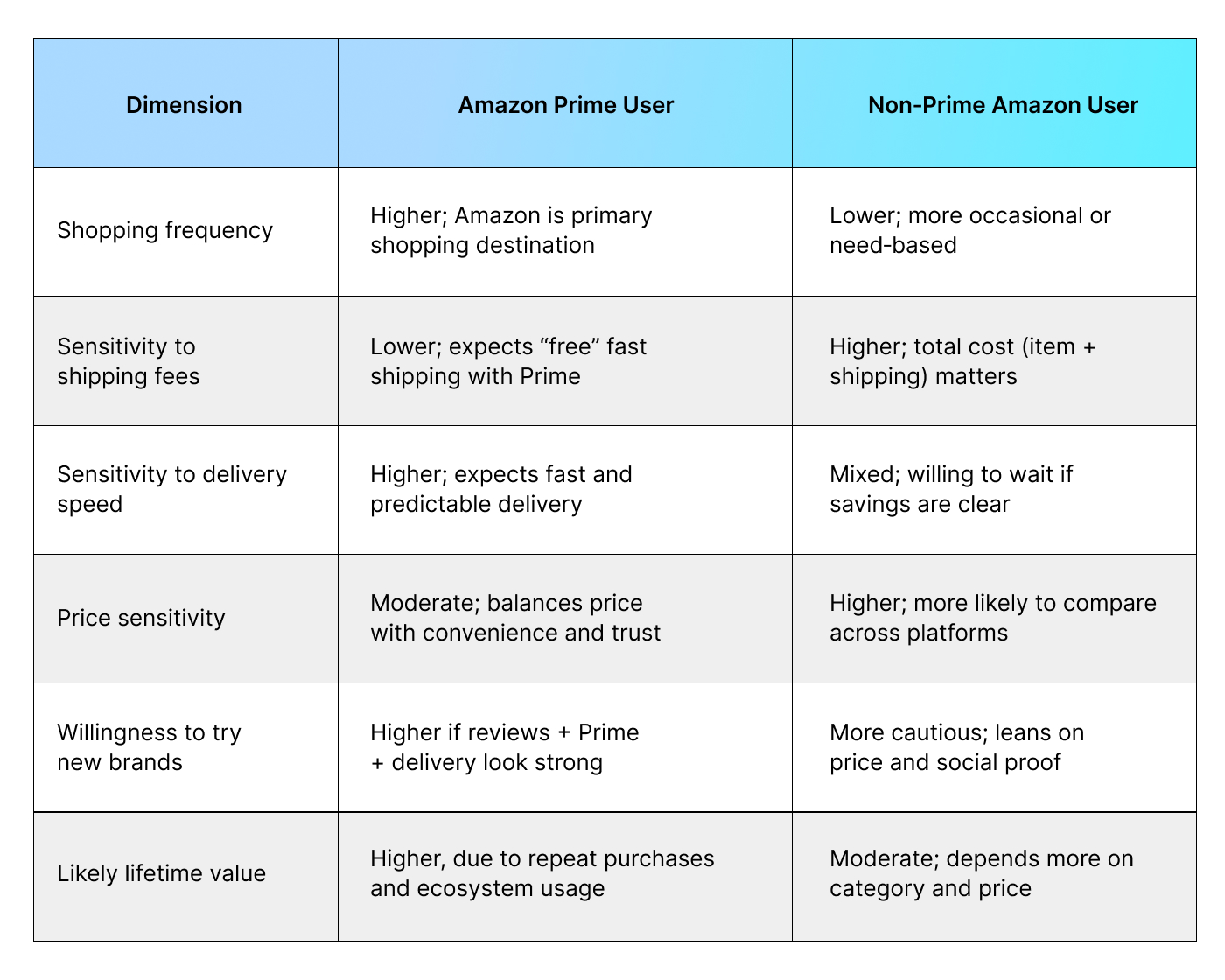
This is not a rulebook, but a framing. Once you start segmenting performance data in tools like Sellerite, you’ll often see these broad patterns reflected in your own numbers.
What This Means For Your Sellerite Strategy

Designing for Prime‑heavy audiences
If your products align naturally with the habits of Amazon Prime Subscribers—think: everyday essentials, mid‑ticket items, and products where speed matters—it usually pays to:
- Prioritize offers that are Prime‑eligible and supported by reliable, fast fulfillment.
- Lean into convenience, reliability, and quality in your copy and assets.
- Make it easy for Prime buyers to reorder (clear variations, consistent packaging, strong “buy again” appeal).
Here, your best customers are the Amazon Prime User who already trusts the Amazon ecosystem and just needs a compelling reason to pick your brand inside it.
Still serving non‑Prime value seekers
At the same time, there’s a meaningful slice of non‑Prime Amazon User traffic that can still be highly profitable—especially in categories where speed isn’t paramount.
For these shoppers, it often makes sense to:
- Highlight per‑unit value, longevity, or cost savings more heavily.
- Use bundles or multi‑packs to improve perceived value and shipping efficiency.
- Make shipping costs and delivery timelines crystal clear so there are no surprises at checkout.
In other words, your catalog can include both “Prime‑optimized” offers (speed, convenience) and “value‑optimized” offers (price, quantity) without forcing every SKU into the same mold.
