



Table of Contents
Introduction

The biggest trap in the Amazon FBA vs FBM debate is looking at it as a “which is better” question. In reality, it’s about how much of your sanity you want to trade for your profit margins.
If you’re a small business owner, you aren’t just a seller, you’re the warehouse manager, the customer service rep, and the CEO. Here is the unvarnished truth about how these two models actually work on the ground.
What is Amazon FBA?
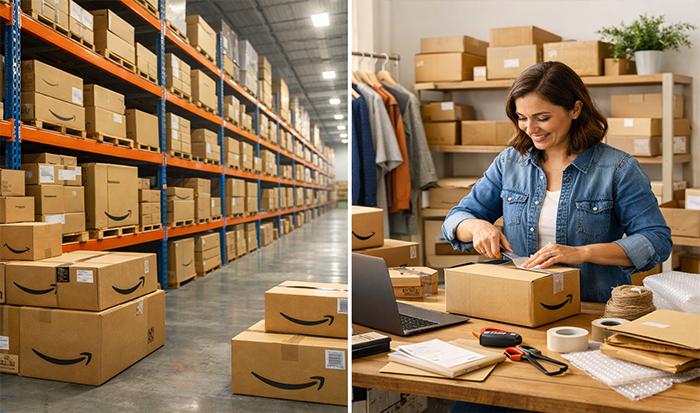
What is Amazon FBA (Fulfillment by Amazon)? It’s essentially “outsourcing the headache.” You send your bulk inventory to Amazon, and they handle the logistics.
The Amazon FBA Business Model Explained:
The process is hands-off but high-cost. Once your goods hit their warehouse:
- The Prime Factor: Your items get that blue Prime badge, which is the single biggest driver of sales on the platform.
- Pick & Pack: Amazon’s staff handles the physical labor.
- Customer Service: If a box gets crushed or a customer wants a refund, Amazon deals with it.
For anyone building an Amazon FBA Business, the goal is “set it and forget it,” but that convenience comes with a stack of fees that can eat small margins alive.
What is Amazon FBA?
What is Amazon FBM (Fulfillment by Merchant)? This is the “DIY” route. You list the product, but you keep the inventory under your own roof.
The Amazon FBA Business Model Explained:
An Amazon FBA Business is built for the person who wants to work on the business rather than in it.
- Scalability: You can sell 10 or 1,000 units a day without needing more staff or a bigger garage. Amazon scales for you.
- The Prime Advantage: Most shoppers filter for “Prime Only.” Without it, you’re invisible to a huge chunk of the market.
- Focus: Instead of taping boxes and waiting for the courier, you’re looking at your PPC (Pay-Per-Click) data, sourcing new products, and building your brand identity.
Amazon FBM Vs FBA: Which one to choose
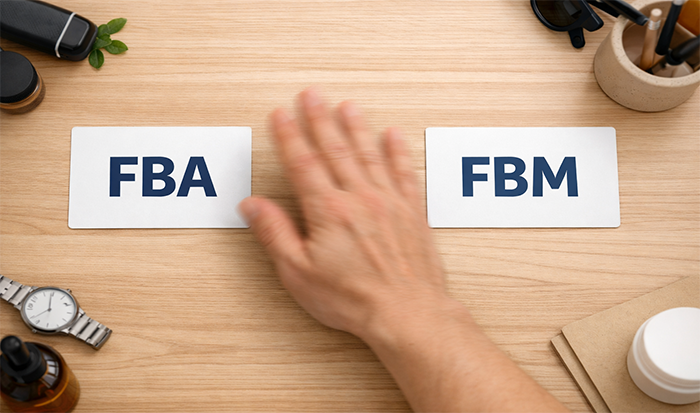
The reality for small businesses in the Amazon FBA vs FBM debate usually comes down to your margins and your product’s “physicality.”
- The FBA Route: Best for small, light, fast-moving goods. It’s for the seller who wants to automate the boring parts of commerce and is willing to pay the storage and fulfillment fees to do it.
- The FBM Route: Best for oversized items, fragile goods, or low-margin products where every penny of shipping cost matters. It keeps you in total control of your inventory and avoids those pesky Amazon storage fees during the slow months.
Most successful sellers don’t actually choose just one; they use FBA for their best-sellers and FBM for their niche, slower-moving stock. It’s about playing the system to keep your business human, profitable, and sane.
When you dive into the Amazon FBA vs FBM debate, FBM is often treated like the “lesser” sibling, but for a certain type of entrepreneur, it’s actually the secret to staying profitable.
If FBA is like staying in a hotel where everything is done for you (for a steep price), FBM is owning the house. You do the chores, but you also keep the keys and the cash.
The costs associated in both Amazon FBA and Amazon FBM

Amazon FBA Costs: Paying for Peace of Mind
If you’re running an Amazon FBA Business, your overhead is predictable but persistent. You are essentially paying a premium to get logistics off your plate.
- Fulfillment Fees (Per Unit): This is the flat fee Amazon charges to pick, pack, and ship your item. It’s based on weight and dimensions. If your product is small and light, this is a dream; if it’s a heavy set of dumbbells, it’s a nightmare.
- Monthly Storage Fees: You pay for the “real estate” your products occupy in their warehouse. These rates often spike during the holiday season (October–December), so “slow movers” can become very expensive very fast.
- Long-Term Storage Fees: If your stock sits for more than 180 or 365 days, Amazon hits you with a “tax” for taking up space. This is their way of telling you to either lower your prices or take your stuff back.
- Removal & Disposal Fees: If you want your unsold stock back, or if it’s damaged and you want it destroyed, you still have to pay Amazon to handle that exit.
How Does Amazon FBA Work Financially? It works by turning your “variable” labor costs into “fixed” service fees.
Amazon FBM Costs: The DIY Ledger
With Amazon FBM, you aren’t paying “fees” as much as you are managing “expenses.” You keep the change, but you also carry the risk.
- Shipping Charges: You pay the courier directly. The win here is that you can negotiate rates with local carriers or use “Buy Shipping” through Amazon to get commercial discounts.
- Packaging Materials: Bubble wrap, tape, boxes, and those little branded stickers, that’s all on you. While it’s an expense, it’s also your only chance to make the unboxing experience feel “human” rather than industrial.
- Warehouse/Storage Cost: Whether it’s the rent for a small unit or just the electricity and space in your own office, you’re footing the bill. The advantage? No “long-term storage” penalties.
- Labor Cost: This is the big one. If you’re packing 50 boxes a day, that’s time you aren’t spending on marketing. If you hire someone to do it, that’s a salary.
The Realities of FBA (Fulfillment by Amazon)
- The “Fee Creep”: It’s no longer just a storage fee. You’re now hit with Inbound Placement Fees (paying Amazon to distribute your goods across their network) and Low-Inventory-Level Fees if you don’t keep enough stock. If your math is off by even $0.50, your profit disappears.
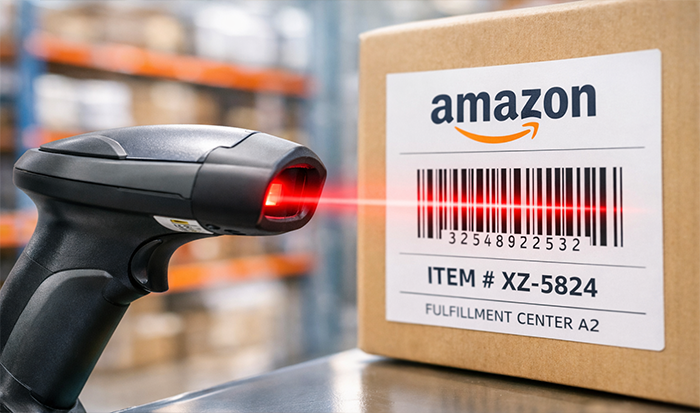
- The Inbound Nightmare: Amazon has become incredibly strict about how you send boxes to them. If a label is slightly smudged or a box is overweight, they hit you with Inbound Defect Fees that can be ten times higher than they were a few years ago.
- Inventory Jail: If your products don’t sell fast enough, your IPI (Inventory Performance Index) score drops. Once it’s low, Amazon literally blocks you from sending more stock, even for your best-selling items.
- The Return Loophole: Amazon handles returns, which is convenient, but they often refund customers for items that are perfectly fine or, worse, obviously used. You end up paying for the shipping, the return processing, and the loss of the item.
The Realities of FBM (Fulfilled by Merchant)
- The “Buy Box” Battle: You are essentially a second-class citizen on the platform. Even if your price is lower, the algorithm will almost always give the sale to an FBA seller because they have the Prime badge. To compete, you often have to slash prices to the bone.
- The Customer Service Grind: You are responsible for every “Where is my package?” email. If a customer claims they didn’t receive a box (even if the tracking says they did), Amazon usually sides with the buyer, and you’re out the money and the product.
- Logistics Burnout: Scaling is a wall. Shipping 5 orders a day from your kitchen is fine; shipping 500 requires a staff, a warehouse, and a deep discount with UPS or FedEx that small sellers simply can’t get.
- Feedback Fragility: One bad delivery experience can tank your seller rating. Since you aren’t FBA, Amazon won’t “strike through” negative feedback related to shipping delays, meaning a late mail carrier can literally kill your account’s reputation.
The "Hidden" Reality: Amazon FBM Vs FBA
The real “cost” isn’t always on the invoice.
When you look at Amazon FBM Vs FBA, you have to factor in the Buy Box. Because FBA products are Prime-eligible, they often win the sale even if they are priced slightly higher than an FBM competitor. So, while FBM might be “cheaper” on paper, you might lose money in “lost sales” because you don’t have that Prime badge.
What is Amazon FBM best for? It’s best for high-ticket, low-volume items where you want to ensure the packaging is perfect and the shipping is handled with white-glove service.
Final Insight: FBA is a “Scalability Play”, it’s costlier per unit, but it frees you up to sell 10,000 items without breaking a sweat. FBM is a “Margin Play”, it’s labor-intensive and keeps you tethered to a packing table, but it allows you to squeeze every possible bit of profit out of a product that Amazon would otherwise overcharge you to handle.
To settle the Amazon FBA vs FBM debate, you have to stop looking at what Amazon offers and start looking at what your day-to-day life actually looks like. One model buys you freedom; the other buys you control. Neither is a “magic button” for success, but choosing the wrong one can sink a small business before it even finds its rhythm.
Here is the grit and reality of making that call.
Choose the best
Choose Amazon FBA if: An Amazon FBA Business is designed for the entrepreneur who wants to build a machine, not a job.
- You Want Automation: If you hate the idea of being surrounded by cardboard boxes and packing tape at 11 PM, FBA is your answer. How Does Amazon FBA Work for the “Lazy” (read: efficient) seller? You ship your bulk stock once, and then you just watch the dashboard.
- You Plan to Scale Fast: If you go viral or hit a peak season, Amazon’s infrastructure doesn’t blink. They can ship 1,000 orders as easily as 10. You don’t have to hire seasonal staff or rent a bigger warehouse overnight.
- High Volume & Fast Turnovers: What is Amazon FBA best at? Moving small, popular items quickly. If your product moves fast, you avoid those nasty storage fees and keep your cash flow healthy.
- The Prime Power: Let’s be real, the “Prime” badge is a psychological trigger. Many shoppers won’t even look at an item if it doesn’t promise that 2-day delivery. FBA gives you instant credibility.
Choose Amazon FBM if: When comparing Amazon FBM Vs FBA, FBM is the choice for the “analog” soul who wants to know exactly where every rupee is going.
- You’re Just Starting & Testing: If you only have ten units of a new product, don’t bother with the bureaucracy of an FBA shipment. Send them yourself, see if they sell, and keep your initial investment low.
- Bulky, Heavy, or Niche Items: What is Amazon FBM perfect for? The stuff Amazon hates. If you sell large furniture, fragile handmade ceramics, or heavy mechanical parts, Amazon will charge you a fortune in “oversized” fees. Doing it yourself, or through a specialized local courier, saves your margins.
- Complete Operational Control: In FBA, if a customer says an item is “defective,” Amazon often just refunds them and tosses your product in the trash. With FBM, you handle the returns. You can inspect the item, talk to the customer, and often save the sale (and your reputation).
- Branding is Your Lifeblood: How Does Amazon FBM Work for brand building? It lets you include a personalized thank-you note, a catalog of your other products, or even a sample of something new. You aren’t just another generic brown box on a doorstep; you’re a real business.
Conclusion

When you strip away the technical jargon and the corporate sales pitches, the Amazon FBA vs FBM debate isn’t about which system is “better”, it’s about which one keeps your business alive while you’re trying to grow it. For a small business owner, the “right” choice changes as your business matures.
Start Lean: The FBM Foundation
When you are just starting out, What is Amazon FBM? It is your safety net. You don’t need to commit to massive warehouse shipments or navigate the complex bureaucracy of Amazon’s fulfillment centers.
- Inventory Safety: You keep your stock in your own space. If it doesn’t sell immediately, you aren’t being bled dry by monthly storage fees.
- Learning the Ropes: By packing and shipping orders yourself, you learn exactly what it costs to get your product from point A to point B. You understand the weight, the fragility, and the customer’s expectations first-hand.
- Low Entry Barrier: How Does Amazon FBM Work for the Beginner? It allows you to launch with five units or fifty without the “inbound” shipping costs and labeling requirements that FBA demands.
FAQs:
1. Can I use both FBA and FBM for the same product?
Yes. This is called a “hybrid” listing. You create two SKUs: one for FBA (Prime) and one for FBM (Backup). If your FBA stock sells out, your FBM listing stays live so you don’t lose sales or ranking.
2. Which one is actually cheaper?
It depends on the item.
- FBA is cheaper for small, light, fast-moving goods because Amazon’s shipping rates are unbeatable.
- FBM is cheaper for heavy, bulky, or fragile items where Amazon’s “oversized” and storage fees would kill your profit.
3. Does FBA mean I don’t have to do anything?
No. You still handle:
- Sourcing & Quality: Finding the product and ensuring it isn’t junk.
- Prep: Labeling and boxing items to Amazon’s strict “inbound” standards.
- Ad Strategy: Managing your PPC and marketing to actually get people to the page.
4. What’s the biggest risk with FBM?
The Prime Badge. Without it, you are invisible to millions of Prime-only shoppers. You also carry the full weight of customer service, if a package is lost, it’s on your dime and your time to fix it.
5. Can I switch from FBM to FBA later?
Easily. Most small businesses start with FBM to test the waters without high storage fees. Once they prove the product sells, they ship a bulk batch to Amazon to “scale up” with FBA.

 Back to top
Thought Leadership, Tips, and Tricks
Never miss insights into the Amazon selling space by signing up for our email list!
