

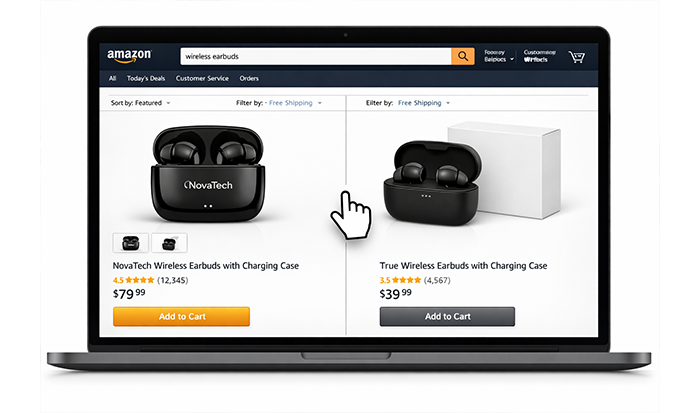
Why This 2026 Buyer Preference Data Matters
If you sell on Amazon for any length of time, you notice something quickly: shoppers do not always buy the cheapest product, and they do not always buy the most well-known one either. Sometimes they want the comfort of a trusted brand.
Other times, they just want something that works well at a better price. That is exactly why the comparison between Amazon Brand Products and Amazon Generic Products matters so much in 2026.
This report looks at how buyers choose between branded and generic products on Amazon, and what that means for sellers trying to improve performance. It is not really a simple battle between “brand wins” and “cheap wins.”
Most of the time, the decision comes down to trust, price, category, product risk, and how convincing the listing feels. A shopper buying a baby item is not thinking the same way as a shopper buying drawer liners or cable clips.
That difference is becoming more important because Amazon search results are more crowded than ever. Many Amazon Generic Brand Products now look polished, well-photographed, and professionally written.
They do not immediately look “cheap” or low quality, the way generic offers often did a few years ago. At the same time, established brands are still using their recognition, reviews, and perceived reliability to justify higher prices.
So the real question is no longer whether shoppers prefer brand or generic in general. The better question is this: in which situations does each one win?

How We Define Brand And Generic Preference
What “brand” means here
For this report, Branded Products on Amazon means products sold under a recognizable brand identity. That does not always mean a giant household name. It can also mean a private-label brand that has built a strong look, a clear promise, and a sense of consistency across its listings. What matters is that the customer sees a real identity behind the product.
These products often compete through:
- Trust.
- Familiarity.
- Stronger presentation.
- Higher perceived quality.
- Premium positioning.
A brand gives the customer a shortcut. Instead of evaluating every tiny detail from scratch, the buyer may feel that the product is safer or more dependable simply because it appears established.
What “generic” means here
Amazon Generic Products are products with little brand pull or very limited brand recognition. That does not automatically mean poor quality. It simply means the shopper is usually making the decision based more on visible value than on brand reputation.
A typical Amazon Generic Product Listing often depends on:
- Lower pricing.
- Clear product photos.
- Straightforward copy.
- Decent reviews.
- Easy-to-understand value.
In other words, generic products usually have to prove themselves more directly. They do not get much help from name recognition, so the listing, price, and review profile have to do more of the work.
What The 2026 Pattern Suggests

Brand usually wins when the purchase feels riskier
When shoppers feel that a product could disappoint them in a serious way, they often lean toward Amazon Brand Products. This happens most often in categories where quality, safety, durability, or performance feel important. The buyer may not know every technical detail, but the brand gives them an extra layer of confidence.
This often includes categories like:
- Personal care.
- Baby products.
- Health-related products.
- Electronics.
- Premium lifestyle items.
In these categories, people are often buying reassurance as much as the item itself. They do not just want something inexpensive. They want something they feel less likely to regret.
Generic often wins when the product feels simple
On the other hand, Amazon Generic Products often do very well when the item feels basic, practical, and easy to judge. If the shopper sees the product as simple and low-risk, the brand name may matter much less than price, reviews, and delivery speed.
This often happens with:
- Home basics.
- Storage products.
- Utility items.
- Simple tools.
- Everyday accessories.
In these cases, shoppers often think in a very practical way: if it looks good enough and costs less, why pay more? That is where generic offers can become very competitive.
Brand Vs Generic At A Glance
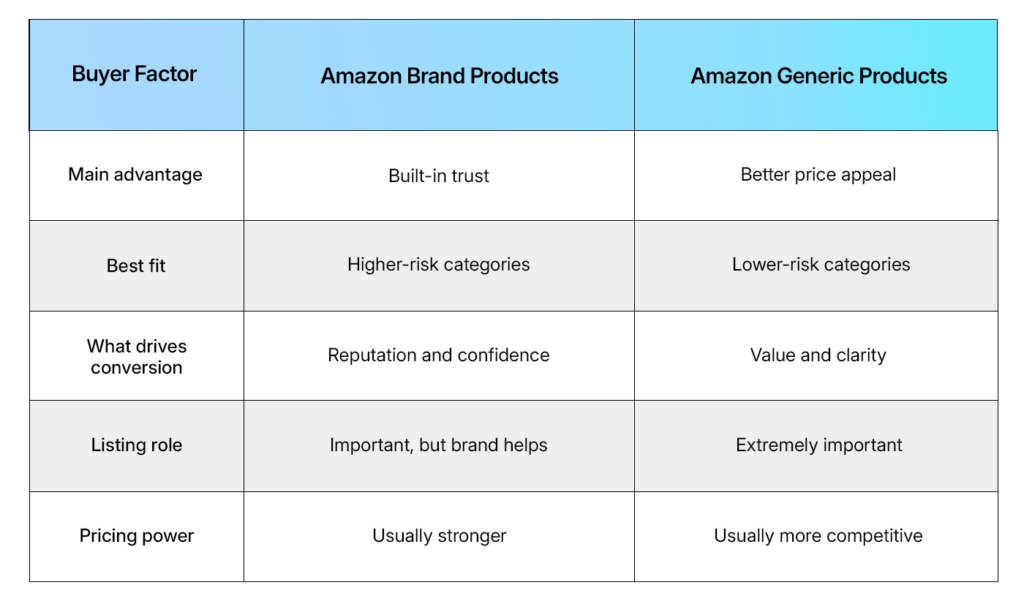
This is really the heart of it. Branded products often reduce doubt, while generic products often reduce spending. Buyers usually decide which kind of comfort matters more in that moment.
H2: What Helps Branded Products Perform Better
Trust starts before the click
One of the biggest strengths of Amazon Brand Products is that trust often begins before the customer even opens the listing. A familiar or well-presented brand can make shoppers more willing to click, especially in crowded search results where several options look similar at first glance.
That early confidence can help with:
- Better first impressions.
- More willingness to click.
- Greater tolerance for slightly higher prices.
- Stronger repeat purchase potential.
A brand does not guarantee a sale, but it often gives the product a head start. That head start matters a lot when shoppers are comparing multiple listings quickly.
Brands usually protect margins better
Branded products also tend to hold pricing better over time. A shopper may be willing to pay more if they believe the product will perform more reliably, last longer, or simply feel more trustworthy. That extra confidence can protect margins in competitive categories where generic listings pull prices downward.
This is one reason many sellers invest so much in brand building. Strong brand perception does not just improve appearance. It can create more pricing flexibility and reduce the pressure to win every comparison through discounts alone.
What Helps Generic Products Win

The listing has to do more heavy lifting
For Amazon Generic Products, the listing usually has to work harder. Because there is less built-in trust, the page needs to quickly show that the product is clear, useful, and worth the money. The shopper is often asking a simple question: does this look reliable enough for the lower price?
That means a strong generic listing usually needs:
- Clear images.
- Honest copy.
- Good reviews.
- Competitive pricing.
- Simple, believable benefits.
If those elements are in place, generic products can convert surprisingly well. Many shoppers are happy to buy a non-branded product if the listing makes the decision feel easy and low-risk.
The price difference has to feel meaningful
Generic products tend to perform best when the value gap feels obvious. If a generic item is only slightly cheaper than a recognized brand, many buyers will still choose the brand because the extra risk does not seem worth it.
But when the savings feel real, Amazon Generic Brand Products can become very attractive. Buyers are often willing to take a chance if the product appears credible enough and the price difference feels like a smart trade-off.
Where Sellers Often Get This Wrong
A common mistake is assuming shoppers always prefer brands. That is not true. In many categories, buyers care more about value than the name on the packaging. But the opposite mistake happens too. Some sellers assume a low price is enough for a generic product to win. That is not true either.
Other common mistakes include:
- Assuming brand name alone can carry a weak listing.
- Assuming cheap pricing alone can sell a generic product.
- Ignoring how much reviews and images shape trust.
- Treating all categories as equally brand-sensitive.
- Forgetting that product risk changes buyer behavior.
The better question is not “brand or generic?” The better question is “what matters most to the buyer in this category: confidence or savings?” Once that becomes clear, positioning becomes much easier.
A Simple Sellerite Approach

If you want better results, focus less on labels and more on buyer mindset. Whether you sell Amazon Brand Products or Amazon Generic Products, the goal is the same: remove hesitation.
A practical approach looks like this:
- Decide whether the category is trust-driven or value-driven.
- Compare how large the real price gap is.
- Build the listing around the buyer’s biggest concern.
- Improve images, reviews, and clarity before lowering price.
- Make sure the product positioning fits the category.
That works because buyers usually are not trying to make a theoretical brand decision. They are trying to make a comfortable purchase decision.
What This Means For Your 2026 Strategy

The biggest takeaway is simple: brand matters on Amazon, but not in every category and not in every buying decision. Branded Products on Amazon usually do better when the purchase feels more personal, more expensive, or more risky. Amazon Generic Products usually do better when the product feels practical, simple, and easy to trust at a lower price.
For Sellerite users, the lesson is clear. Do not assume your product will win just because it has a brand name. And do not assume a generic product cannot compete. Shoppers usually choose the offer that feels more sensible for the situation in front of them.
In 2026, the strongest listings are the ones that make the buyer feel comfortable with the decision. Sometimes that comfort comes from trust. Sometimes it comes from value. Very often, it comes from a balance of both.
