




Table of Contents
Google Ads vs Amazon Ads: A Practical, Budget-First Playbook
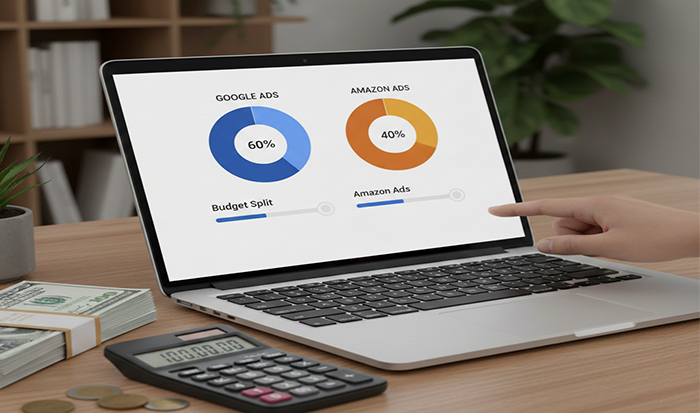
On the surface, Google Ads vs Amazon Ads looks like a simple “search vs shopping” debate. In reality, it’s a budget, intent, and conversion math problem.
Google helps you capture demand across the web and build your brand; Amazon helps you monetize in-the-moment purchase intent right on the product page.
The best results happen when you know where each platform shines, plug the right gaps, and keep your funnel tight from ad click to checkout.
In this guide, we’ll break down how each platform works, where they win, what the costs and returns typically look like, and how to allocate budget by scenario.
We’ll also cover common mistakes and a quick decision checklist to help you choose the right mix. If you’re weighing Amazon Advertising Vs Google for the next quarter’s plan, you’ll leave with a clear, practical path.
A Quick Snapshot — When to Bet on Google, When to Bet on Amazon
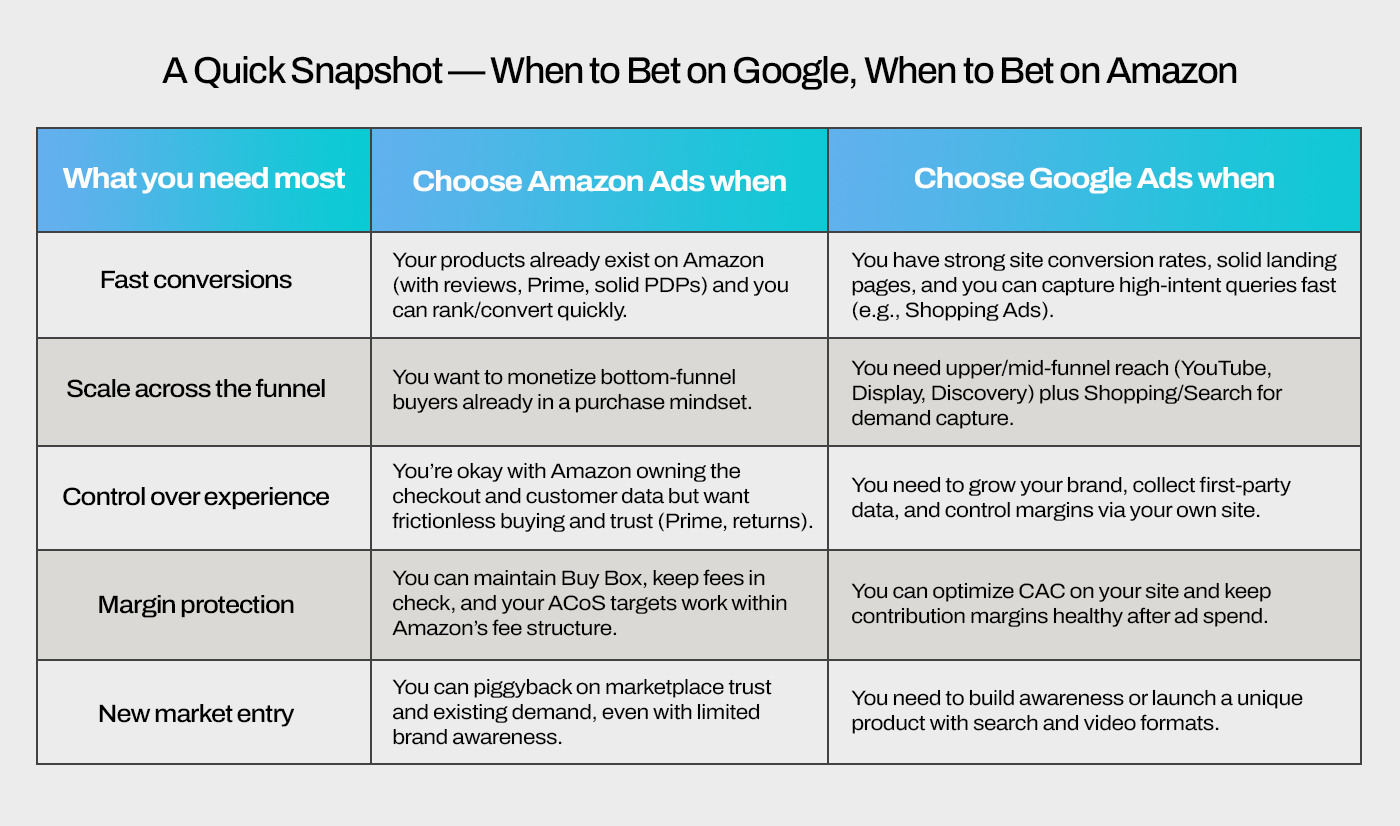
Amazon Ads typically win on immediate purchase intent and conversion rate; Google Ads for Ecommerce excel at full-funnel reach, brand growth, and owning your customer relationships.
How Each Platform Works (and Why That Matters for Conversion)
Buyer Intent and Context
- Amazon Ads: Shoppers are there to buy. Queries are product-first (“wireless earbuds with mic”), decisions are fast, and your product detail page (PDP) is the checkout path. This is why Sponsored Products often produce strong ROAS when your listing is dialed in.
- Google Ads: Mixed intent. Search and Google Shopping Ads capture bottom-funnel demand, but the broader network (YouTube, Display, Discovery, Performance Max) lets you seed and shape demand earlier. That means more control—and more responsibility—to get your funnel right.
Targeting and Reach
- Amazon: Keyword and ASIN targeting dominate Sponsored Products and Sponsored Brands; Sponsored Display and DSP add audience, remarketing, and off‑Amazon placements. You reach in-market shoppers and competitor product pages with surgical precision.
- Google: Keywords, product feeds, audience segments, and AI-driven placements (PMax) span Search, Shopping, YouTube, and more. You can reach people before, during, and after they search—powerful for launching and scaling brands beyond marketplaces.
Ad Formats and Surfaces
- Amazon Ads: Sponsored Products (workhorse), Sponsored Brands (brand banner + store), Sponsored Display (retargeting and competitor conquesting), and DSP (programmatic scale on and off Amazon).
- Google Ads: Search (text ads), Shopping (product tiles with price/reviews), Performance Max (multi-surface), YouTube (video), Display, and Discovery. Together, they cover the entire path to purchase.
Why it matters: Amazon concentrates demand with buying intent; Google disperses demand across surfaces you can orchestrate. Use Amazon to monetize intent you can’t afford to miss; use Google to create and capture demand on your terms.
Costs, ROAS, and What “Good” Looks Like

- Amazon Ads: CPCs vary by category competitiveness and seasonality. Sponsored Products often deliver efficient CPCs when your listing converts well. Poor listings = higher ACoS and lost rank momentum.
- Google Ads: Shopping CPCs can be efficient for clear, price-competitive SKUs; Search CPCs vary widely by keyword. Performance Max may blend costs across surfaces, requiring tight feed quality and conversion tracking.
ROAS and profitability
- Amazon: Stronger conversion rates due to trust, Prime, and 1‑click checkout. But factor in Amazon fees (referral, FBA, storage) when setting ACoS targets. High ROAS can still underperform if fees and returns aren’t modeled.
- Google: You keep more post-purchase margin on your site, but conversion rates often trail Amazon unless your site is optimized. The payoff is data ownership and LTV you can unlock with email/SMS.
Scale considerations:
- Amazon: ROAS can erode at scale as you expand keywords/placements and compete more aggressively. Listing quality, reviews, and inventory become your throttle.
- Google: Scale comes from stacking channels (Shopping + PMax + Search + YouTube). ROAS may compress as you widen audiences, but you gain brand lift and first-party data.
Takeaway: Don’t compare channels on ROAS alone. Compare contribution margin after platform fees and ad spend, including LTV where you own the relationship.
Where They Fit in the Funnel
Amazon Ads
- Lower Funnel: Sponsored Products for exact/phrase and ASIN targeting—your conversion machine.
- Mid Funnel: Sponsored Brands to tell your story, drive store traffic, and cross-sell.
- Upper Funnel: DSP audiences for in-market, lifestyle, and retargeting on/off Amazon.
Google Ads
- Lower Funnel: Google Shopping Ads and branded + high-intent Search.
- Mid Funnel: Performance Max blends prospecting and remarketing as you scale feed-driven campaigns.
- Upper Funnel: YouTube and Display to build awareness and influence search volume.
- Ideal flow: Use Google to create demand and capture non-marketplace shoppers; use Amazon to monetize shoppers who prefer marketplace convenience.
Keyword Strategy — Same Skill, Different Playbook
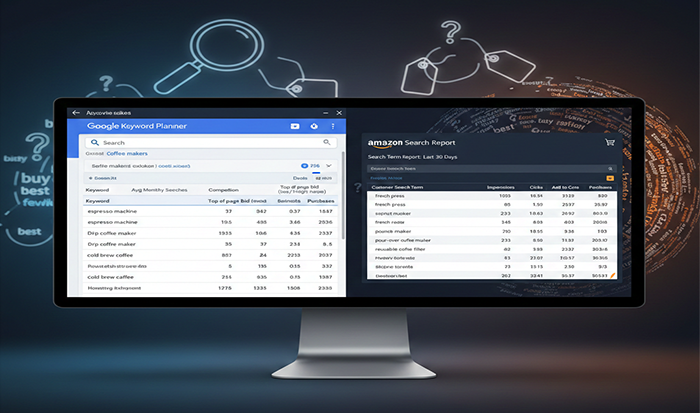
On Amazon
- Start with exact/phrase for high-intent queries; harvest from auto campaigns.
- Build a tight “rank cluster” of primary terms; index broadly via bullets, A+ content, and backend.
- Use negative targeting to protect ACoS; expand cautiously with broad match if needed.
- Conquest competing ASINs where your differentiator is obvious.
On Google
- Feed quality is king for Shopping: clean titles, strong product type taxonomy, and rich attributes.
- Segment campaigns by margin, price competitiveness, and brand vs non-brand.
- For Search, map match types to intent; protect brand terms; isolate expensive generics.
- Use audience layers (in-market, custom intent) to improve efficiency for non-brand search.
Shared principle: Speak the shopper’s language and earn relevance with conversions. On Amazon, that lives on your PDP. On Google, it lives in your feed, landing pages, and site speed.
Creative, Landing Experience, and Conversion
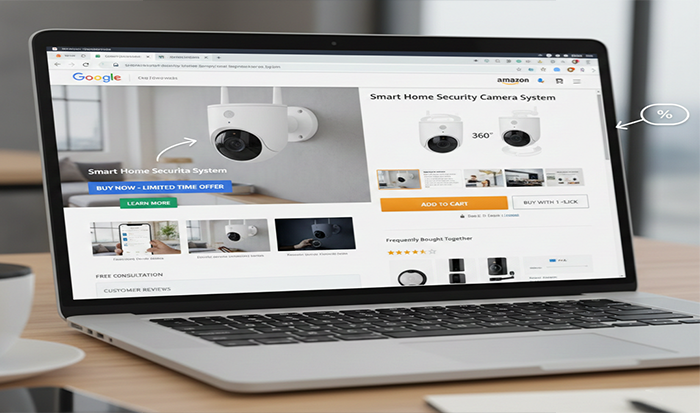
Google Ads send shoppers to your site or product page. Conversion hinges on page speed, trust badges, reviews, pricing, shipping transparency, and frictionless checkout. Great pages make the algorithm love you (and your CPCs drop).
If your PDP is strong but your site is weak, lean into Amazon Ads first. If your site converts well and you want data/LTV, lean into Google Ads while you build marketplace presence.
Data, Measurement, and Attribution

- Amazon: You’ll see ad-attributed sales and new-to-brand on some formats. Brand Analytics and Search Query Performance (if eligible) offer rich search data. Data lives inside Amazon; modeling LTV is trickier since Amazon owns the customer.
- Google: You control tracking (consent-compliant) and can integrate GA4, ad platform data, and your CRM. Expect modeled conversions and cross-device attribution. The upside: you can calculate CAC to LTV and build durable growth loops.
Decision tip: If you need channel-by-channel LTV clarity, Google wins. If you need immediate sales velocity and ranking momentum inside the marketplace flywheel, Amazon wins.
Deep Dive — Amazon Ads and How to Manage Them Well
Core Formats
- Best for: Direct sales, rank building, defending your listings.
- Targeting: Keywords (exact/phrase/broad), ASINs, categories.
- Tip: Separate campaigns by match type and intent; control bids tightly.
Sponsored Brands (SB)
- Best for: Brand awareness on relevant searches, store traffic, and cross-selling.
- Creative: Headline + logo + three products or video.
- Tip: Lead with a clear promise in the first few words; video can outperform static.
Sponsored Display (SD)
- Best for: Retargeting, competitor conquesting, complementary product audiences.
- Tip: Start with retargeting windows that match your consideration cycle; expand to in-market.
Amazon DSP
- Best for: Scaled audience buying on and off Amazon with advanced targeting and creativity.
- Tip: Useful for brands with sufficient budget and a clear attribution plan.
Best Practices for Amazon Ads Management
- Start with SP exact/phrase to prove unit economics, then layer SB and SD.
- Mine search term reports weekly; add negatives and graduate winners to exact.
- Align bids with rank goals: push on mid-page terms you can realistically win.
- Sync inventory and ads—don’t push SKUs low on stock and risk losing Buy Box.
- Treat your listing as CRO: image tests, clearer titles, and social proof can drop ACoS 10–30% without bid changes.
Tip for discoverability: Many merchants look for “Amazon Ads Management,” “Amazon Paid Ads Managemnet,” “Amazon Product Ads Management,” and even “Amazon Product Ads Managemnet.” However you spell it, the key is disciplined structure, search term harvesting, and relentless listing improvement. If you need help, consider an “Amazon Ads Managemnet Agency” offering comprehensive “Amazon Ad Services” and Amazon Seller Advertising support.
Deep Dive — Google Ads for Ecommerce (Search, Shopping, and PMax)
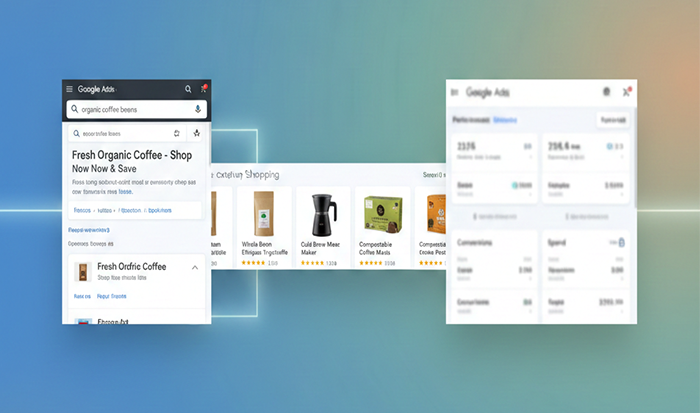
Google Shopping Ads
- Why they work: Visual product tiles with price, image, merchant rating—perfect for comparison shoppers.
- Success factors: High-quality feed (titles, GTIN, brand, attributes), competitive pricing, and strong product images.
- Structure: Segment by margin, price competitiveness, and product category. Keep budget and bids aligned to contribution margin.
Search Ads
- Why they matter: They capture explicit intent and protect your brand terms from competitors.
- Structure: Separate brand vs non-brand. Use exact for winners; test phrase/broad with audience layers. Tailor ad copy to the query and the product page.
Performance Max (PMax)
- Why it’s powerful: One campaign taps Shopping, Search, Display, YouTube, Discover, Gmail.
- What to watch: Feed quality, audience signals, creative assets, and conversion tracking accuracy. Use listing groups and campaign splits to protect top SKUs and margins.
YouTube and Display
- Role: Build demand, support launches, and retarget effectively.
- Creative: Short, benefit-led hooks; clear CTAs; fast paths to product pages.
Tip: If you’re hiring, look for partners experienced in “Google Ads for Ecommerce” and “Google Shopping Ads,” with a plan for feed optimization and incrementality testing—not just toggling bids.
Budget Allocation — Practical Playbooks by Scenario
Launching on Amazon First (New or Limited Brand Awareness)
- 60–80% Amazon Ads (SP heavy, add SB video once you have assets)
- 20–40% Google (Shopping for branded and tight non-brand; minimal Search)
- Why: You’ll capture fast intent and build review momentum. Use Google to mop up lost searches and protect brand terms.
DTC Site Is Strong, Amazon Is Secondary
- 60–70% Google (Shopping + PMax + brand/non-brand Search; YouTube for awareness)
- 30–40% Amazon (SP for core SKUs; SD retargeting)
- Why: You own data and margins. Amazon still monetizes the marketplace-native buyer.
Mature Omnichannel Brand
- 40–50% Amazon (SP/SB/SD + seasonal DSP)
- 50–60% Google (Shopping/PMax/Search + always-on YouTube retargeting)
- Why: Balance immediate marketplace sales with brand growth and data capture on-site.
Seasonal Push or Prime Event
- Ramp Amazon spend 2–4 weeks pre-event to build rank; tighten search terms and defend ASINs.
- Support with Google YouTube + Discovery to create demand; spike Shopping around the event.
- Post-event: Shift to retargeting and high-margin SKUs.
Note: Treat these ranges as starting points. Always rebalance by contribution margin, inventory, and cash conversion cycle.
Common Mistakes (and What to Do Instead)

- Treating ROAS as the only metric : Measure contribution margin after ad spend and platform fees. On Google, include LTV where you own the data.
- Ignoring the landing experience: On Amazon, fix your listing (images, bullets, A+); on Google, speed up your site and simplify checkout.
- Same strategy across categories: Competitive categories demand tighter keyword clusters and aggressive negative targeting. Niche categories reward long-tail depth.
- Not segmenting branded vs non-branded traffic: Separate campaigns and budgets; brand protects your name efficiently; non-brand expands reach strategically.
- Scaling before proof: Validate unit economics on core SKUs and queries before expanding to broad match, DSP, or PMax scale.
- Neglecting inventory and Buy Box: Sync ads with ops. Don’t waste spend on out-of-stock or non-Buy Box listings.
- Underusing search term reports and feed diagnostics: Harvest winners weekly; prune losers; improve feed titles and attributes for Shopping and Amazon indexing.
Mini Case Example — Same Product, Two Paths
On Amazon Ads:
- Strategy: Sponsored Products exact/phrase for “garlic press stainless steel,” ASIN targeting on top competitors, Sponsored Brands video to highlight ease-of-cleaning.
- Outcome: Strong click-through thanks to Prime, high conversion from reviews and clear imagery. Rank improves, ACoS settles as organic lifts.
On Google Ads:
- Strategy: Shopping campaigns segmented by margin and price competitiveness, PMax for prospecting and remarketing, branded Search to defend your name.
- Outcome: Solid non-brand reach, but conversion depends on your site’s trust and speed. If your PDP and checkout are tight, blended CAC beats target and you own the customer for LTV.
Together: Google grows your brand and retargeting pool; Amazon turns marketplace intent into cash flow. The combined plan often outperforms either channel alone.
Decision Checklist — Google Ads vs Amazon Ads
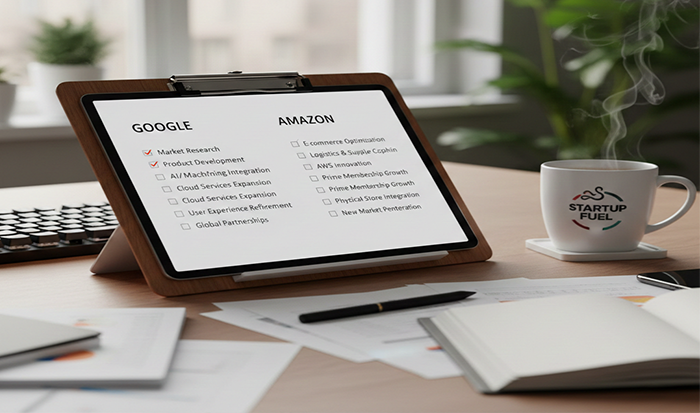
- Where do your customers prefer to buy—marketplace or your site?
- Is your Amazon listing review-ready with strong images and A+ content?
- Does your site load fast, look trustworthy, and convert above 2–3%?
- Can you profit after Amazon fees at your target ACoS?
- Do you need first-party data and LTV right now, or cash flow and rank momentum?
- What’s your inventory position—can you fulfill spikes from either channel?
- Do you have creative assets for YouTube/Display or SB Video?
If your answers skew toward marketplace readiness and fast conversions, prioritize Amazon Ads. If they skew toward brand control, data, and broader reach, lean into Google Ads. Many sellers do both—just sequence wisely.
How Sellerite Can Help
Sellerite supports brands across both ecosystems—so you don’t have to guess which lever to pull next.
- Amazon Ads Management: Campaign structure (SP/SB/SD/DSP), search term harvesting, creative testing, and listing optimization tied to ACoS and rank goals.
- Google Ads for Ecommerce: Feed optimization for Google Shopping Ads, Performance Max architecture, brand/non-brand Search strategy, and YouTube for scalable demand.
- Holistic reporting: Contribution margin modeling across channels, marketplace fees, and LTV projections where you own the customer.
- Operational sync: Inventory-aware budgeting and launch calendars for events and seasonality.
Whether you’re searching for an Amazon Ads Management partner, need end-to-end Amazon Ad Services, or want a team that gets both Amazon Seller Advertising and Google’s full funnel, Sellerite builds a plan that fits your stage and targets. And yes—we’ll gladly fix feed issues, audit your PDPs, and get your tracking airtight before scaling spend.
Note: We also meet you where you search—terms like Amazon Ads Managemnet, Amazon Paid Ads Managemnet, Amazon Product Ads Managemnet, and Amazon Ads Managemnet Agency come up a lot. However you spell it, we’ve got you covered.
Ready to Decide? A Quick Checklist

Google Ads vs Amazon Ads isn’t either/or—it’s sequencing, fit, and margin math. Amazon excels at monetizing ready-to-buy intent; Google excels at building and capturing demand across the web while you keep the customer relationship.
Pick the starting line that suits your strengths, prove unit economics, then layer the other channel to scale. If you want an experienced co-pilot across both, Sellerite is ready to help you plan, launch, and grow with clarity.
FAQs
1. Which is better for fast ROI: Google Ads vs Amazon Ads?
If your products are ready to win on Amazon (good reviews, Prime, strong listing), Amazon Ads often deliver faster ROI due to higher conversion rates. If your site is highly optimized and you need data ownership and LTV, Google can be just as fast through Shopping and branded Search.
2. Should I run both Google and Amazon ads?
If the budget allows, yes. Use Amazon to capture marketplace demand and build rank; use Google to own your brand story, capture high-intent searches beyond Amazon, and nurture customers for repeat purchases.
3. How do fees and margins change the equation?
Amazon charges referral and fulfillment fees that affect your true margin. Google sends traffic to your site, so your margin depends on CAC and your cost structure. Always measure contribution margin after ad spend and platform fees—not just ROAS.
4. What’s the ideal budget split?
For Amazon-first brands: 60–80% Amazon, 20–40% Google. For DTC-first brands: 60–70% Google, 30–40% Amazon. For mature omnichannel: roughly 50/50. Adjust based on SKU margins, inventory, and performance.
5. Where should I start if I’m new to ads?
Start where your conversion path is strongest. If your Amazon listing is polished and stocked, begin with Sponsored Products exact/phrase and a tight keyword set. If your site converts well, begin with Google Shopping and branded Search, then layer PMax and YouTube once tracking and feeds are clean.

 Back to top
Thought Leadership, Tips, and Tricks
Never miss insights into the Amazon selling space by signing up for our email list!
Read more
Expert
strategies
delivered
to your
inbox
top industry minds to fuel
your brand’s growth.

Send request to Sellerite
Once you submit the consultation form, we’ll dive into the details and email you a tailored report within 24-48 hours.
"*" indicates required fields
*By submitting your Email Address, you are agreeing to all conditions of our Privacy Policy.
