



Table of Contents
Introduction

Selling on Amazon gets a lot easier when your products appear for the right searches and convert once shoppers land on the page.
A strong Amazon SEO Strategy helps you boost visibility, earn more clicks, and build steady momentum over time.
The real goal is not just traffic, but qualified traffic that turns into real sales.
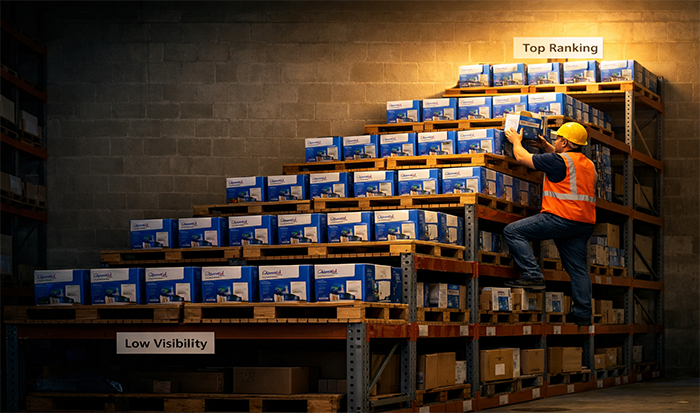
Why Amazon SEO matters now
Amazon is not just a marketplace anymore. It is a search engine with a checkout button. People usually do not arrive ready to explore every brand in a category. They type in a phrase, scan the results, compare a few options, and choose the product that feels most relevant and trustworthy. That is exactly why Amazon SEO matters so much.
If your listing is not clearly optimized, your product can get buried even if the item itself is excellent. A lot of sellers assume good products naturally rise to the top. In reality, Amazon needs clear signals to understand what your product is, who it is for, and why shoppers are responding to it.
This is where SEO in Amazon becomes more than just keyword placement. It becomes a full growth strategy. When your listing is well-structured, keyword-rich without sounding robotic, and built to convert, you improve your chances of winning both visibility and sales.
A strong Amazon SEO approach helps you:
- Get found for relevant searches.
- Improve click-through rate from search results.
- Turn traffic into sales more consistently.
- Strengthen organic rankings over time.
- Reduce overdependence on paid ads.
For brands trying to scale, this matters even more. If your listing is weak, you often end up compensating with ad spend. But if your organic foundation is strong, every ad dollar works harder.
What Amazon’s algorithm cares about

At a basic level, Amazon’s algorithm is trying to answer one question: which product is most likely to get purchased for this search? That is why rankings are usually influenced by two broad factors: relevance and performance.
Amazon first checks whether your product matches the search term. Then it measures how shoppers react to your listing. Do they click? Do they buy? Do they leave satisfied? Those signals matter.
Relevance signals
Relevance is Amazon’s first filter. If your listing does not clearly tell Amazon what the product is, you are already at a disadvantage.
The platform looks at areas like:
- Product title
- Bullet points
- Product description
- Backend search terms
- Category placement
- Attributes and listing details
This is why a proper Amazon SEO Optimization plan needs structure. It is not about stuffing the same phrase everywhere. It is about placing the right keywords in the right fields in a way that still sounds natural to a human reader.
Many sellers make the mistake of over-optimizing. They repeat the same words, write awkward titles, and create content that feels forced. That usually hurts more than it helps. Amazon wants relevance, but customers still need readability.
Performance signals
Once Amazon sees your product as relevant, performance becomes the deciding factor. A listing that gets clicked and converts well sends a strong signal that shoppers like what they see.
Important performance signals include:
- Click-through rate
- Conversion rate
- Sales velocity
- Review quality
- Inventory consistency
- Pricing competitiveness
- Return rate
This is where good SEO Amazon work becomes more strategic. Rankings are not built by keywords alone. They are built by listings that perform well after the click. That means SEO and conversion are tied together from the very beginning.
Start with buyer-intent keyword research
Every strong Amazon listing starts with keyword research, but not all keyword research is equally useful. What you need is buyer-intent keyword research. In simple terms, you want to understand how real shoppers search when they are close to making a purchase.
A broad keyword may bring traffic, but a more specific phrase often brings better traffic. Someone searching a generic term may still be browsing. Someone using a detailed phrase usually knows what they want.
For example, there is a big difference between a search like:
- “water bottle”
- “stainless steel insulated water bottle for gym”
The second search is much more specific, and that usually means stronger buying intent.
That is why your Amazon SEO Strategy should include a mix of keyword types:
- Primary keywords for main visibility.
- Secondary keywords for product features and use cases.
- Long-tail keywords for niche, high-intent traffic.
- Problem-solving phrases that reflect how customers think.
- Modifier keywords such as size, material, style, or audience.
Useful keyword sources include:
- Amazon autocomplete
- Competitor listings
- PPC search term reports
- Customer reviews
- Brand Analytics
- External keyword tools
The goal here is not to collect the biggest list possible. It is to collect the smartest list possible. A polished Amazon SEO Service workflow always starts with keyword intent because every section of the listing depends on it.
Build listings that rank and convert
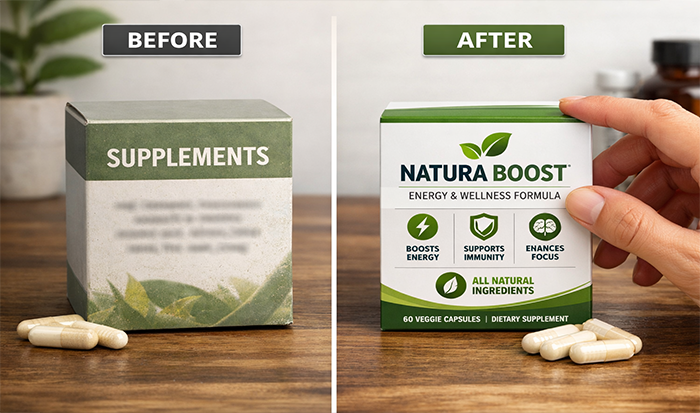
A listing should do two jobs at once. First, it should help Amazon understand the product. Second, it should help shoppers feel confident enough to buy. That is why the best listings balance keyword optimization with clarity, readability, and persuasion.
A listing that sounds robotic may technically include the right phrases, but it often loses trust. On the other hand, a listing that sounds beautiful but misses important search terms may never get enough visibility. The sweet spot is somewhere in the middle.
Title optimization
Your title is one of the first things both Amazon and the shopper notice. It helps determine relevance, and it strongly influences whether someone clicks.
A good title should:
- Start with the main keyword naturally.
- Include the most important product details.
- Stay clear and readable.
- Avoid unnecessary repetition.
- Match the category style and expectations.
A weak title usually has one of two problems. Either it is too vague, or it is overloaded. If it is vague, Amazon and the shopper both struggle to understand the product. If it is overloaded, it becomes hard to read and easy to ignore.
Think of your title as a first impression. It should be informative, confident, and easy to understand within seconds.
Bullet points that sell
Bullet points are where a lot of conversion happens. They help shoppers quickly understand what makes the product useful, different, and worth the price.
The best bullets do not just list features. They translate features into benefits.
Instead of simply mentioning a feature, explain what it means for the customer. That shift makes the listing more persuasive and more natural.
Strong bullet points usually:
- Connect features with everyday value.
- Answer common buyer questions.
- Remove hesitation before purchase.
- Include relevant keywords naturally.
- Stay short enough to scan easily.
A helpful way to think about bullets is this: each one should help the shopper move one step closer to saying yes.
For example, good bullets often cover:
- Product quality
- Comfort or ease of use
- Durability
- Compatibility
- Care instructions
- Ideal use cases
This is one area where many Amazon SEO Services create real value. They do not just rewrite bullets to sound better. They turn passive features into buyer-focused messaging.
Descriptions and A+ Content
Your description gives you room to slow down and explain the product more naturally. This is where you can tell the fuller story, speak to specific use cases, and make the listing feel more complete.
A+ Content takes that a step further. It helps you visually organize the product story, explain key benefits, compare items, and create a cleaner shopping experience.
Use your description and A+ Content to:
- Add brand personality.
- Clarify product usage.
- Address fit or compatibility.
- Explain what makes the product different.
- Support trust with cleaner storytelling.
Many sellers overlook these sections, but they can have a real impact on conversion. And better conversion usually supports better rankings, which is why A+ Content still matters in Amazon SEO Optimization even when its role is more indirect.
Images are part of SEO on Amazon

A lot of people still talk about SEO as if it only lives in text fields. On Amazon, that is not true. Images play a major role because they affect clicks and conversions, and those performance signals influence organic rankings.
In other words, your image stack may not be a traditional keyword factor, but it absolutely affects how well the listing performs.
A strong image set should do more than just show the product. It should answer questions before the customer asks them.
Your image strategy should include:
- A clean, professional main image.
- Lifestyle photos that show real use.
- Infographics with dimensions and features.
- Close-ups that highlight quality.
- Packaging or included-items visuals.
- Comparison graphics when relevant.
The main image is especially important because it competes directly in search results. If it looks weak, cluttered, or unclear, shoppers may never even click through.
Additional images should reduce uncertainty. They should help the customer picture the product in real life. The easier that feels, the more likely they are to buy.
Conversion is the engine behind organic rankings
This is probably the most important idea in the entire article: Amazon does not just rank products that match a search. It prefers products that are likely to sell for that search.
That means conversion rate sits at the center of any effective Amazon SEO Strategy.
If your listing gets impressions but no clicks, something is off at the top of the funnel. If it gets clicks but no sales, the issue is probably deeper in the offer or content.
Common reasons for low conversion include:
- Weak title
- Poor main image
- Unclear bullets
- Uncompetitive pricing
- Low review trust
- Thin product detail
- Mismatch between expectation and reality
To improve conversion, focus on the basics first:
- Make pricing feel fair and believable.
- Use clear and persuasive copy.
- Improve images that answer buyer questions.
- Keep product details accurate.
- Make sure the item delivered matches the promise.
- Keep inventory and fulfillment stable.
A lot of sellers look for Amazon SEO Service support after ranking drops, but by then the underlying conversion issues may already be hurting performance. It is better to build conversion into the optimization process from day one.
Reviews, inventory, and operational health
Amazon SEO is not just about the listing itself. It is also about what happens after the order.
If customers are happy, reviews tend to improve, returns tend to stay lower, and conversion tends to rise. If customers are disappointed, the opposite usually happens.
That is why operational health supports SEO more than many sellers realize.
Reviews matter because they shape buyer trust quickly. In competitive categories, shoppers often compare ratings before they even read the bullets. A strong rating profile can improve confidence almost instantly.
Inventory matters because stockouts can disrupt ranking momentum. If one of your best-performing products goes unavailable, Amazon may shift visibility to competitors. Recovering those placements can take time.
A practical checklist here includes:
- Monitor best-selling ASINs closely.
- Prevent stockouts where possible.
- Track review trends for recurring issues.
- Improve listings when questions repeat.
- Watch returns for expectation gaps.
- Keep fulfillment consistent.
A sustainable Amazon SEO system should include these checks regularly. Otherwise, your content may improve while your operational signals quietly weaken.
Use PPC and competitor data to strengthen SEO
Organic SEO and PPC should work together, not separately. Paid campaigns can help you discover which keywords actually convert, which listings need support, and where your product has room to grow.
For new products especially, PPC helps create early momentum. It gives your listing visibility while organic rankings are still developing. For established products, it helps uncover new search terms and defend important keyword positions.
PPC data can help you:
- Find converting search terms.
- Spot wasted traffic.
- Understand which keywords deserve stronger placement.
- Test keyword relevance faster.
- Support launches and seasonal pushes.
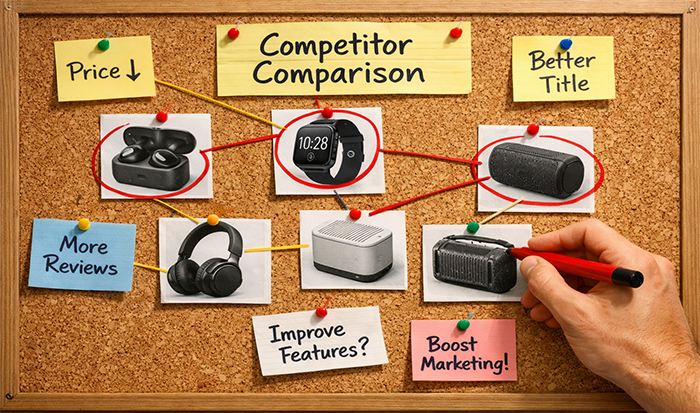
Competitor analysis adds another layer. Study the listings already ranking well and ask practical questions:
- How are they structuring titles?
- What benefits do they emphasize?
- How strong are their images?
- What objections are they answering?
- Where does your listing still feel weaker?
Do not copy them. Learn from them. Good SEO Amazon work often comes from understanding the category standard, then presenting your product more clearly and more convincingly.
Create a repeatable Amazon SEO workflow
One of the biggest mistakes sellers make is treating SEO like a setup task. They optimize once, publish, and move on. But Amazon is too dynamic for that. Competitors change, customer behavior shifts, and listings need regular refinement.
The best results come from consistency.
A repeatable SEO workflow can include:
- Monthly keyword reviews
- PPC search term analysis
- Listing copy refreshes
- Review mining
- Competitor tracking
- Image audits
- Conversion checks
This is where Amazon SEO Services can become especially useful for growing brands. The real value is not just in writing better copy once. It is in creating a process that keeps your catalog improving over time.
When SEO becomes a routine instead of a reaction, your listing quality becomes more stable, and your growth becomes more predictable.
Improve Weak Listings With Better SEO Decisions
Want a more organized way to improve rankings and sales on Amazon? Sellerite helps brands manage listing optimization, track performance gaps, and build a more consistent Amazon SEO Strategy across the catalog.
Instead of making random edits and hoping for the best, your team can work with a clearer process built around visibility, conversion, and long-term organic growth.
Turn Amazon SEO Into a Scalable Growth Process
If your products are getting traffic but not enough conversions, the issue may not be demand. It may be your content, keyword targeting, listing structure, or offer clarity. Sellerite helps you spot weak points faster and improve Amazon SEO Optimization with more confidence.
That means less guesswork, better decisions, and a stronger path to sustainable growth.
Conclusion

A strong Amazon SEO Strategy is not about tricks, hacks, or keyword stuffing. It is about making your product easier to find, easier to understand, and easier to buy.
When your keywords match buyer intent, your listing reads naturally, your images build trust, and your offer converts consistently, organic rankings become much easier to grow. That is the real power of SEO in Amazon. It connects visibility with sales in a way that keeps building over time.
The best sellers do not rely on one lucky listing update. They keep improving. They study what shoppers want, they refine their pages, they learn from PPC, and they protect the operational side of the business too.
For Sellerite, that is the bigger opportunity: helping sellers turn Amazon SEO into a repeatable growth system. And when that system is built well, stronger rankings and better sales stop feeling random.
FAQs:
1. What is an Amazon SEO Strategy?
It is a plan to improve product visibility and conversions on Amazon through better keywords, listing structure, and stronger sales signals.
2. Does Amazon SEO only depend on keywords?
No. Keywords matter for relevance, but conversion rate, reviews, pricing, and sales performance also shape rankings.
3. How long does Amazon SEO take to show results?
Some changes can help quickly, but meaningful organic growth usually takes a few weeks of steady optimization.
4. Do images affect Amazon SEO?
Yes, indirectly. Better images improve clicks and conversions, which can support stronger rankings.
5. Are Amazon SEO Services worth it?
They can be, especially for brands that want structured optimization, stronger listings, and a consistent growth process.

 Back to top
Thought Leadership, Tips, and Tricks
Never miss insights into the Amazon selling space by signing up for our email list!
