



Table of Contents
Introduction

Selling on Amazon isn’t just about listing an item; it’s about navigating a massive ecosystem with a strategy that actually cuts through the noise. While the automated “FBA” dream is often sold as passive income, the reality for a beginner is a mix of meticulous research and branding.
Here is a grounded, step-by-step guide on How to Sell on Amazon for Beginners.
Choose Your Business Model
Before you sell products on Amazon, you need to decide where those products come from. Most successful beginners choose one of these two paths:
- Private Label: Creating your own brand (e.g., your own line of journals or organic spices).
- Wholesale: Buying established brands in bulk and reselling them.
- Arbitrage: Finding discounted items in retail stores and flipping them for a profit.
Market Research: What to Sell on Amazon
This is the most critical stage. You want to find “The Sweet Spot”, high demand but low-to-medium competition.
- Check the Best Sellers Rank (BSR): This tells you how well a product is moving.
- Look for “Gaps”: Read 3-star reviews of competitors. What are customers complaining about? If you can fix that flaw, you have a winning product.
- Avoid “Seasonal” Traps: Unless you’re prepared, stay away from products that only sell in December or July.
Setting Up Your Professional Account
To start Selling on Amazon, you’ll need to register at Seller Central. You have two choices:
- Individual: No monthly fee, but you pay an extra $0.99 per sale. Best if you’re selling fewer than 40 items a month.
- Professional: $39.99/month. This is essential if you want to scale and use advertising tools.
Understanding Fulfillment by Amazon (FBA)
When you Sell Things on Amazon, the logistics can be a nightmare. FBA simplifies this:
- You send your inventory to an Amazon warehouse.
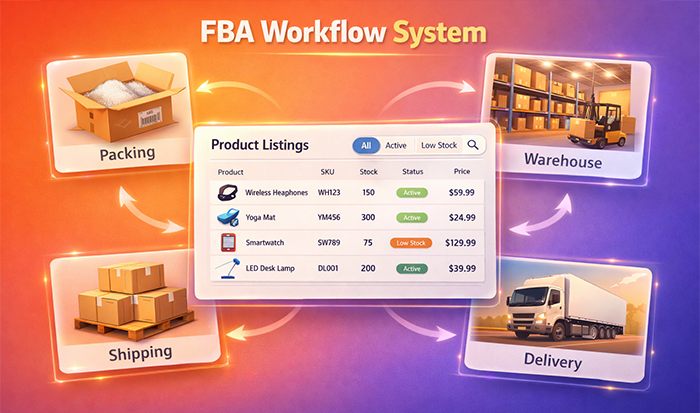
- Amazon stores it, picks it, packs it, and ships it.
- They handle the customer service and returns.
Note: FBA makes your products “Prime Eligible,” which significantly increases your conversion rate.
Creating a High-Converting Listing
You can’t just throw up a photo and hope for the best. To master How to Sell on Amazon, your listing must be “Retail Ready”:
- Photography: Use high-resolution images with a pure white background. Infographics showing the product in use are even better.
- Keywords: Place your main keywords in the title and the “backend search terms” to help Amazon’s algorithm find you.
- The Hook: Use your bullet points to sell benefits, not just features. Don’t just say “Stainless steel”; say “Rust-proof durability that lasts a lifetime.”
Launching and Getting Reviews
The first 30 days are the “honeymoon period.” Amazon gives new listings a slight boost in visibility. Use this time to:
- Run PPC (Pay-Per-Click) ads to get your product on page one.
- Use the Vine Program (if you have a brand registry) to get your first few honest reviews.
The Real Talk on FBA: What They Don't Tell You

If you’re looking into How to Sell on Amazon for Beginners, you’ve probably seen the “get rich quick” ads. Let’s kill that myth right now. Selling on Amazon is a grind, but Fulfillment by Amazon (FBA) is the only reason most of us can even compete with the big players.
Think of FBA as renting Amazon’s massive brain and muscle. You aren’t just paying for a shelf in a warehouse; you’re paying for the “Prime” badge. In the real world, customers are impatient. They want their stuff in two days, and if you’re shipping from your living room, you just can’t keep up.
When you Sell Products on Amazon through FBA, Amazon takes the logistics nightmare off your plate—the packing, the shipping, and those annoying 2 AM customer service emails about “where is my package?”
Why It’s a Game Changer (And Where It Hurts)
When you start to Sell Things on Amazon, your biggest enemy is time. FBA buys that time back. You send a bulk shipment to them, and then you’re done with the physical labor. You can focus on the actual business—like hunting for What to Sell on Amazon next or obsessing over your branding.
But here’s the catch: Amazon isn’t your friend; they’re a partner who takes a cut. If your product is heavy, oversized, or sits on their shelf for six months without moving, the storage fees will bleed you dry. To truly master How to Sell on Amazon, you have to be a math nerd first and a salesperson second.
The Real Logic Behind FBA for Beginners
If you are looking into How to Sell on Amazon for Beginners, you’ve probably realized that the “business” part isn’t just making a sale—it’s the soul-crushing logistics that happen after the sale. This is exactly where FBA (Fulfillment by Amazon) changes the game.
When you Sell Things on Amazon, you are competing with brands that have hundreds of employees. You don’t. FBA is your “equalizer.” By shipping your stock to Amazon’s warehouse, you’re basically hiring their world-class logistics team for a fee. You stop being a “delivery person” and start being a “business owner.”
Why It’s the Smart Play in 2026
- The Prime Factor: Let’s be honest—nobody waits 5 days for a package anymore. To successfully Sell Products on Amazon, you need that Prime badge. FBA gives it to you instantly. It’s the difference between a customer clicking “Buy Now” or scrolling past you for someone who can deliver by tomorrow morning.
- Outsourced Headaches: Dealing with a customer who says their package is “lost” or wanting a refund at 3 AM is exhausting. With FBA, Amazon handles the customer service and the returns. This frees up your brain to focus on the actual strategy: researching What to Sell on Amazon and building your brand.
- Growth without the Burnout: Selling on Amazon is scalable only if you aren’t the one taping up every box. FBA allows you to sell 10 units or 1,000 units with the same amount of physical effort from your side.
The Beginner's Reality Check
While FBA simplifies the operations, 2026 has brought some “real-world” shifts. Fees for small standard items (in that $10–$50 range) have crept up by about $0.25 per unit. It doesn’t sound like much, but if you’re operating on thin margins, it adds up. To truly master How to Sell on Amazon, you have to be obsessive about your dimensions and weight.
Don’t just pick a product because it looks cool; pick it because it’s light, small, and solves a problem. That is the only way to keep FBA profitable in the long run.
Step-by-Step: How to Sell on Amazon for Beginners
Forget the sterile, perfect checklists you see in AI manuals. If you’re actually going to do this, you need to know where the landmines are buried. How to Sell on Amazon for Beginners isn’t just a technical setup; it’s an endurance test.
Phase 1: The Paperwork (Don't Trip Here)
Before you can even think about selling on Amazon, you have to get through Seller Central registration. In the US, this is where many beginners get stuck due to identity verification and tax setup requirements. You’ll need a valid government-issued ID, bank account details, and your tax information (such as SSN for individuals or EIN for businesses).
Pro tip: Make sure the name on your bank account and tax records matches exactly with your Amazon account details. Even small mismatches can trigger Amazon’s automated verification system and delay your approval, leaving you stuck in support-ticket limbo for days or even weeks.
Phase 2: Deciding What to Sell on Amazon
This is the most stressful part. You’re looking for a product that is “boring” but profitable. Don’t try to reinvent the wheel. Look for things people need but nobody is excited about, think silicone spatulas or heavy-duty drawer organizers.
- The Weight Rule: If it’s heavier than 500g, your FBA fees will eat your soul.
- The Breakage Rule: If it can break when a delivery driver tosses it over a gate, don’t sell it. To truly Sell Products on Amazon and stay in the black, aim for a price point between $6 and $30. Anything lower, and the fees kill you; anything higher, and the customer expects a “big brand” experience.
Phase 3: Sourcing Without Getting Scammed
Once you know what to sell on Amazon, you need a supplier. You can go the Alibaba route, but don’t ignore local US manufacturing hubs like Morbi for ceramics or Ludhiana for textiles.
- Always get a sample. If a supplier refuses a sample, run.
- Negotiate, but don’t be cheap. If you squeeze a supplier too hard on price, they’ll squeeze you back on quality.
Phase 4: The "Listing" is Your Shop Window
When you sell things on Amazon, your photos are your only salesperson. If your photos look like they were taken on a dusty 2015 smartphone, you won’t sell a single unit.
- The Title: Pack it with your keywords naturally.
- The “Why”: Don’t just list features. If you’re selling a waterproof bag, don’t just say “PVC material.” Say “Keep your phone bone-dry during the Nagpur monsoon.”
Phase 5: The FBA Launch & The "Mojo"
Enroll in FBA, print your labels, and ship your boxes to the nearest fulfillment center (likely the ones near Mumbai or Pune for us). This is when the real work of How to Sell on Amazon starts.
- PPC is Mandatory: You are invisible on Day 1. You have to pay for “Sponsored Products” ads to get onto page one.
- The Review Trap: Don’t ask your family for fake reviews; Amazon’s algorithm is smarter than you think and will suspend your account. Use the “Vine” program instead.
Costs Involved in Selling on Amazon FBA
The Game Changer: The $12 Threshold
Since March 16, 2026, Amazon USA has made a massive move to compete with other local players. If you Sell Things on Amazon priced under $12, the Referral Fee (Amazon’s commission) is now 0% across over 1,800 categories.
- The Strategy: If your product is currently $12.65, you might actually make more profit by dropping the price to $12 because you instantly save that 5–15% commission.
The FBA "Core Four" Fees
When you are Selling on Amazon using FBA, you aren’t just paying for a listing; you’re paying for a robotic warehouse team.
- Closing Fee: This is a flat fee based on your price. For items under $3.60, it’s recently been slashed to around $0.25 – $0.31.
- Weight Handling Fee: This is the cost of shipping. It starts around $0.30 per item for local delivery of small, light products. This is why everyone tells you to find small, light items when you’re researching What to Sell on Amazon.
- Pick & Pack Fee: This is the “human” (or robot) cost of grabbing your item off a shelf and putting it in a box. It’s usually a small, fixed amount per unit (around $0.13 – $0.18).
- Storage Fees: Amazon is a fulfillment center, not a warehouse. They charge you for the space your box takes up. If your inventory sits for more than 270 days, the “Aged Inventory Surcharge” kicks in, and it gets expensive fast.
The "Invisible" Costs
To successfully Sell Products on Amazon, you have to account for the things no one talks about:
- Returns: In USA, return rates can be high. When a customer returns a “Change of Mind” item, you often still pay the shipping and a “Returns Processing Fee.”
- PPC (Ads): You are basically invisible on day one. Budget at least 10-15% of your revenue for Amazon Advertising in the beginning just to get noticed.
- Sales Tax & IRS Reporting: In the US, Amazon automatically collects and remits sales tax for most states under marketplace facilitator laws, so you don’t have to handle it manually in many cases. However, you are still responsible for reporting your income to the IRS.
- If your sales exceed certain thresholds, Amazon will issue a 1099-K form, which you must include when filing your taxes. While sales tax is mostly automated, proper bookkeeping and income reporting are essential to stay compliant and avoid penalties.
Common Mistakes Beginners Make
The "Me-Too" Product Trap
The biggest mistake is picking a product just because “it’s selling well.” If you see a generic yoga mat with 5,000 reviews and you launch the exact same mat, you’ve already lost.
- The Reality: You’ll be forced to drop your price to nothing just to get a sale.
- The Fix: When researching What to Sell on Amazon, look for “Product Gaps.” Read the 3-star reviews of your competitors. If they say “I wish this had a longer strap,” make yours with a longer strap. Selling on Amazon is about being better or different, not just being there.
The "SEO Stuffing" Mess
A lot of beginners think they need to cram every single keyword into their title until it looks like gibberish.
- The Reality: While you need keywords, if a human can’t read your title in 3 seconds and know what you’re selling, they won’t click.
- The Fix: Put your primary keyword—like How to Sell on Amazon for Beginners, near the front, but keep the rest natural. Amazon’s 2026 algorithm prioritizes “Click-Through Rate” (how many people actually click) over how many words you crammed in.
Underestimating "The Invisible Fees"
Most people use a basic calculator and think they’ll make 40% profit. Then the reality of Selling on Amazon hits:
- The Trap: They forget about the $0.10 – $0.20 “Pick & Pack” fee, the “Inbound Placement” fee (sending stuff to the warehouse), and the cost of PPC ads.
- The Fix: Always leave a 15% “buffer” in your math for returns and advertising. If your margins are thinner than 25% after all FBA fees, that product is a hobby, not a business.
Running Out of Stock (The Ranking Killer)
This is the “Silent Killer.” You finally get to page one, you’re selling 20 units a day, and then… you run out of stock.
- The Reality: When you hit zero inventory, Amazon’s algorithm “forgets” you. When you finally restock, you’ll be back on page ten.
- The Fix: When you Sell Products on Amazon, your second order should be placed almost as soon as your first shipment hits the warehouse.
Bad Photos = Zero Trust
In a physical shop, people touch the product. When you sell things on Amazon, the photo is the product.
- The Trap: Using a cell phone photo with a messy background.
- The Fix: Your main image must be on a pure white background. But more importantly, your 2nd and 3rd images should show the product “in action.” If you’re selling a kitchen tool, show a hand using it. Humans buy from humans.
Conclusion

- Inventory: Never let your stock hit zero.
- Conversion: Keep tweaking your photos and “A+ Content” to turn browsers into buyers.
- Customer Love: Answer every question and address every negative review. In the digital world, your reputation is your only currency.
FAQs:
1. Do I need a business license to sell on Amazon in the US?
Not always. Many beginners start as sole proprietors without a formal business license, but requirements vary by state. It’s best to check your local regulations.
2. What is the 1099-K form from Amazon?
Amazon issues a 1099-K form to sellers who meet IRS reporting thresholds. It shows your total sales and must be included when filing your taxes.
3. How does Amazon handle sales tax in the US?
Amazon collects and remits sales tax in most states under marketplace facilitator laws. However, you may still need to register for sales tax in certain situations.
4. Can I start an Amazon FBA with a small budget in the US?
Yes, many sellers start with around $500–$1,500, depending on product selection, sourcing, and initial inventory size.
5. Do I need a US bank account to sell on Amazon US?
No, but you need a way to receive payments. Amazon supports international sellers through services like Payoneer or Wise for currency transfers.
 Back to top
Thought Leadership, Tips, and Tricks
Never miss insights into the Amazon selling space by signing up for our email list!
