




Table of Contents
Introduction
Strategic Amazon Keyword Research

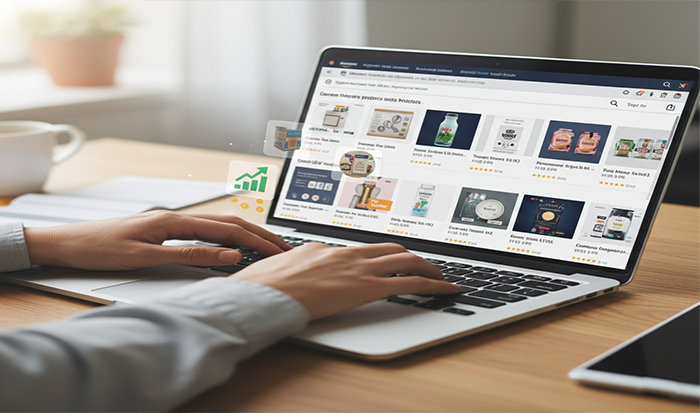
Amazon keyword research is the core of Amazon SEO. This helps in telling you how customers search, what items they use and how you can position your products to match their intent. So, understanding the right keywords not only helps in improving your Amazon search ranking but also helps in increasing traffic, maximising revenues and boosting conversions.
Through this detailed blog, you will understand how to do Amazon keyword research, how you can optimize listings by using keywords, and how to find competitor keywords. So, whether you are a beginner or an experienced person, these insights will help you thoroughly.
Why Amazon Keyword Research Matters
Amazon is a search-driven marketplace keeping this in mind. Unlike social media or Google, this is the place where users browse or research. Amazon shoppers arrive with immediate purchase intent. The words they type in the Amazon search bar helps in reflecting preferences, needs and readiness to purchase.
So, if you product listing does not include these things, the Amazon A9/A10 algorithms will not be displaying your listing for relevant searches. As a result, your high-quality product will fail to get that traction.
Effective Amazon keyword research helps our sellers
- Identifying high-volume and high-intent keywords.
- Understanding buyer psychology.
- Optimising product titles and descriptions.
- Improving ad targeting using PPC Campaigns
- Discovering long-tail keywords with less competition.
- Tracking competitor’s keyword strategies.
- Boosting effectives of paid campaigns and organic rankings.
Understanding the Basics of Amazon SEO Keywords
- Relevance (how closely a keyword matches user intent)
- Conversion rate (how often searches turn into purchases)
- Sales velocity
- Customer satisfaction (ratings, reviews, returns)
Amazon SEO Keywords are connected to revenue. A keyword that brings traffic but does not convert will not maintain ranking.
Amazon SEO Keywords are of three types
- Primary keywords: These are the most important, high-volume keywords which directly describe your products. So, for example: For a yoga mat-> Exercise mat, Yoga Mat.
- Secondary keywords: These are the keywords that give additional context or features. Like non-slip yoga mat, thick yoga mat and yoga mat for women.
- Long-tail keywords: These are low volume but very specific and conversion-friendly. It includes, eco-friendly yoga mat for the gym, and a yoga mat for beginners.
A well-balanced combination of all three is found in successful Amazon keyword research.
How to Do Amazon Keyword Research Step-by-Step

Step 1: Start with Amazon Auto-Suggest
- Water bottle steel
- Water bottle for gym
- Water bottle with time markings
- Water bottle for kid’s leak-proof
These aren’t random suggestions they come straight from actual customer behaviour.
Why this works:
Amazon is literally showing you what people want, and how often they search for it. That means every suggestion is a high-intent keyword you can use.
Quick tip:
Take your main keyword and type it alphabetically:
- Water bottle a…
- Water bottle b…
- Water bottle c…
Doing this reveals dozens of long-tail keyword ideas you might never think of on your own.
Step 2: Analyze Competitors’ Amazon Listings
Start by searching your main keyword and pay attention to:
- Product titles
- Bullet points
- Descriptions
- Backend keywords
- Customer Q&A
- Customer reviews
Competitors often reveal their keyword strategy without even realizing it.
Here’s what to watch for:
- Words that keep repeating in titles
- Phrases customers naturally use in reviews (like “I bought this leakproof water bottle for office”)
- Synonyms or variations used across listings—sports bottle, gym bottle, travel bottle, and so on
Your aim is simple: identify the words and phrases that consistently show up. Those are the keywords real customers use.
Later in this guide, we’ll dive into specific Amazon keyword tools to uncover competitor keywords even more efficiently.
Step 3: Use an Amazon Keyword Research Tool
- Jungle Scout – Keyword Scout
- Helium 10 – Cerebro
- SellerApp
- Viral Launch
- KeywordTool.io (with the Amazon filter)
These tools show you exactly what’s happening behind the scenes. You can see:
- How many people search for a keyword each month
- Whether the keyword is trending up or dropping
- How heavily competitors are using it
- How difficult it is to rank
- Estimated PPC bids
- Where competitors currently rank organically
With this information, you can easily decide which keywords are important and need your attention—and which keywords are not chasing.
Take Jungle Scout’s Keyword Scout, for example. It gives you:
- Reliable monthly search volume
- High-quality long-tail keyword ideas
- Easy keyword filters
- Competitor keyword insights
- Relevance scores
All of this helps you work smarter, cut down hours of manual effort, and optimize your listing with pinpoint accuracy.
Step 4: Find Competitor Keywords on Amazon
Method 1: Reverse ASIN Lookup (Top Choice)
Using tools like Jungle Scout or Helium 10, you can get an access of competitor’s ASIN and instantly see:
- Every keyword they rank for
- Search volume for those keywords
- Their exact ranking positions
- Keywords they missed that you can target
- Terms driving the most traffic to their listing
It’s one of the fastest ways to discover high-value keywords you may not have thought of.
Method 2: Study Their Titles & Bullet Points
Open the top 10 listings and in that case you need to consider:
- Which words keep showing up?
- What keyword variations do they use?
- Which features do they highlight over and over?
Patterns reveal what’s working.
Method 3: Dig Into Competitor Reviews
Customers often describe the product using the same words which they had typed in the search bar
For example:
“I needed a non-slip yoga mat for hardwood floors.”
Reviews like this are keyword gold—they show you real search phrases directly from the buyer’s mind.
Step 5: Just keep focussing on Long-Tail Keywords
- Less competitive
- More specific
- Better at converting
- Easier for new sellers to rank for
Think of them as keywords which will match the user’s mind.
Examples:
Instead of targeting a broad term like “water bottle,” go for something clearer and more intent-driven like:
“BPA-free water bottle for gym 1 liter.”
Or instead of just “pill organizer,” try:
“weekly pill organizer with moisture protection.”
These detailed phrases bring you customers who know exactly what they want—and are much more likely to hit “Buy Now.”
That’s why long-tail keywords are a key part of strong Amazon listing optimization.
Step 6: Pick Keywords That Actually Fit Your Product
Before adding any keyword, think about:
- Does this word honestly describe what I’m selling?
- If someone types this in, would they be interested in my product?
- Is the competition so high that I’ll get buried?
- Does this keyword match the features or purpose of my product?
For example, if you sell yoga mats, broad terms like “gym equipment” or “sports accessories” might get a lot of searches—but they’re not specific to yoga mats. They’ll bring in the wrong audience and won’t help you rank.
At the end of the day, the most relevant keyword wins. When your keywords clearly match what buyers are looking for, Amazon rewards you with better ranking—and better conversions.
Step 7: Organising keywords in more structured lists:
- Title keywords (highest priority)
- Bullet keywords (feature-specific)
- Description keywords (secondary relevance)
- Backend keywords (hidden search terms)
- PPC keywords (ad targeting)
This will ensure that every keyword has a place and your listing remains clear, optimised and readable.
How to keep using keywords in Amazon Product listing optimization

This is where many sellers fail. Dumping keywords randomly hurts readability. And in this case, Amazon penalises keyword stuffing.
So, here is how to use it correctly:
Product Title: Primary Keyword Placement
Like for example: Yoga Mat
Non-slip Yoga mat for men and women, extra thick exercise mat for gym and home workouts.So, a strong title helps in improving both ranking and click-through ratings.
Bullet Points: Feature-Driven Secondary Keywords
- Benefits
- Features
- Material
- Use cases
- Audience
- And naturally incorporate secondary keywords
Like for example:
- Eco-friendly material has got better grip and durability.
- Perfect Yoga mat for beginners, and fitness enthusiasts.
- This is ideal for home workouts, and stretching sessions.
Product Description: Narrative + SEO Keywords
Like:
This extra thick yoga mat helps in providing superior comfort and support for beginners and practitioners.
So, whether you are doing pilates, intense workouts or meditation, this is your go-to exercise mat.
Backend Search Terms: Hidden Keywords
Amazon helps in allowing you to 250 bytes for backend search keywords:
This includes:
- Synonyms
- Misspellings
- Regional variations (mat vs. matts)
- Abbreviations
Avoid:
- Repeating title keywords
- Brand names
- Competitor names
- Punctuation
Backened keywords help you in ranking without making your listing suffer.
Images & A+ Content (Indirect SEO Boost)
The more the conversions, the higher the ranking in Amazon’s algorithm.
A+ Content helps in embedding keywords in descriptions and image captions, thus giving you additional indexing opportunities.
How Amazon PPC Helps in Keyword Validation
So, by running:
- Automatic campaigns, you discover new keyword variations Amazon associates with your product.
- Manual campaigns, you test specific keywords and monitor their conversion rate.
- Keywords with high conversions are the core organic keywords.
- Keywords with poor conversions should be eliminated.
Common Mistakes Sellers Make in Keyword Research

- Choosing only high-volume keywords: High volume usually means high competition.
- Ignoring long-tail keywords: Long-tails often deliver the best conversion rates.
- Keyword stuffing: This decreases readability and hurts ranking.
- Using irrelevant keywords: Amazon penalizes deceptive SEO practices.
Not updating keywords regularly: Search trends change—your listing must evolve.
Updating your keywords over time
Review keywords every:
- 30 to 60 days for performance
- After major shopping seasons
- When launching new variations
- When competitors change strategy.
So, use keyword tracking tools that help in monitoring ranking shifts.
Final Strategy: Building a Winning Amazon Keyword System
So, in order to dominate your niche, you need to follow this framework:
- Collecting keywords: This can be done by using tools, auto suggest and competitor research.
- Filtering keywords that are based on intent and relevance.
- Classifying keywords in bullets, backend and PPC.
- Writing optimised content that helps in balancing readability and search strength.
- Running PPC Campaigns that help in validating keyword performance
- Tracking rankings, because this helps in updating keywords monthly.
- Monitoring competitor listings as their changes affect the market.
This holistic approach makes sure that there is consistent growth.
Conclusion

Amazon keyword research is one of the most powerful drivers of better visibility and steady organic traffic. If you go about it in a thoughtful way, it paints a crystal clear picture: what shoppers actually search for, how your competitors position themselves, and which opportunities you can tap into to increase sales.
Once you know how to find the right keywords—either through dedicated research tools, analysis of competitors, or simply reading customer intent—you start using Amazon the way the top sellers do. With the right keyword strategy in place, your listings become more discoverable, more relevant, and far more appealing to the audience that is ready to buy.
Well-researched Amazon SEO keywords will set you apart in a marketplace of thousands trying to stand out.
Just continue implementing the steps outlined in this guide, continually update your keyword list as trends change, and watch your products climb the rankings and draw more consistent, high-quality traffic.

 Back to top
Thought Leadership, Tips, and Tricks
Never miss insights into the Amazon selling space by signing up for our email list!
Read more


Expert
strategies
delivered
to your
inbox
top industry minds to fuel
your brand’s growth.

Send request to Sellerite
Once you submit the consultation form, we’ll dive into the details and email you a tailored report within 24-48 hours.
"*" indicates required fields
*By submitting your Email Address, you are agreeing to all conditions of our Privacy Policy.
