




Table of Contents
Introduction — The Seller’s Journey Begins

Asha launched her first product with a tiny savings account, a rented camera for photos, and a lot of hope. The first few months were a blur: learning listings, setting up FBA, guessing at keywords, and responding to late-night customer messages. She crossed $10K in revenue and felt proud—until the rollercoaster began.
One week, her bestseller hit page one. The next, a stockout erased her momentum. Ads ate cash. A blunt 2-star review highlighted confusing instructions. Asha realized she didn’t just need more sales—she needed a plan to scale Amazon business with systems, not stress.
Her turning point came after a painful Q4. She decided to fix fundamentals: unit economics, listings, inventory rhythm, and a real Amazon business growth strategy that wasn’t built on hacks. She brought in professional guidance, created dashboards for truth, and focused on customer experience. In six months, sales became more predictable, ad costs stabilized, and she finally had breathing room.
In this post, we’ll unpack the same principles Sellerite uses to help ambitious brands grow Amazon sales—from $10K to $1M+—with control, clarity, and confidence.
Understanding What It Really Takes to Scale on Amazon

Scaling means volume without chaos. It’s building systems that hold under pressure: stable margins, consistent inventory, strong customer experience, and clean account health. You don’t rise to the level of your goals—you fall to the level of your systems.
- Revenue ≠ Profit: A $100K month at 7% margin is worse than $60K at 20%. Profit funds growth; cash flow keeps you alive.
- Short-Term Hacks vs. Long-Term Scalability: Tricks fade; strong product-market fit, optimized listings, and disciplined operations compound.
- Mindset Shift: Seller to Brand Builder: Stop “listing managing.” Start brand building—positioning, packaging, reviews, and retention.
The Foundation of Every Scalable Amazon Brand
- Strong product–market fit: Solve a real problem. Validate with review sentiment and repeat purchase rate.
- Optimized listings with SEO and conversion-driven design: Clear titles, benefit-first bullets, proof-driven images, and A+ content that answers objections.
- Consistent stock availability: Avoid stockouts and aging inventory. Rank depends on reliable availability.
- Healthy review and feedback loop: Fast responses, transparent instructions, and ethical review generation.
- Mini callout: A 1% conversion lift can raise profit 8–12% depending on your TACoS and margins.
Stage 1 — From $10K to $100K: Building the Base
At this stage, your job is to learn faster than competitors. Don’t outspend—out-understand.
Master the Fundamentals
Product optimization
- Titles: primary keyword + core benefit.
- Bullets: benefits > features; address objections.
- Images: lifestyle context, comparison charts, size clarity, problem-solution frames.
- A+ content: reinforce value, reduce returns via usage tips.
Keyword indexing and conversion tracking
- Cover high-intent terms in titles/bullets.
- Track sessions, CVR, and keyword clusters weekly.
- Use search term reports to prune irrelevant spend.
Buy Box and pricing rules
- Keep prices within guardrails to avoid suppression.
- Use promos to test elasticity, not to bleed margins.
Understand Your Unit Economics
- Map cost stack: COGS, freight, duty, FBA, storage, returns, PPC, overhead.
- Track contribution margin by ASIN and campaign.
- Set non-negotiables: minimum margin and TACoS thresholds.
- Mini math: Margin per order $9 minus blended ad spend $3 = $6 contribution. If overhead per order is $2, you bank $4. Scale what repeats.
Optimize Advertising for Data, Not Just Sales
Use ads as your microscope.
- Sponsored Products first: Exact for proven terms; phrase for controlled discovery; product targeting for complements and competitors.
- Build learnings, not just revenue: Test angles and hooks; refine listing based on ad-driven insights.
- Negative keywords: Cut waste fast; protect your budget.
- Track intent: Which keywords convert at which price points for which SKUs?
Pro tip: Ads should teach you “how to increase Amazon sales” by revealing which levers move the needle—price, imagery, claims—not just by spending more.
Stage 2 — From $100K to $500K: Systemize and Expand
You’ve proven demand. Now, discipline.
Inventory and Operations Efficiency
- Forecasting and IPI management: Forecast per ASIN by velocity, seasonality, lead times; monitor IPI; cut stranded/aging inventory.
- Reorder points and buffer stock: Use safety stock models; schedule inbound cycles against restock limits.
- FBA tools and reports: Review Restock, Excess, and Stranded reports weekly; standardize prep to avoid delays.
- Data snippet: One stockout can wipe out 3–6 weeks of rank gains on competitive terms.
Brand Positioning and Differentiation
- Cohesive story: Who it’s for, what it solves, why it’s better—echoed across title, bullets, A+, and storefront.
- Premium imagery and packaging: Show quality; reduce uncertainty; increase perceived value.
- Consistent experience: Accurate attributes reduce returns; thoughtful inserts increase loyalty.
Smarter Advertising with Profit Focus
- Data-driven PPC: Segment by intent; scale exact where margin holds; use placement and dayparting where CVR spikes.
- Sponsored Brands and Video: Own your brand terms; explain value fast with video.
- Retargeting: Sponsored Display and external retargeting for fence-sitters.
- Track: TACoS by product group, contribution margin, new-to-brand trends. This is where you truly grow Amazon sales with control.
Expanding SKUs and Product Lines
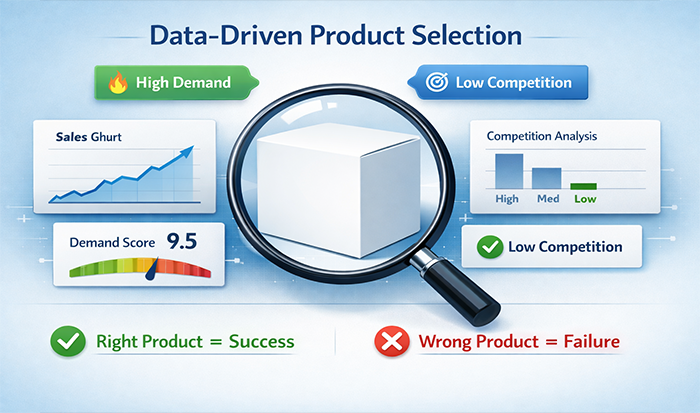
- Demand-first validation: Keyword volume, price bands, review gaps, and sentiment.
- Launch with intent: Start with top variants; consolidate reviews via proper variations; pre-plan inventory.
- Pricing and positioning: Enter at defensible margins; time promos to learning windows.
Stage 3 — From $500K to $1M+: Scaling Intelligently
The jump to seven figures is fewer mistakes, better systems.
Automate, Delegate, and Optimize
You can’t—and shouldn’t—do it all.
- Automation: Repricing within margin guardrails; ticketing for health alerts; PPC rules for off-hour caps.
- Team building: VAs for catalog hygiene and messaging; specialists for PPC and creatives.
- Expert partners: Agencies with deep experience help scale e-commerce business without operational burnout.
Data-Driven Growth Strategy
Operate with instruments, not instincts.
- Dashboards and profit analytics: Watch TACoS, contribution margin, session-to-sale conversion, and refund rates.
- North-star KPIs: Repeat purchase rate, Buy Box stability on heroes, account health metrics.
- Cadence: Weekly optimization sprints; monthly strategy reviews; quarterly roadmaps.
This is the heartbeat of an “Amazon business growth strategy” that compounds.
Expansion Beyond Amazon
Diversify using Amazon insights.
- Shopify or Walmart: Port winning offers; tailor pricing and promos to each channel.
- Owned audiences: Build email flows; encourage bundles and reorders off-Amazon.
- Brand independence: DTC strengthens margins and resilience while you grow Amazon sales.
International Scaling
- Market selection: UK/EU or Canada for similar demand patterns.
- Compliance and operations: VAT/GST, translations, packaging, logistics timelines.
- Phased launches: Start with top SKUs; scale once reviews and ops stabilize.
Case Study — The Sellerite Framework in Action

Rohit ran a home fitness brand. He bounced around $12K/month—good months followed by scary dips. A stockout crashed his rank. Ads looked busy but weren’t profitable. A compliance warning nearly froze his top ASIN.
He partnered with Sellerite to scale Amazon business with structure. The goal wasn’t just growth; it was profitability and predictability.
Sellerite’s Approach
Audit
- Profitability by ASIN, fee and returns analysis, compliance gaps.
- Catalog hygiene: suppressed attributes, variation issues, weak keywords.
- PPC diagnostic: wasted spend, missing negatives, bad placement multipliers.
Strategy
- Keyword clustering; listing overhaul; value-based copy and imagery.
- Ad funnel: exact for profit, phrase for discovery, product targeting for conquest, brand defense.
- Pricing guardrails: contribution-margin thresholds; promos around demand curves.
- Inventory cadence: reorder points, buffer stock, inbound calendars aligned to limits.
Execution
- Weekly optimization sprints; creative refresh; review program aligned to policy.
- Return-reason fixes in bullets and A+ to cut dissatisfaction.
Monitoring
- KPI dashboards: ACoS/TACoS, IPI, Buy Box stability, refund rate, contribution margin.
- Same-day case handling for health alerts.
Results Achieved
- 4.3x total revenue growth in 12 months
- TACoS dropped from 19.8% to 10.6%
- 38% lift in organic sessions; 21% CVR lift on hero ASIN
- Zero policy violations post-engagement
- IPI improved; no stockouts on top three SKUs across peak weeks
Within 14 months, he crossed $1.2M in cumulative sales—with better margins than when he started.
Key Takeaways from the Case Study
- Numbers don’t lie—measure what matters and direct capital accordingly.
- Consistency beats chaos—weekly sprints compound; sporadic fixes don’t.
- System > hustle—processes scale; adrenaline doesn’t.
Common Mistakes Sellers Make While Trying to Scale

Ignoring Analytics
Solution: Track SKU-level profit weekly; build dashboards that surface leaks instantly.
Stockouts and Poor Inventory Planning
A single stockout can crater rank and force expensive recovery.
- Fix: Forecast by ASIN with lead times and seasonality; set reorder points and safety stock; review FBA restock limits weekly.
Over-Reliance on Ads
- Fix: Upgrade titles, bullets, images, and A+ first; let ads amplify a strong page, not hide a weak one.
Ignoring Account Health
- Fix: Daily health checks; documented SOPs; proactive case logging; claim-safe copy.
Static Pricing Strategy
- Fix: Dynamic rules within margin guardrails; strategic promos during learning or seasonal windows to support “how to increase Amazon sales” without bleeding profit.
Bonus mistake: Underinvesting in creative
- Fix: Video and premium imagery often deliver the fastest conversion and return-rate improvements.
Common Mistakes Sellers Make While Trying to Scale
Sellerite blends PPC, operations, analytics, and compliance to help brands scale Amazon business without losing control. One partner. Full accountability.
Proven Growth Framework
Audit → Strategy → Execution → Optimization. A steady rhythm that compounds results and protects margins and account health.
Dedicated FBA Specialists
Your brand gets specialists in ads, inventory, pricing, creative, and policy—people who’ve solved your challenge before it becomes a crisis.
Transparent Reporting
Clear dashboards and weekly recaps. Always know what we did, why, and what’s next. No black boxes.
Results You Can Expect with Sellerite

- Higher profit margins through cost control and pricing precision
- Optimized ad spends and better TACoS
- Smoother inventory cycles with disciplined forecasting
- Sustainable sales growth with predictable momentum
- Stronger brand presence through elevated creative and messaging
- Consistent account health with fewer disruptive surprises
Data callout: Many brands see 20–35% PPC efficiency gains within 60–90 days when optimizing to contribution margin rather than ROAS alone.
Key Lessons for Amazon Sellers
- Scaling isn’t luck—it’s systems and discipline.
- Numbers drive clarity; clarity drives profit.
- Creative clarity often beats bid aggression.
- The right partner accelerates your road to seven figures.
Conclusion — Scale with Confidence, Scale with Sellerite

The leap from $10K to $1M+ isn’t about chasing a magic product. It’s about foundations that compound: listings that convert, inventory in rhythm, pricing with guardrails, and ads that produce insight—backed by a cadence that never stops improving.
If you’re ready to turn sporadic wins into steady growth—to scale Amazon business with clarity, control, and confidence—Sellerite is ready to help.
Ready to scale Amazon business to $1M+ with clarity, control, and confidence? Partner with Sellerite—your growth engine for sustainable Amazon success.
FAQs
1. How can I scale my Amazon business quickly but sustainably?
2. What’s the best Amazon PPC strategy for growth?
3. When should I start automating my Amazon operations?
4. How can external traffic help increase Amazon sales?
5. What are the top Amazon seller success tips for reaching $1M+?
- Know your numbers: margin per order, TACoS, refund rate.
- Build creative that answers objections fast.
- Keep inventory in rhythm—no stockouts, no dead stock.
- Scale PPC that proves profit; cut what doesn’t.
- Guard account health like revenue insurance.



 Back to top
Thought Leadership, Tips, and Tricks
Never miss insights into the Amazon selling space by signing up for our email list!
Read more
Expert
strategies
delivered
to your
inbox
top industry minds to fuel
your brand’s growth.

Send request to Sellerite
Once you submit the consultation form, we’ll dive into the details and email you a tailored report within 24-48 hours.
"*" indicates required fields
*By submitting your Email Address, you are agreeing to all conditions of our Privacy Policy.
