




Table of Contents
Introduction

The biggest challenges people face when trying to scale is including bottlenecks, inventory, inconsistent product quality and over-dependence on paid advertising.
Scaling is different from launching, it is not about selling your first 100 units, infact it is about creating systems that have consistent sales growth while dealing with margins.
This guide makes sure to cover areas which are necessary for sustainable Amazon growth, right from building a strong product line up and optimizing listings to mastering PPC and expanding traffic sources and operational efficiency.
Each way provides actionable strategies for sellers at every level. Right from small private-label brands to mid-sized businesses that aim in making it a multi-marketplace area.
Here you will tend to learn about how to optimize operations, diversify revenue streams and build a defensible brand that can take care of the market fluctuations.
So, whether you are seeking to scale profitably on Amazon or prepare your business for eventual sale, this guide is for you.
Laying the Foundation for Sustainable Growth
The procedural systems, product catalogues, and operational discipline must remain intact at this stage until advertising campaigns are adjusted and geographical access is added.
This early step is what creates the strength for continued success as well as the ability to withstand future volatility from outside factors or changes in marketing algorithms and competitors.
Building a solid product lineup (avoiding weak SKUs)
Evaluate every product based on demand consistency, return rate, and review profile. Removing products that chronically underperform or drain resources. Focusing on winners that give room for optimised pricing and improved variations.
What Amazon's Algorithm (A9/A10) Means and Why It's Important.
The A9/A10 Algorithm will also analyze the click-through rate, conversion rate, price history and organic review count of a product along with seller performance when determining its placement in search results.
Understanding this will help you prioritise your listings for both conversion and visibility. Keyword placement, pricing strategy and backend attributes all are counted into how Amazon decides when and how often your listings should appear.
So, when your catalog is algorithm-friendly, your money works harder.
Setting up clean financial and operational systems
- The Clarity Check: Do you know exactly how much profit you make on a single product (SKU) after all costs are factored in? If the answer is “I think so,” you’re in trouble. Accurate P&Ls (Profit & Loss statements) and expense tracking aren’t just for tax season—they tell you which products to double down on and which to quietly retire.
- The Right Tools: Stop using messy spreadsheets to keep track of things. Systems like Xero and QuickBooks (or something more specialized for e-commerce accounting) are not optional anymore; they have become your source of truth.
- Operational Flow: On the operations side, scaling means more chaos. Reducing the bumpy roads in your business first means finding ways to make issuing purchase orders and communicating with suppliers and managing shipping a lot smoother. The removal of errors leads to more reliability. Also, by having your financial records organized and accurate, you will be able to create a significant number of profitable financial decisions for both yourself and your company.
Inventory forecasting basics
- The Stockout Killer: Running out of stock (a stockout) is an immediate reputation and revenue killer. It ruins your search ranking and sends customers straight to your competition.
- The Overstock Cash Trap causes the business to lose its valuable cash in a warehouse (via Overstock) and prevents it from being used in other important parts of your business like marketing.
- The Sweet Spot is where your Business is at its best and you want there to be a lot of room for future growth.
To help forecast what will happen in the future, you will need to factor in some of the following:
- Seasonality – (Q4 holiday rush)
- Sales Velocity – (How fast are you selling right now?)
- Lead Times – (How long does it really take for your product to arrive?)
- Safety Stock – Buffer!
- Discipline is Key- This isn’t a one-and-done setup. Inventory forecasting is a weekly habit. Treat it like your most important meeting.
Catalog Preparation for Long-term Growth
The Trust Builders will review all of your product listings to ensure that they contain high-quality product images and include the correct parent-child product variations, as well as include the full A+ Content (Enhanced Brand Content).
Creating SOPs for repeatability
- Document Task Achievements: Upon completing a project successfully and accurately, create a detailed report that describes each step you took to complete the project, called Your Standard Operating Procedures.
- This documentation should include instructions on launching products, responding to defective merchandise, returning merchandise, and creating campaigns; with a comprehensive written guide with detail on how each process works.
- The establishment of SOP will help you ensure that all customers receive the same quality level of service each time they use your services, minimise the possibility of employees making mistakes, and assist new employees to easily learn their responsibilities.
The intresting part of e-commerce is the big product launch or the viral ad. But the difference between controlled, profitable growth and chaotic, stressful scaling is entirely in these simple, solid systems. You are building the powerful, silent engine that makes the whole machine go faster and farther.
Amazon SEO: Optimize Your Listings for Discoverability & Conversion

Optimize Your Listings for Discoverability & Conversion: Here’s how to create a long-term organic revenue engine. Good SEO will allow you to leverage every dollar spent in advertisements.
Keyword research for scaling (long-tail + high-volume keywords)
- Go Big for Volume: You need to start with those big, high-volume keywords—the ones almost everyone types in. These are your “rock stars” that bring in the maximum number of people, helping you tap into broad, consistent customer demand.
- Go Niche for Sales: Don’t stop there! You also need those detailed, long-tail keywords (like “rechargeable waterproof LED headlamp for camping” instead of just “headlamp”). These are the real gems. While fewer people search for them, the ones who do are usually much closer to buying. They face less competition and drive traffic that is already highly qualified and ready to convert.
The most effective research does both.
Advanced listing optimization techniques
Once your keywords are at the right place, the next thing is advanced optimization. This includes crafting titles, bullets and descriptions that help in improving both engagement and indexing. High-performing listings have keyword placements. Image sequencing is done to answer customer objections. Bullets then follow a hierarchy that highlights benefits initially. These refined elements then work in combination to increase visibility, and guide shoppers towards purchasing decisions that has minimal friction.
Improving indexation and keyword coverage
Amazon’s algorithms can rank your products which will make it read. This is crucial in indexation which in itself is a critical part of SEO. This has ensured all relevant keywords, like supporting, primary and semantic.
These backened search terms, alternate use cases help in widening the net. Reviewing indexation regularly also reveals gaps where Amazon has not yet recognised your keywords, allowing you to adjust content. Better coverage directly helps in translation and in getting more opportunities for good impressions.
Optimizing for conversion rate (CRO fundamentals)
Traffic has value only if it gets converted. And in this case, CRO helps in strengthening at every stage of the shopper’s decision journey. This also means optimising visual assets and reducing hesitation and for rewriting bullets to communicate value instantly.
Trust, clarity and perceived value plays a bigger role in Amazon conversion than pricing. So, when your listing removes doubts and helps in building confidence quickly, then conversions rise, and in this case organic rank is followed.
A+ Content and Brand Story for brand building
This gives your brand a stage to communicate. With the help of modular layouts, enhanced visuals and storytelling, A+ helps in reinforcing your product’s strengths.
A great brand story builds emotional connection and helps in portraying your brand’s mission, vision and credibility. These things work together to lift conversions and make your listing more fruitful.
How SEO impacts PPC performance
SEO and PPC are inter-connected. A well optimised listing helps in increasing relevance, and lowering cost per click which in turn boosts conversion rates.
Strong keywords in your listing helps PPC campaigns to index faster and gain traction. When your organic ranking rises, your expensive ads decrease. And this in turn leads your TACOS stabilise.
Winning PPC Strategy: Scaling Advertising Without Losing Profit
Understanding Sponsored Products, Sponsored Brands, Sponsored Display
By highlighting your brand and product lineup, sponsored brands can increase visibility at the top of the funnel. For increasing recognition and attracting early-stage customers, this is perfect.
Expanding your reach on and off of Amazon is made easier with sponsored displays. Thus, As a result, it is possible to conduct audience-targeting and audience-retargeting efforts.
When you have learned how to leverage the benefits of each type of audience-targeting format, you will be able to achieve “full-funnel” coverage for both immediate conversion objectives and longer-term business objectives that require continued exposure.
How to structure PPC accounts for scalability
The difference between scaling spend vs. scaling profit
Scaling spend increases exposure and is associated with diminished returns and rising ACOS. Scaling profits, focuses on increasing contribution margin with the help of smarter targeting.
The key to identifying campaigns with healthy margins and incremental lift helps in blindly pushing budgets in the areas with low efficiency.
Growth can only be sustained when every dollar that is gained will have a positive impact on the total amount earned from that dollar.
Optimisation of bids, placements, and match types used for a keyword
At the same time, choosing the right match type structure for correct precision and broad discovery helps in balancing traffic volume and quality.
A well-optimised PPC engine has data driven bid adjustments that helps in generating steady, profitable growth without runaway costs.
How TACOS determines scaling potential
When TACOS remained low and stable, it gave strong organic rank and healthy branded demand. If TACOs begin to rise, it has ads that are having too much weight.
Monitoring TACOS helps in identifying when to invest aggressively so that it helps in identifying when to invest aggressively and when to pause.
Expanding to DSP for advanced growth
Once PPC fundamentals are correct, Amazon DSP has higher-level scaling by getting in touch with audiences that are beyond traditional keyword targeting. DSP enables refined demographic and behavioural targeting and building brand reach across Amazon’s network of partner sites. With its ability to influence both awareness and consideration, DSP becomes a powerful tool for mid-sized and mature brands which are willing to dominate their category and reduce dependency on search-only things.
Reducing wasted ad spend and creating efficient campaigns
So, when it comes to efficiency, rather than trying to keep expenses low, it’s really about making sure that every dollar you spend is being used as efficiently as possible.
The budget leaks that silently drain your funds are:
- Irrelevant Search Terms: Paying for clicks from people who clearly aren’t looking for your product.
- Overly Broad Targeting: Casting a net so wide that you catch way more “junk” traffic than potential customers.
- Poor Placement Settings: Letting your ad appear in expensive, low-converting spots.
- Unchecked Campaigns: Allowing a poor performer to run on autopilot.
The Secret to Staying Lean
- Negate Bad Queries: Immediately block search terms that are wasting money.
- Audit Search Term Reports: Regularly review what people actually typed to find you.
- Clean Up Underperforming Keywords: Pause the keywords that eat budget but never convert.
- Tighten Bids: Adjust how much you’re willing to pay to maintain profitability.
The entire point of this work is brilliantly simple: You need to take every single wasted rupee and immediately reinvest it into the keywords, audiences, and ad placements that are proven to drive actual sales growth.
When to outsource PPC vs. manage in-house
Your choice of hiring an agency for your PPC management or keeping it in-house will depend on how confident you are currently in the structure of your business and how you perceive its future growth and development.
Do you really believe you have sufficient knowledge, experience, and enough complexity regarding your company that you can justify hiring a professional with the extra cost of going through this, considering all that you currently have happening?
When to Stay In-House (DIY)
All you need is discipline—setting aside time for rigorous weekly optimization. You can keep those campaigns running smoothly.
When to Bring in the Experts (Outsource)
- Your catalog explodes: You suddenly have dozens or hundreds of products to manage.
- TACOS is a mystery: Your Total Advertising Cost of Sales becomes unpredictable, and you can’t easily pinpoint why.
- Strategy gets layered: You need advanced tactics like DSP (Demand Side Platform), sophisticated retargeting, multi-format campaigns, and branded defense strategies.
At this stage, an expert partner becomes a huge asset. They bring deeper, specialized experience and can execute complex strategies faster than an internal team pulled in multiple directions.
The decision ultimately boils down to this calculation: Outsourcing is valuable when the money you lose from missed growth opportunities is greater than the cost of the agency fee.
By taking this approach, as a brand owner, you can stop worrying about having to constantly adjust your daily bids and instead work on what creates value for your business.
Which is through constant development of new products, streamlining operational processes, and working towards your long-term strategic vision.
Increasing Organic Ranking & Maintaining Page 1 Placement

How ranking actually works
The search results page is considered to be valuable property; amazon leases out the penthouse to only the listing(s) that give the customer the best shopping experience time after time.
The Algorithm's Report Card
- Do they Click? (Are your images and title compelling?)
- Do they buy? (Is your price/value proposition right?)
- Do they Return? (Was the product accurately described?)
- Do they Ignore it? (A huge negative signal!)
These interactions are the “signals” that feed the ranking engine, telling Amazon: “This listing is the most reliable option for satisfying customer intent.”
Keywords vs. Performance
- Keywords are your ticket to the party (They help shoppers discover you).
- Performance is what keeps you there forever (It ensures you stay ranked highly).
When your listing proves that it converts lookers into buyers better than the competition, Amazon rewards you. Why? Because by giving you a higher spot, Amazon makes more money and keeps its customers happy. You become the most reliable money-maker on that search term.
How to maintain rankings without overspending
If I was an Olympic runner, when I make my final push at the end of a race. I don’t keep going at full speed. Instead, I conserve my energy and protect my spot in the race.
Shifting from Sprint to Strategy
- Keep it Tight: No more running mass-expensive mass campaigns with large number of products/keywords to advertise.
- Dispose of Waste: Remove all keywords/placements that take money away from you, but don’t help you rank.
- Track Your Metrics: Track your TACOS (for profitability) and Conversion Rate (for organic quality).
Your advertising strategy is an equally powerful combination of balanced advertising, optimised content, and a steady stream of positive reviews.
How Excessively To Get A Book To Continually Rank On The First Page? Efficiently Getting And Maintaining Your Book’s Value On The First Page Must Be Done By Fine-Tuning It Rather Than Through Brute Force Spending. Every dollar will work directly to bolster your Book’s organic rank.
Ranking Boosters - CTR, CVR, Velocity
In order for your product to achieve a consistent high ranking in its respective market, your primary focus should be on all three elements that drive growth.
Click-Through Rate (CTR): The Magnet Test
Your CTR (Click-Through Rate) is a measurement of how likely someone will click on your product in the Store because they found it attractive.
When a product has a high CTR on Amazon, Amazon interprets this as an indication of strong customer interest in clicking through to view that product (which increases the overall volume of clicks).
A high Click-Through Rate is indicative of a combination between the attractiveness of the image(s) associated with the product, as well as its relevancy to potential purchasers looking for similar products.
Conversion Rate (CVR): The Trust Test
The Conversion Rate (CVR) is the “Trust Test” for your product listing. A high CVR indicates that once shoppers get to your product page, they find what they see appealing and, as a result, they make an immediate purchase.
As such, a high CVR indicates to Amazon that your product’s content, ratings, pricing and offer are trustworthy and aligned with a shopper’s search intent.
Sales Velocity: The Consistency Test
Sales Velocity indicates to Amazon whether or not you are a consistent and reliable business partner. Sales Velocity means consistent daily sales activity.
Sellers that continually demonstrate a history of consistent sales will be rewarded by being maintained within the top listings of search results on Amazon.
Controlling price to maintain rank stability
The Danger of Drifting High
If your price slowly drifts too high compared to your competition, the effect is immediate and painful:
- Your Conversions will drop (fewer people buy).
- Your Organic Rank will quickly slip (Amazon stops promoting you).
The algorithm sees the data: shoppers prefer the other guy.
Strategic Price Movements
On the flip side, you can use price strategically. Temporary discounts or competitive pricing drops aren’t just for clearing inventory—they are brilliant for:
- Recovering momentum after a dip in rank.
- Defending your position during peak sales seasons or competitor launches.
The key to success is finding that sweet spot—a price that perfectly balances healthy profitability for you and maximum conversion strength from the shopper.
When your price feels fair and competitive against similar products, Amazon views your listing as a safer, more reliable bet to put in front of its buyers.
Avoiding stockouts (the #1 ranking killer)
Think of a stock-out as the ultimate penalty from Amazon.
The Immediate Damage
The moment Amazon detects your inventory hits zero, two bad things happen instantly:
- Organic Halt: Amazon immediately stops all your organic progress. Why would they promote a product they can’t sell?
- Competitor Replacement: Your hard-earned ranking spot is immediately given to a competitor who can fulfill orders.
And the worst part? When your inventory finally arrives back in the warehouse, you aren’t simply put back where you were. You often have to rebuild your ranking momentum almost from scratch.
The Simple Shield
- Strong Forecasting: Accurately predicting future demand.
- Buffer Inventory: Always keeping a safety cushion of units.
- Aggressive Demand Planning: Getting shipments in well ahead of time.
Ultimately, staying in stock is the single simplest, yet most crucial, way to protect your long-term rank and profitability.
Tactical ranking strategies for competitive niches
The Uphill Climb Strategy
In tough niches, rankings aren’t won by massive spending (power), they are won through precision. You need to deploy sharper tactics across your listing and ads:
- Pinpoint Targeting: Forget broad keywords. You must target only the highly specific search terms that generate high-intent clicks.
- Aggressive Early PPC: You need to budget heavily at the start to force your way onto the first page and gather initial sales data quickly.
- Refined Image Optimization: Your main image has to be instantly better than the top three competitors.
- Instant Trust: You need strong social proof (reviews) that builds confidence immediately when a shopper lands on your page.
Strategic Intelligence
You must treat your competitors as case studies. Competitive analysis is crucial:
- Identify gaps in features (what are they missing?).
- Find their pricing weaknesses.
- Determine their positioning angle (and how you can differentiate).
Micro-Campaign Execution
Your execution needs to be surgical:
- Run targeted micro-campaigns focused only on your highest-converting, long-tail keywords.
- Use compelling launch offers to quickly drive sales velocity.
- Implement legitimate review velocity programs (TOS-compliant) to rapidly build trust and social proof.
In these tough categories, you have to be the best, and you have to prove faster.
Expanding Your Traffic Sources Beyond Amazon

Now, when it comes to external traffic it not only boosts sales but also helps in strengthening brand equity and helps in reducing reliance on Amazon’s algorithm.
The goal is very simple, it is to get qualified buyers who can convert at a high rate without even disrupting your ranking ability.
TikTok Shop + TikTok influencers
Influencer-driver videos generate instant virality and help in sending a surge of visitors to your Amazon listings too. Short and native-style videos outperform more and can create compounding effects when reposted at multiple platforms.
Google Ads → Amazon
These campaigns capture higher-intent shoppers who have trust in Amazon ecosystems. With proper Amazon attribution setup, you can keep a track of conversions, and optimise bidding and measure the lifting in both ranking and sales.
Influencer collaborations
Micro-influencers are particularly high ROI because they trust people’s recommendations. A diversified influencer stack helps you in keeping your brand active across various platforms.
External landing pages & funnels
Advanced funnels help in capturing emails, enabling remarketing and building long-term owned users.
Amazon Attribution and tracking
This is important for ad scaling and for earning brand referral bonuses, and this in turn helps in refunding a percentage of sales driven by approved external traffic.
When external traffic helps ranking and when it hurts
Always ensuring that you’re landing pages, and audiences are aligned with your ideal buyers.
Diversifying away from Amazon dependence
Operational Scaling: Systems, Automation & Efficiency
The solution is very unique, replacing manual work with automation, and trained support so that your business expands.
Importance of SOPs and workflow automation
Documenting these processes means that you are not relying solely on one individual to complete the job. It also provides the opportunity for your team members to transfer their responsibility from one individual to another, without any break in any function that was to be performed.
Tools that help automate operations (inventory, reports, case handling)
Stock management through inventory software has created a new world of possibilities for managing stock. With automated stock forecasting, planning, sending reminders for restocking, and maintaining all warehouse locations working together perfectly.
-
- Case management tools take the pain out of dealing with Amazon Seller Support. They simplify the process by tracking open issues and letting you use pre-approved templates for quick, consistent responses.
- Analytics and reporting tools turn complex data into clarity. Your data will be gathered automatically, with daily and weekly reports being generated, and the key insights that you need in order to make effective decisions will be highlighted.
- Your Automated PPC Tool helps you to continually improve your ad strategy by automatically managing mass scale bid changes and keyword modifications.
With the automated system, you reduce the chance for human error, reduce the time taken to resolve any campaign issue once it is discovered, plus you have easy access to your campaign performance data, making it possible to make swift, assured choices using trustworthy information.
Hiring VAs and delegating operational tasks
Delegation helps in allowing you to focus on product development, strategy and scaling activities rather than simply getting trapped in day-to-day execution. A layered structure creates a smooth workflow.
Streamlining supply chain and logistics
- Create a Backup Plan: Never put all your eggs in one basket; always have a second source of suppliers for critical parts. This significantly reduces the risk of delay or quality problems due to a single supplier.
- Consistent Quality Inspections: Do not wait until receiving the item to inspect quality. Quality inspections must occur for all production phases, including during manufacturing.
- Stock Levels: Prepare for the worst case scenario on levels of stock, i.e. traffic delays due to holidays, tornados, earthquakes, etc. Always provide yourself with a “safety” stock in anticipation of potential demands, and have “buffer” stock to cover small problems encountered during regular production.
- Maintain Contact With Your Logistic Service Provider: View your logistics provider as though they are an integral part of your operational staff by utilizing proactive communication. The use of open communication with your logistics provider can assist in eliminating shipping errors and customs delays.
Use an Automated System to Monitor the Status of Your Shipments Automate the process of tracking the status of shipments so that you do not have to rely on manually checking each day.
You should build a system that continuously tracks where your shipments are located so that you can catch any potential delays early and eliminate or reduce the chance of delays escalating into larger problems.
Minimizing errors and operational delays
- Checklists before every listing update
- QC steps before sending shipments to Amazon
- Automated alerts for low inventory, stranded inventory, or suppressed listings
- Periodic audits of SKUs and backend compliance
- Preventing issues is always cheaper than fixing them.
Building a scalable backend infrastructure
- Centralized documentation (SOPs, checklists, templates)
- A project management system to streamline team tasks
- Cloud storage for assets and reports
- A communication hub (Slack, Teams, etc.) for fast coordination
- Automated reporting dashboards for finance, PPC, and inventory
Once these foundations are in place, your brand can scale to new marketplaces, launch more SKUs, and withstand rapid spikes in demand without operational chaos.
Inventory Management for Scaling
Forecasting and demand planning
Once you fully understand the demand, you’ll know what to do to prepare for any future events such as Prime Day, fourth quarter or new launches.
In addition, your forecast should take into account both organic and PPC-driven velocity in order to ensure your supply will match your growth plans.
Mastering this process has enabled many brands to accelerate their growth and find a way around a bottleneck created from not having enough product to sell.
Avoiding stockouts and overstocking
Alternatively, keeping too much inventory takes away your cash flow, builds up extra warehousing costs, and stifles your flexibility.
Establish a safety stock level based on how variable the time between when you order and receive product is, and set a re-order point that allows for unexpected peak demands. Balancing both extremes ensures smooth scaling without wasted capital.
Managing lead times
As your sales volume grows, you should seek to negotiate better terms with all your suppliers for the quantities required to support your increased production/sales output.
In addition, provide for a buffer/safety stock of your products during this time to allow for manufacturing delays, customs clearance delays, and the time between shipment and FBA check-in.
Every time you increase your sales volume, you should also review your supply chain process to determine which suppliers have a proven track record of providing reliable service, and develop a sourcing strategy so that you can minimize business risk by diversifying your sourcing location(s). Stable lead times protect your ranking and prevent emergency air shipments.
FBA vs FBM for scaling
- FBA restock limits cap your growth
- You want to test new SKUs before committing to large POs
- You need backup stock to avoid full stockouts
A hybrid approach lets you stay active during delays, scale during peak periods, and maintain the buy box even when FBA is constrained.
How inventory impacts TACOS, profit, and ranking
Strong inventory continuity improves ranking by maintaining sales velocity and conversion rate stability. Put simply: operational stock health creates marketing efficiency and financial consistency.
Using data to predict growth cycles
Tools that aggregate data across these signals help you map upcoming growth cycles and plan inventory 60–120 days ahead. Predictive data ensures you scale proactively instead of reacting to shortages.
Brand Building & Long-Term Growth

Strong brand presence protects you from competitors and helps in improving conversion rates, and strengthens rankings across your catalog.
Building brand loyalty on Amazon
Subscribe & Save
This helps in working exceptionally well for supplements, pet supplies and household goods. Once a customer subscribes, your brand becomes their choice.
Driving repeat purchases
Building a community outside Amazon
Creating defensible products (unique angles, bundling, patents)
- Unique product design or enhanced functionality
- Thoughtful bundling to create value competitors can’t match
- Patents or trademarks that protect your IP
- Exclusive packaging or custom formulations
The stronger your differentiation, the longer your products dominate.
Increasing branded search volume
You can grow branded searches with the help of influencer reviews, strong external content, and strategic advertising. As more shoppers look for your brand, Amazon starts viewing your catalogue as authoritative, thus leading to faster scaling.
Expanding to New Marketplaces & Channels
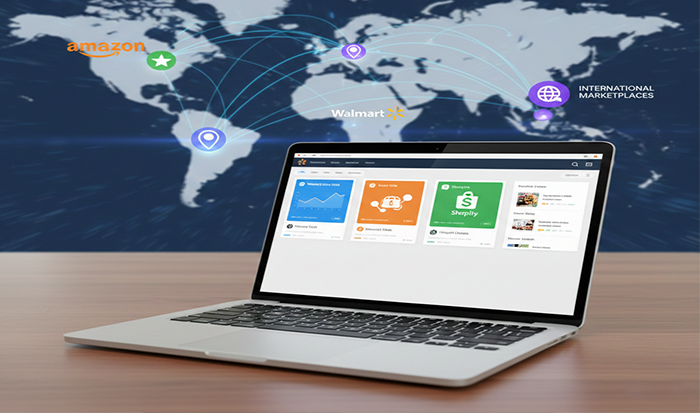
With Pan-EU Fulfillment, your products can be stored centrally and can be distributed across various platforms. Thus, giving you reach and lowering shipping costs.
But, expansion needs compliance with VAT rules, product certifications and translations. Brands are ready for multi-country logistics which benefits the European markets.
UAE, KSA, CA, MX, AU
Australia, Canada, and Mexico provide easier access because their products frequently need little alteration. Here, growth lowers the risk associated with a single-market reliance and diversifies revenue.
Multichannel expansion (Walmart, TikTok Shop, Shopify)
When combined with influencer content, TikTok Shop can increase impulse purchases on a large scale. You have complete control over customer data, branding, and retention with Shopify. Long-term profitability and resilience are enhanced by a well-balanced channel mix.
When expansion is beneficial vs. destructive
By dividing attention and stretching resources, expansion becomes detrimental if your primary marketplace is still unstable—frequent stockouts, inconsistent rankings, or high TACOS.
Only enter new markets if you can continue to perform at your current level without sacrificing anything.
Managing multi-marketplace PPC and logistics
Financial Management for Scaling
Understanding profit margins at scale
To stay healthy, you must track margins at three distinct levels:
- Gross Margin: Product Cost + Landed Cost vs. Sales Price. (Your baseline profit before selling fees.)
- Contribution Margin: After Amazon Fees + Advertising. (Your channel-specific profit.)
- Net Margin: After ALL Overhead, Payroll, and Logistics. (Your ultimate bottom line.)
The Goal: Know your numbers by SKU, by marketplace, and by campaign. Clarity reveals which products drive real growth and which ones are dragging you down.
Managing cash flow for rapid growth
The Fix:
- Forecast precisely based on velocity and seasonality.
- Maintain buffer stock for emergencies.
- Plan Purchase Orders (POs) 60–120 days out.
- Use tools to map future cash requirements and anticipate crunches.
Why it Matters: A predictable cash flow cycle protects you from stockouts and rank decay during peak demand.
Calculating true TACOS and blended ROAS
- TACOS shows how paid ads support total revenue.
- Blended ROAS combines Amazon ads, and total sales uplift.
As your brand strengthens, TACOS should also stabilize or decrease. This also depends on the ads spent, because organic sales rise from improved visibility. Tracking blended metrics help in preventing overspending and keeping ad strategy aligned with profitability.
When to reinvest vs. when to pull profit
- Core listings have strong organic ranking
- Inventory cycles are stable
- Cash reserves cover at least one full reorder cycle
This ensures you’re not compromising future growth for short-term withdrawals.
How to secure funding (loans, Amazon Lending, growth capital)
- Amazon Lending – fast approval process with fixed repayment schedule;
- Bank loans – ideal for companies looking to pay the lowest amount of interest, as well as those with a long-term growth strategy;
- Revenue-based financing – repayment process is flexible and directly related to sales;
- Growth capital and Investor Funding – companies looking to aggressively expand will benefit most from these forms of capital.
The type of funding you choose for your company should be based on what works best for your business’s financial cycle and will not create a drain on your cash flow when used.
Creating an effective capital structure can allow for much faster growth, allow for an increased number of SKUs, and increase the percentage of the overall market captured while remaining operationally efficient.
Avoiding the Most Common Scaling Mistakes

So, before aggressively scaling, make sure to validate profitability at contribution level. After ads, fees and logistics this is the thing. If margins shrink as volume is high, growth becomes unsustainable.
- Over-reliance on one hero SKU: Depending majority on a single top-selling product keeps your entire business at risk. A competitor, or supply chain issue can eliminate revenue overnight. Build a balanced catalog with complementary SKUs to help in protecting your growth.
- No operational systems: Scaling helps in amplifying inefficiency. Without SOPs, task delegations and workflows, daily operations become difficult as order volume increases. Systems help in creating structure, and reducing errors and freeing up your time that helps in focussing on strategy instead of firefighting.
- Poor supply chain planning: Many sellers underestimate lead times, peak-season surges. The result: stockouts that destroy ranking and invites competitors to take over everything. Accurate forecasting and multiple suppliers help in maintaining inventory continuity.
- Overspending on PPC: Rapid scaling often leads to over-aggressive PPC spend which in turn inflates TACOS and eats into margins. Ads should support organic growth, and should not replace it. Tracking helps in blending metrics and allocating budget to campaigns that give profitable velocity.
- Ignoring product quality: Sales can grow quickly, but if quality declines, reviews also drop. Also, recovering from bad reviews/ ratings is difficult. Maintaining proper quality assurance procedures, as well as implementing a proactive means of satisfying your customer needs, assures that your business is meeting the challenges of delivering products and services on time.
- Additionally, it has been shown that a lack of excellence in delivering an enjoyable customer experience can lead to greater than average return rates and an increased likelihood of receiving negative feedback from customers regarding your products. As a result, the experience of customers should continually progress as you experience business growth and expansion to build strong customer loyalty.
- Not tracking key metrics: Scaling blindly is very expensive, Monitor unit TACOS, conversion rate, and organic ranking. Consistent tracking highlights opportunities, and guides strategic decisions.
Creating a Long-Term Scaling Roadmap
Breaking them into quarterly goals helps in focussing on product launches and operational upgrades. Quarterly planning helps in growth control and being resilient.
Creating repeatable systems
Identifying bottlenecks
When to add new SKUs
Introduce SKUs that enhance your winners, address other client needs, or generate opportunities for bundles. Strategic growth increases lifetime value and strengthens defensibility.
When to expand vs. optimize
Prior to growing, optimise. Expansion will increase losses if your TACOS is erratic, margins are thin, or listings convert poorly. Expand into new marketplaces or categories after core listings are steady and cash flow is predictable.
Building a sustainable growth cycle
Preparing the business for eventual valuation or sale
Keeping your documentation, SOPs and financial statements organised is crucial. Improve profitability and maintain ranking stability.
Conclusion

To scale your Amazon business, you should not take one large, explosive action but rather implement small and consistent actions that occur in all aspects (product, operations, marketing, and finance) of your business.
The entire guide has provided you with a complete picture of how to achieve sustainable growth by establishing a sound foundation and creating a strong engine for growth.
Each individual component of your business has been explained and how to complement each of them: optimizing your listings, diversifying your traffic, building a defensible product, streamlining your operations, entering new marketplaces, and establishing financial control.
Growth requires more than ambition. You must put a system in place to eliminate disorganization, make informed decisions that help protect your profit margins, and show consistent performance in all areas including your PPC bids, supply chain reliability, and customer service.
Successful sellers view their brand as an asset that can continue to develop over the long-term rather than simply making money as quickly as possible.
Scaling a brand is not a ‘fast’ process, scaling must be done thoughtfully & methodically, so take your time to establish a strong foundation for your business before trying to grow.
You should also build a team and create the necessary processes to support the level of expansion you plan to have. As you continue to grow your business, you will have many more opportunities to develop new products, scope into new markets, and expand your reach to a larger & new audience.
When scaling your business, always remember: Sustainable Scales happen through calculated progression through mastering core concepts, consistency, and building a brand with lasting power.
Establishing a system for your Amazon businesses that is well-established will allow your Amazon businesses to grow into much larger brands than what you ever imagined.


 Back to top
Thought Leadership, Tips, and Tricks
Never miss insights into the Amazon selling space by signing up for our email list!
