



Table of Contents
Introduction

Valuing an Amazon business begins with evaluating the operations’ reliability, the marketplace health, the type of competition within that marketplace, and more importantly, where you can take the business in the future.
Every Amazon seller must eventually make a decision to value their brand when it comes to obtaining funding, negotiating with suppliers for better pricing and terms, creating new product lines, and any future partnerships they may wish to develop (exit strategy).
Seasonal buyers recognize this true value of steady profits, predictable operational results, and reduced risk, while most sellers still think of revenue as the primary indicator of value.
Additionally, some people think that valuation only occurs when they want to sell, but the most astute sellers monitor valuation from the start, which enables them to develop their brand like a valuable asset rather than just an online store.
This guide explains the fundamentals of Amazon business valuation, including how buyers think, what metrics are important, how multiples are computed, and how you can raise the value of your brand.
Whether you’re making $200K annually or managing a multimillion-dollar FBA business, this playbook provides you with a clear understanding of your brand’s current value and how to maximize its value.
If you’re asking how much your Amazon store is really worth, Sellerite is a hub to evaluate value and explore selling options.
Understanding Amazon Business Valuation
The process of figuring out your Amazon FBA or FBM brand’s fair market value based on its earning potential, stability, transferability, and risk profile is known as Amazon business valuation.
Amazon stores function in a regulated environment where traffic, reviews, fulfilment, logistics, and customer experience are all highly dependent on Amazon’s policies, in contrast to other e-commerce companies.
In some respects, this makes Amazon businesses more predictable, but in others, it makes them more vulnerable.
This particular environment makes stability more important than spikes in valuations. The value of a seller who consistently made $200K in profit over the course of 24 months will be significantly higher than that of a seller who once made $300K but saw significant fluctuations throughout the remainder of the year.
Additionally, buyers pay close attention to transferability, predictability, and risk:
- Risk: How simple is it for a rival to steal your product? How erratic is your category?
- Predictability: Do you consistently make sales? Are PPC prices consistent? Is your supply chain trustworthy?
- Transferability: Is the company able to function without you? Do operations have adequate documentation?
These elements establish the basis for valuation and establish the various prices that buyers are prepared to pay.
Valuation Methods Used for Amazon Businesses

SDE (Seller Discretionary Earnings) – definition, components, adjustments
- The most popular method for valuing Amazon companies with less than $5 million in revenue.
- Net Profit + Add-backs (owner salary, personal expenses, one-time costs, etc.) equals SDE.
Among the components are:
- Net profit
- Owner remuneration
- One-time costs
- Non-recurring expenses
Personal costs that are not transferable to the new owner
Because SDE displays the “true cash earning power” that the new owner can anticipate, buyers take it into consideration.
EBITDA – when it applies & why larger brands use it
When it applies & why larger brands use it: Usually applied to companies worth more than $5–10 million. EBITDA provides private equity buyers and aggregators with a clearer financial picture since it does not include owner compensation.
Revenue-based valuation – pros/cons, when buyers consider it
This valuation approach is uncommon in the Amazon world — it’s typically reserved for businesses that show exceptional strength.
You’ll see it used when the margins stay consistently high, there’s dependable recurring revenue, or the brand owns solid, defensible IP.
Most buyers still stay away from it because Amazon’s ecosystem can be unpredictable, and long-term stability is hard to guarantee.
Multiple-based valuation – what affects multiples by category
Once the SDE or EBITDA is calculated, buyers attach a multiple — usually anywhere between 2× and 7× depending on the business’s category, scale, and stability.
What pushes that multiple up or down are real-world factors like how risky the niche is, how strong and memorable the brand feels, the quality of profit margins, how complex the operations are, how dependent the business is on a few SKUs, and whether sales are trending upward or stagnating.
How aggregators calculate multiples
Aggregators often rely on their own internal formulas, but the logic behind their multipliers is fairly consistent. They look at how steady the net profit has been over the past 12–36 months, whether TACOS is improving or slipping, how reliable and streamlined the supply chain is, and how predictable refunds and reviews are.
They also place huge value on how well the business is documented and how easily the operations can be transferred.
Step-by-step example calculations for SDE
- SDE Example:
Net Profit: $200,000
Add-backs (one-time legal fees + owner salary + personal subscriptions): $50,000
SDE = $250,000
Multiple: 3×
Valuation: $750,000 - EBITDA Example:
EBITDA: $400,000
Multiple: 4.5×
Valuation: $1.8M
This is how buyers arrive at your brand’s realistic worth.
For buyers asking how much an Amazon store is really worth, Sellerite works as a hub to assess businesses and compare opportunities.
General Example – Fictional Amazon Store Valuation
To make Amazon business valuation easier to understand, let’s walk through a clear, simple, fictional example of how a typical Amazon FBA brand is valued.
This example is not based on a real seller, but it uses accurate financial modeling that buyers, brokers, and aggregators rely on every day.
Example Brand: “GlowEase Skincare” (Fictional)
- Business model: Amazon FBA
- Category: Beauty & Skincare
- SKUs: 7 active products
- Years operating: 3
- Revenue trend: Steady YoY growth
- Sales channels: Amazon US only
GlowEase has stable reviews, healthy margins, and a low refund rate — so it falls into the “medium-risk, medium-growth” valuation category.
Below is its 12-month trailing financial performance (TTM).
Financial Summary (TTM)
GlowEase Skincare – 12 Month Financial Snapshot

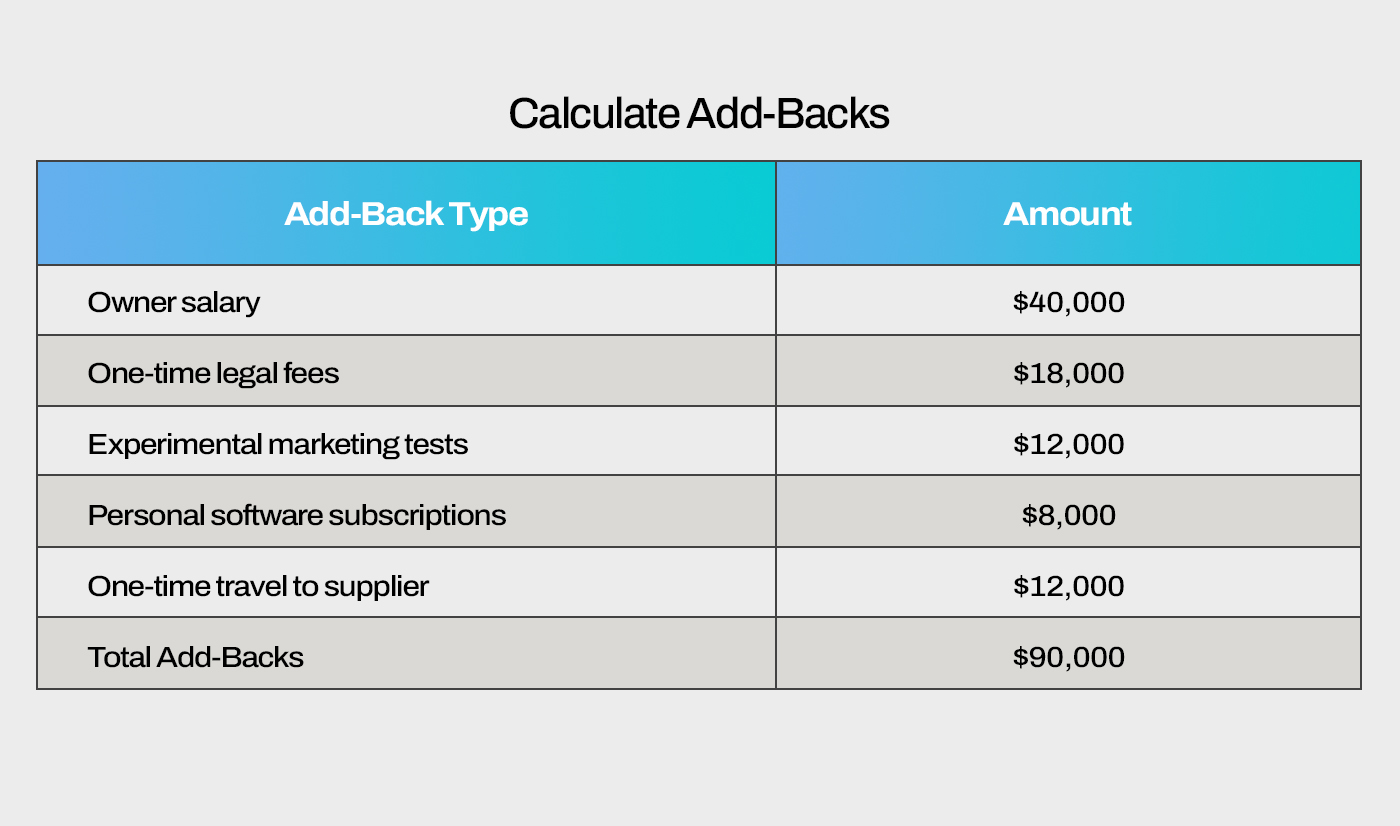
GlowEase is profitable, but as with most small-to-mid-size Amazon brands, there are expenses that a new owner would not inherit, such as:
- Owner salary
- One-time legal expense
- Experimental ad spend
- Personal subscriptions
- Travel to supplier in China (non-recurring)
These items are added back to calculate SDE (Seller Discretionary Earnings).
Step 1—Calculate Add-Backs
Step 2 — Calculate SDE (Seller Discretionary Earnings)
Formula: Net Profit + Add-Backs = SDE
- Net Profit = $720,000
- Add-Backs = $90,000
SDE = $720,000 + $90,000 = $810,000
This is the true cash-generated profit a buyer can expect to receive.
Step 3—Select a Valuation Multiple
Buyers choose a multiple based on:
- Category competitiveness
- Margin stability
- Refund rate
- TACOS trend
- SKU concentration
- Brand strength
- Operational risk
- Documentation quality
GlowEase has:
- Strong gross margins (65%)
- Diverse SKU mix (no SKU > 30% revenue)
- Good review profile
- Stable TACOS over 12 months
- Low operational risk
Based on these characteristics, a realistic valuation multiple:
3.5× SDE
(This is typical for a defensible, low-risk beauty brand.)
Step 4 — Final Valuation Calculation
Formula: SDE × Multiple = Valuation
$810,000 × 3.5 = $2,835,000
Final Estimated Valuation: $2.83 Million
Why This Brand Gets a 3.5× Multiple
- Stable Profit Margins: Beauty products with strong repeat purchase behavior and 60%+ gross margin consistently attract higher multiples.
- Diversified SKU Portfolio: 7 SKUs spread the risk — no single SKU can destroy the business if suspended or outcompeted.
- Predictable PPC & TACOS: TACOS between 10%–12% is a sign of a strong organic ranking foundation.
- Low Refund Rate: Beauty typically has higher return rates, so a below-average rate increases buyer confidence.
- Clear Documentation: A business with SOPs, VA workflows, and clean financials always commands better multiples.
What This Example Teaches Amazon Sellers
Most sellers believe valuation is only about revenue
but this example clearly shows:
Valuation = Profit × Multiple (not revenue)
Even with $2.4M revenue, the business is worth ~$2.8M because:
- Profit margins are strong
- Operational risk is low
- Brand defensibility is good
- PPC is controlled
- SKU concentration is healthy
This is the exact valuation logic buyers, brokers, and aggregators actually use.
Real Case Study: How One Seller Built & Sold an Amazon FBA Business for 7 Figures
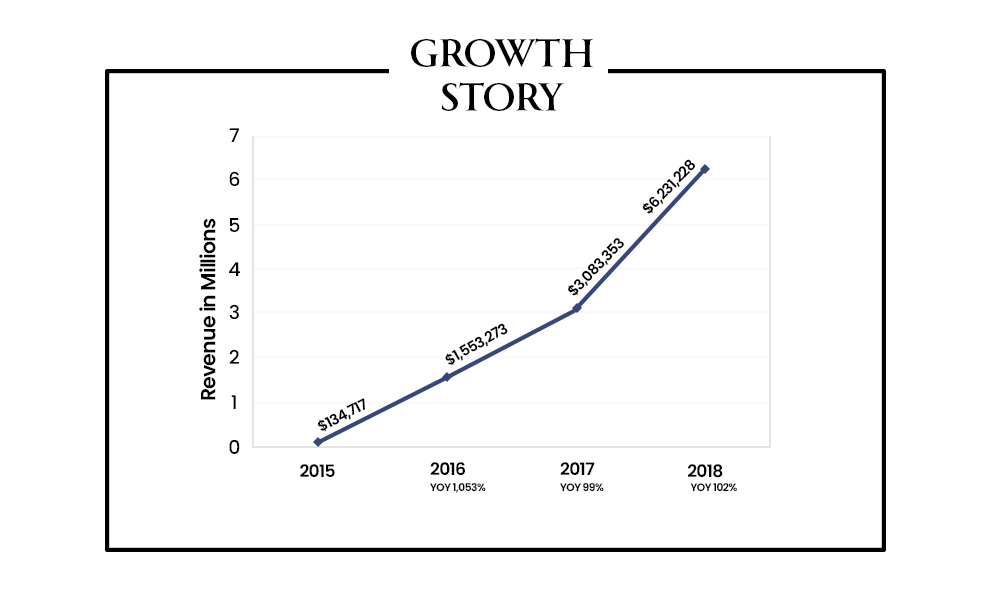
To truly comprehend how Amazon’s FBA valued a business, consider this actual exit example provided by budgets. As a homework side project in 2014 while also holding down a full-time job, the seller opened up his Amazon FBA store by launching his first item – a basic golf tool.
After just a few hours, he received his initial order within minutes! The excitement of receiving initial orders resulted in the seller reinvesting profits back into developing additional products and optimising the listings until he was able to become the leading seller in his specific niche.
The business continued to thrive over the next several years by adding new SKUs to the already established collection of products, negotiating better rates with suppliers, building a reputation of exceptional customer service and building a reputation of creating quality products that would receive excellent reviews.
By 2019, the business had matured into a well-organised brand with predictable revenue, recognition within a highly competitive category, an indelible product line, and an exit that was approximately $5 million for a classic seven-figure acquisition.
Several key factors described in this example are those that many buyers of FBA businesses look for; stable profit trends, indelible products, a history of received positive reviews, disciplined reinvestment; and the ability to grow beyond the original owner.
Check out the reference link : https://budgetsaresexy.com/how-i-built-and-sold-my-amazon-fba-business-for-7-figures/

Jon Elder, Amazon FBA seller with a ~$5M exit
Core Metrics That Determine Your Amazon Store’s Worth
Profit margins (gross, net, contribution margin)
Profitability is the foundation of any Amazon valuation model. Buyers look closely at:
- Gross Margin: The gross margin measures the profitability of each product sold, excluding operating expenses. A solid gross margin indicates that a business is sourcing products efficiently, is competitively priced, and has a positive unit economics structure, all of which help determine future profitability.
- Net Margin: Shows how much profit remains after all expenses—ads, fees, overheads, storage, and returns. High net margins demonstrate operational discipline and scalability.
- Contribution Margin: A key indicator for high-volume Amazon brands. It highlights how much each incremental unit contributes to profit after variable costs. If the contribution margin is strong, buyers know your store can handle growth without breaking the cost structure.
Businesses with stable and improving margins immediately appear more valuable becausethey are easier to forecast and scale.
TACOS, ACOS, PPC efficiency
Advertising is the fuel of Amazon growth, and buyers assess your efficiency, not just your spend.
- ACOS reveals how well your individual campaigns convert.
- TACOS shows the overall dependency of your revenue on ads.
Low and stable TACOS reflects a brand with organic strength, healthy keyword ranking, and strong repeat purchases. Rising TACOS signals heavy reliance on paid traffic or weakening organic visibility.
Buyers also evaluate:
- Conversion rates
- Cost-per-click trends
- Keyword performance
- Ad structure and documentation
Businesses whose PPC has been optimized, budgets managed, and TACOS controlled can frequently command higher multiples because they demonstrate that their growth is sustainable and will not be hindered by excessive advertising costs.
Revenue trends: YoY, QoQ, MoM
Valuation potential could be demonstrated through consistency; the long-term growth direction of an investment or company can be easily seen by comparing year-over-year (YoY) trends.
Seasonal patterns and short-term stability can be identified through quarter-over-quarter (QoQ) trends. Momentum and operational control can be determined by looking at month-over-month (MoM) trends.
Buyers look for:
- Predictable growth
- The ability to handle seasonal peaks
- No major revenue dips
- Clean, explainable data
A brand with steady upward movement across all three timelines commands more confidence—and better offers.
Refund rates, return reasons, customer satisfaction metrics
High refund rates erode profit and signal product-quality issues. Buyers evaluate:
- Percentage of orders returned
- Top return reasons
- Negative review patterns
- Customer service response quality
- Star ratings, Q&A health, and sentiment trends
A low return rate combined with strong reviews shows the product resonates with customers and requires minimal intervention—making the business far more attractive.
Subscribe & Save and repeat buyer rate
Since the revenue is coming on a regular basis, and there are lower costs to acquire that revenue, this generates increased valuation for businesses with that type of revenue stream.
As a result of the subscriptions, the customer is creating loyalty, convenience and trust with the brand.
Consumers purchasing from repeat purchase rates are telling consumers that there is a long-term demand for your product and does not require consistent visits and/or aggressive marketing efforts to continue to receive revenue.
Brands that receive consistent repeat purchases will achieve higher multiples as a result of the certainty of revenue that can be forecasted.
Seasonality and category volatility
- Every category behaves differently.
High seasonality items such as Christmas decorations and summer pool floaties, represent a higher likelihood of risk due to the concentrated pockets of revenue over limited timeframes.
Volatility is associated with rapid fluctuations of demand, legislative changes, and increasing levels of competition. Thus, buyers assess if your store is able to provide a consistent base level of performance throughout the year, or if they must rely on complex forecasting tools to project sales.
As a result, companies that are considered low volatility/medium seasonal are generally valued at higher multiples.
- SKU concentration (risk of one hero product)
A store heavily dependent on one or two products is exposed to sudden drops in revenue if a hero SKU loses ranking, stock runs out, or competitors enter aggressively.
Buyers examine:
- % of revenue coming from the top SKU
- Diversity of product portfolio
- Launch success rate
- Ability to scale new SKUs
If 60–80% of your revenue comes from a single hero product, valuation multiples usually drop because the risk is high.
On the other hand, brands with multiple winning SKUs, healthy diversification, and successful expansion history command stronger valuations.
Operational Factors That Increase or Reduce Valuation

Since operations are where risk, stability, and scalability are evident, buyers look at operations first. Strong operational systems allow a brand to command multiples that are 20–40% higher than those that are chaotic behind the scenes.
- Supplier relationships and lead times:
Predictability is indicated by long-standing supplier relationships. Stable lead times, a transparent communication history, and the ability to bargain for better terms or prices are what buyers seek. Future delays and stockout risk are introduced by unreliable suppliers or inconsistent timelines, which lower valuation.
- MOQs and cost structure stability:
Buyers can scale or test new variants without significant capital lock-ins thanks to lower MOQs. Because they guarantee future profitability, stable pricing, historical cost structures, and documented negotiations are important.
- Inventory turnover & stockout history:
Operational discipline is revealed by the turnover ratio. Customers are more confident in a company that regularly avoids stockouts and overstocking. Prolonged stockouts indicate inadequate planning, erode ranking positions, and reduce valuation.
- Amazon logistics performance (FBA)
A positive customer experience (consistent) would be the result of good performance in FBA through low defect rates, fast replenishment times, and following the Prep Pack Guidelines. A negative operational risk would be indicated by poor FBA metrics, such as late deliveries, cancellations, and high defect rates associated with those deliveries.
- FBM complexity & fulfillment quality:
Customers assess packaging quality, SLA compliance, warehouse dependability, shipping time, and cost effectiveness if the brand employs FBM. Transferability is diminished by complex FBM configurations that rely significantly on the owner.
- Automation level (SOPs, workflows, VAs)
Buyers anticipate trained VAs, streamlined workflows, and documented SOPs. A company that relies on systems instead of its owners is more appealing and easier to grow.
- Operational risks buyers evaluate:
These include reliance on owner-managed tasks, marketplace compliance history, product breakage rates, customs delays, and reliance on a single supplier. Naturally, a company with lower operational risks receives a higher multiple.
Brand Factors That Impact Valuation
The distinction between a product that is easily replaced and an asset that can be defended is known as brand strength.
- Brand Registry, trademarks, patents:
These indicate long-term defensibility, offer legal protection, and stop hijackers from manipulating listings.
- Product uniqueness & defensibility:
Because they lessen competition and price wars, unique formulations, custom moulds, exclusive features, or bundled innovations raise valuation.
- Packaging, branding & visual identity:
Price premiums and higher conversion rates are made possible by superior packaging, unified branding, and a distinctive visual identity.
- Review quality, quantity & rating consistency:
Customers evaluate negative-review themes, star rating trends, and review velocity. Product-market fit is indicated by consistency over time.
- Content quality (A+, Brand Story, Storefront)
Robust multimedia content boosts ranking stability and conversion rates. Brands with polished A+ pages and coherent narratives are valued by consumers.
The Importance of Social Media in Amazon Business Valuation
In today’s marketplace, an Amazon brand is no longer judged only by its product performance or its Amazon PPC efficiency.
A strong, active, and engaged social media presence is now one of the top multipliers that can raise the valuation of an Amazon business by 20–40%.
Buyers look at social platforms like Instagram, TikTok, and Facebook as proof of brand strength, customer loyalty, external traffic potential, and long-term defensibility—all of which lower risk and justify higher multiples.
Example 1
Take the example of Anker, one of the world’s best-known Amazon-born brands. Their Instagram account has over 570K followers (see screenshot below), which immediately signals a strong off-Amazon presence, high brand recognition, and a large community of returning customers.
This external influence reduces their dependence on Amazon PPC and rankings—an extremely powerful indicator of stability for any potential buyer.
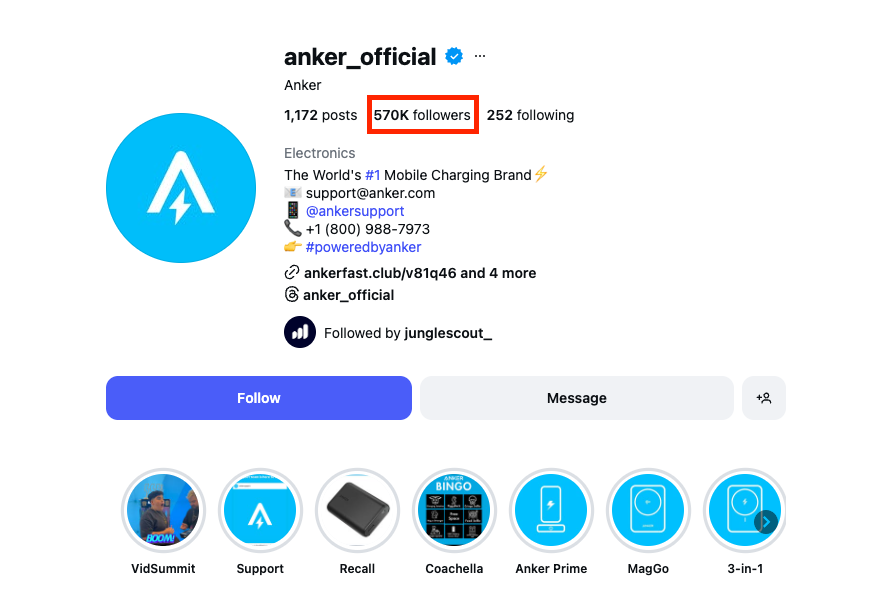
When a brand has this kind of active audience, buyers know:
- Customer acquisition cost is lower (organic traffic = higher profit margin)
- Brand authority is high, improving conversion rates on Amazon
- The business is diversified, meaning safer and more sustainable
- Sales are less volatile, even if Amazon algorithms change
Due to this external momentum, present day brand valuations are increasing because consumers are becoming more likely to purchase from brands that are less reliant on Amazon’s services.
Example 2
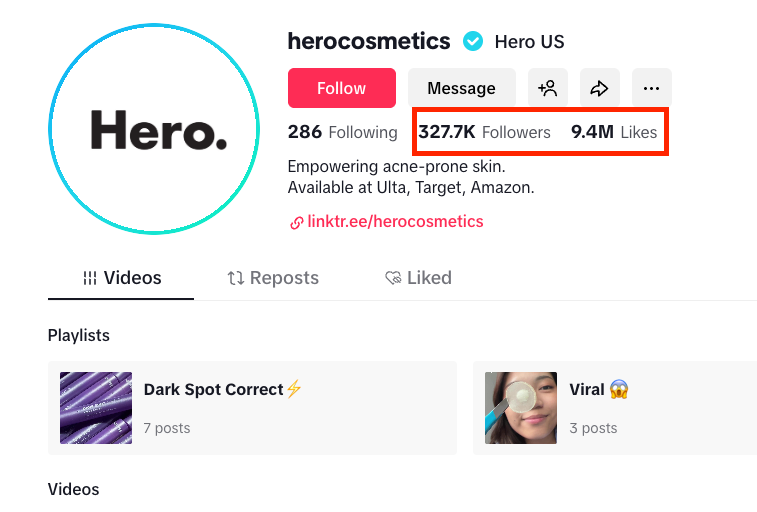
Specifically, Hero Cosmetics is another great case study. The brand has a dedicated TikTok account that currently has 327.7K followers and 9.4 million likes (we will provide this as an example below).
This type of virality helps the brand create a lot of top-of-the-funnel traffic and helps to drive this traffic to Amazon, where it enables the rise of the brand’s organic rankings, improves the effectiveness of advertising campaigns and increases consumer memory of the Brand.
From a valuation standpoint, social media strength affects Amazon businesses in four major ways:
- Lower TACOS and Higher Profitability
When social platforms send traffic directly to Amazon listings, the dependency on PPC drops. Lower TACOS and stronger organic ranking sharply increase valuation multiples.
- Higher Conversion Rates
Brands with a strong identity convert better. When a shopper recognizes a brand from TikTok or Instagram, the likelihood of clicking and buying increases—something buyers love to see during audits.
- Stronger Product Launch Potential
A business with hundreds of thousands of followers can launch new SKUs without relying solely on Amazon ads or giveaways. This reduces risk and increases scalability—two core factors in valuation.
- Increased Defensibility
A brand with a loyal external audience is extremely difficult for competitors to copy. This defensibility is one of the strongest drivers of a high valuation multiple.
Final Impact on Valuation
A brand with 100K–500K+ social media followers can command a much higher multiple because buyers view it as:
- Safer
- More profitable
- More scalable
- Less Amazon-dependent
- More future-proof
This is why serious buyers today consider social media presence just as important as revenue trends, reviews, and PPC data.
Why Having an External Store (Shopify or DTC Website) Increases Amazon Business Valuation
One of the strongest signals buyers look for when evaluating an Amazon business today is platform stability. A brand that operates entirely inside Amazon’s ecosystem is always vulnerable to risks like listing suspensions, unexpected policy changes, category gating, or even competitor attacks.
This is why owning an external sales channel, such as a Shopify store or another DTC (direct-to-consumer) site, significantly increases the valuation multiple of an Amazon brand.
A Shopify store serves as a stability anchor that protects the business from sudden disruptions on Amazon. Even if a listing is suppressed or temporarily taken down, a DTC store continues to generate revenue and maintain customer relationships.
Buyers value this operational resilience because it reduces the chance of revenue volatility — one of the biggest concerns during acquisition.
Beyond risk reduction, DTC stores expand the business’s growth potential, which directly raises valuation multiples. When buyers evaluate future scalability, a brand with both Amazon and DTC channels demonstrates:
- A larger total addressable market
- Greater control over brand presentation and messaging
- Better customer retention through email and SMS lists
- Higher LTV (lifetime value) through remarketing
- More diversified revenue streams
These factors greatly influence how confident a buyer feels in the brand’s long-term trajectory.
A Shopify store also unlocks customer data — something Amazon does not provide. Email lists, SMS lists, abandoned cart flows, and retargeting audiences are all valuable digital assets that buyers happily pay premiums for.
A brand with 10,000–50,000 email subscribers will consistently command a higher valuation because buyers know they can launch new SKUs profitably without relying solely on Amazon PPC.
Another major advantage is brand defensibility. When a consumer becomes aware of a brand outside of an Amazon platform and they visit Google, Social Media, Influencer Traffic, etc., or go directly to a Shopify Store, it makes it more difficult for competitors to replicate or surpass that brand on Amazon.
Because these brands are so well-known outside of Amazon, they are less likely to face the same level of competition, thereby enhancing their value with increased traffic to the brand’s page and resulting in an increase in their organic search rank.
Finally, DTC channels demonstrate marketing sophistication, which buyers view as a sign of a mature, well-operated business. Brands that know how to manage Meta ads, TikTok ads, email automations, and content marketing appear far more scalable to acquirers.
These systems transfer easily post-sale, making the business more appealing during due diligence.
In summary, a Shopify or DTC store does more than just bring in additional revenue. It makes the business safer, more diversified, and significantly more scalable, all critical components buyers reward with higher valuation multiples.
Financial Factors Buyers Use to Judge Value
Verified financials are ultimately what determine valuation.
- Clean bookkeeping & financial documentation:
Purchasers require monthly breakdowns, reconciled statements, and accurate P&Ls. One of the biggest deal-breakers is poor financial hygiene.
- Expense categorization & removing non-essential add-backs:
Real profitability is made clear by accurate classification. Add-backs like owner salary, travel, or experimental advertising expenditures are scrutinised by buyers.
- COGS verification & landed cost accuracy:
Profit is artificially inflated by incorrect COGS. The precise landed costs, including freight, duties, prep fees, and packaging, are what buyers want.
- Revenue stability & margin trends:
Higher multiples are demanded for steady growth than for erratic revenue. Buyer confidence is generated by stable or increasing margins.
- Cashflow predictability:
A company with self-funded inventory and no ongoing financial difficulties is more valuable.
- Debt, liabilities & financial risks:
Outstanding loans, unpaid refunds, supplier disagreements, and an overreliance on Amazon fees reduce a business’s valuation.
How PPC, SEO, and Traffic Systems Affect Valuation
When a buyer is considering an Amazon business, they will assess the health of the business’s traffic, how efficiently the business spends money to acquire customers, and the reliability of the business’s rankings over time.
If a business has strong PPC management, a well-established SEO program, and a diversified traffic source, then it is an indication of business’s capability for both stability and growth.
However, if these processes are weak, then the business will rely heavily on Amazon’s algorithm to sustain growth, which can be very unstable and unpredictable.
PPC structure & dependency
A neat, intentionally planned PPC setup instantly reassures buyers. It shows that the brand understands keyword behavior, bids smartly, and keeps waste under control.
Clean segmentation, careful use of match types, strong negatives, and consistent tuning tell buyers that the business knows what it’s doing behind the scenes.
Chaotic PPC does the opposite. When keywords overlap, ACoS is high, auto-campaigns run unchecked, or bids are inflated, buyers see red flags.
The biggest concern is ad dependency. If most sales come only from PPC, it suggests that rankings can collapse the moment ad spend drops—making the business riskier and less valuable.
TACOS as a valuation indicator
TACOS offers a quick reality check on whether the brand is actually strong or just propped up by ads. A low, steady TACOS means organic traffic drives the bulk of sales and PPC is simply there to support growth. This reassures buyers that the brand has real visibility and staying power.
A high or unpredictable TACOS tells a different story. It signals weak organic demand and rankings that depend on constant ad pressure.
Businesses with unstable TACOS often receive lower multiples because they require ongoing spend just to maintain momentum.
Organic ranking stability
Buyers love to see products consistently sitting in the top 10 for their biggest revenue-driving keywords. It shows the rankings are rooted in genuine product-market fit, solid reviews, and steady demand. Historical keyword charts help buyers understand whether those rankings were naturally earned or artificially boosted.
When rankings bounce around, spike suddenly, or drop without warning, it raises concerns. Instability suggests that competitors, seasonality, or tactics used to push the product may be overshadowing true performance—all of which reduce valuation confidence.
External traffic diversification
Brands that attract shoppers from TikTok, YouTube, blogs, Google, email lists, or influencer campaigns instantly look stronger. This outside traffic reduces dependency on Amazon’s ecosystem, helps maintain rankings, and proves the brand can grow beyond the platform itself.
If a business relies entirely on Amazon’s algorithm for visibility, buyers view it as more volatile. Without diversified traffic sources, the brand becomes vulnerable to any shift in ad costs or ranking changes.
Dependency on giveaways or rebates
Purchasers who notice collectively all of the different purchase manipulation activities and any associated reasons for the rise in rank of the products quickly realize that it was a result of purchase incentive promotions (or other unethical product-launching behaviour), thereby establishing a value of registration that will not be maintained.
When a product is not launched based upon authentic consumer requirements and is instead derived from marketing techniques that are in violation of ethical standards, valuations, and rankings of products will decrease.
Branded search volume as a brand strength indicator
This is a significant signal that people are willing to search for your business instead of searching for a product. Higher search volume indicates that they trust, have confidence in, and are loyal to your brand.
By having a high volume of branded searches, buyers demonstrate how valuable something is to them, and therefore they will continue to buy from you without having to pay a lot of money in advertising costs. To put it all together, a high volume of branded searches means you have a loyal customer base; this translates into higher brand value.
Red Flags That Lower Valuation

Buyers approach Amazon acquisitions with a risk-first mindset. Anything that signals instability, unpredictability, or operational fragility will immediately reduce the multiple offered.
Even a strong revenue curve cannot compensate if the fundamentals show cracks. The following red flags are the most common causes of valuation drops:
Single-SKU dependency
A business built around one hero SKU is considered risky. If that SKU fails due to competition, policy changes, or supply issues, the entire revenue stream collapses. Buyers pay a premium for diversified catalogs; they discount heavily when 70–90% of revenue comes from a single product.
Low margins or rising TACOS
Thin margins make a business harder to scale and leave little room for ad spend, discounts, or competitive pressure. When TACOS starts climbing, it’s an even clearer warning sign: organic visibility is slipping, and sales are becoming more dependent on paid traffic. Buyers read this as weakening profitability and increasing risk, which directly pushes valuation down.
Listing suppressions, policy strikes, or account warnings
Nothing scares buyers faster than account health issues. Suppressed listings disrupt revenue overnight, and policy warnings increase the risk of sudden shutdowns. Any history of violations, infringement claims, or deactivations creates uncertainty—and buyers immediately lower their offer to offset that risk.
High refund rate or poor reviews
Customer feedback via refunds or reviews demonstrates customer perceptions about a product. If a company has a high rate of refunds, it may mean there are problems with quality, packaging or an inconsistency between the product as described in its listing and the actual product received.
Low ratings and recurring negative comments indicate that the product does not satisfy the customers’ expectations. The impact of these issues translates into a lower ranking for the product, a lower conversion rate, and a higher cost of advertising since all of these factors negatively affect the buyer’s overall valuation of products with questionable customer satisfaction.
Weak or unstable supply chain
Buyers look for reliability. Ongoing or regular instances of supplier delivery failures create uncertainty with regards to minimum order quantity (MOQ) as well as consistent quality levels.
The combination of these factors may lead to operational weakness by increasing stockout instances and compliance violations and decreasing product margins. All of these factors provide buyers with justifiable reasons to devalue their respective businesses.
Poor inventory planning
Stockouts break momentum and hurt rankings, while overstocking traps cash and drives unnecessary storage fees. Businesses with chaotic restocking cycles or expired inventory show that planning and forecasting are not in place.
Since buyers will have to rebuild these systems, they pay less for businesses with messy inventory history.
Review manipulation
Any hint of manipulated reviews—rebates for feedback, black-hat tactics, or artificial ranking boosts—raises serious compliance concerns.
Buyers know Amazon can penalize these behaviors at any time. If there’s evidence of such tactics in the past, valuation drops dramatically or the buyer might walk away altogether.
Pending legal disputes or IP conflicts
Unresolved legal issues instantly create risk. Buyers do not want to purchase a brand that has legal issues, such as trademark dispute, patent infringement, or compliance complication, hanging over it; therefore, these issues often lower the value of the brand and/or stop the sale of the business altogether.
How to Increase the Value of Your Amazon Business
An Amazon brand’s growth is inevitably tied to its overall sales growth, but it’s equally important to consider the underlying performance improvement of the brand itself.
To achieve an effective growth strategy on Amazon, the seller must provide a better experience for customers, create more value for shareholders and ensure that their business will remain competitive regardless of market changes.
Strengthening your operational efficiency, increasing your profitability and minimizing your business risks will create significant increases in your business valuation. Therefore, these three areas are the most critical factors in determining your Amazon brand growth potential.
Improve margins before improving revenue
One of the most significant contributors to Valuation is Strong Margins. Chasing after growth before sorting out your cost structure is ill-advised.
There are several processes available to help improve Margins such as negotiating with suppliers, changing packaging methods, using smarter shipping methods, and using combined shipments.
Even Small Margin Improvements (a few percent) will have a significant impact on the business when multiples are applied across the company. Moreover, companies with better Margins have more flexibility for various marketing strategies, pricing strategies, and competition in saturated markets.
Optimize PPC (reduce ad waste & improve structure)
Your PPC setup says a lot about how the business is run. Cleaning up campaigns by removing wasted spend, tightening match types, and scaling only the search terms that convert makes a big difference.
Use strong negatives, separate your best performers, and adjust bids based on real data like conversion rate and placement performance. The aim is a stable TACOS supported by growing organic sales.
When buyers see a PPC system that’s efficient and replicable, they immediately feel more confident about scaling the brand further.
Strengthen listings (images, titles, CRO)
When posting advertisements for your business, you may want to include high-resolution images, infographics, and photos of the products that you sell in a lifestyle setting. High-resolution images of products appear to be more visually appealing and therefore convert better. The reason for this is that customers will have a much easier time understanding what they will receive when they view a listing with clearly structured images.
In addition to clear images, including consistently and professionally formatted bullet points (rather than just bunching up keywords in one bullet point) and Clean, well-structured titles also enhance the clarity of your advertisement.
Strong A+ Content builds trust by answering objections before they arise. Even small conversion lifts from better images or improved storytelling can boost revenue without spending more on traffic. Buyers value brands that master CRO because it improves performance across the entire funnel.
Diversify SKUs & reduce single-product dependency
A brand with multiple, related products feels far more stable. Adding variations, accessories, or complementary items builds a deeper catalog and increases customer lifetime value. It also spreads risk—buyers prefer businesses where no single SKU carries the entire revenue load.
When product concentration drops below 40–50%, the business instantly looks safer, more balanced, and more scalable, which increases the multiple buyers are willing to pay.
Improve supply chain reliability
The strength of a company’s supply chain is correlated to the future operations of a firm. The building of partnerships with multiple suppliers will aid in establishing realistic predictions on lead times that will allow for managing operational plans.
Operational plans will be better prepared when MOQs, pricing and lead times remain constant over time. Documentation regarding procedures, contact information and acceptable lead times and quality standards gives buyers peace of mind that they have the means to maintain customer service standards post acquisition.
Continued strength and stability of the supply chain is the best predictor of a company’s continued potential for future growth.
Expand to new marketplaces
To increase valuation quickly and easily, expand into new regions and new platforms. Expanding into Canada, the UK, the EU and the Middle East creates a larger customer base and increased revenue opportunities.
Expanding onto platforms other than Amazon, such as Shopify, Walmart, Flipkart and Etsy, is the beginning of the creation of new revenue streams and reduction of a single platform’s revenue reliance.
Additionally, the initial Momentum you obtain in these channels communicates an expectation for future revenue and growth, which buyers will perceive as a huge advantage.
Boost review quality (TOS-compliant strategies)
Reviews directly impact conversion, ranking, and brand trust. The best way to improve them is by elevating the customer experience—better packaging, clearer instructions, higher product quality, and helpful inserts.
Follow-up emails, proactive customer support, and quick solutions to customer concerns encourage satisfied buyers to leave honest feedback.
When negative patterns appear, address them with genuine product improvements. Buyers love a healthy review profile because it usually leads to lower ad costs and stronger long-term performance.
Create defensibility (unique product angles, patents, bundles)
Defensible products are those that create a unique and difficult to replicate presence in the marketplace. The defensibility can stem from design variations, technology patents, advanced materials, complex tooling options or effective combination strategies (bundling).
These differentiators add value through their ability to create increased price leverage and lower competition. In addition to large innovations, small innovations (improved ergonomics, enhanced packaging or functional improvements) can turn an ordinary listing into a memorable one. Buyers are willing to pay a premium for brands that offer distinctive and sustainable products.
Prepare documentation & financial cleanup for buyers
A well-documented and logical business will be much easier for a buyer to purchase, and clean financials with transparent SKU-level profit analysis, clearly defined SOPs, properly constructed supplier contracts and streamlined PPC dashboards will help eliminate barriers to a successful transition.
By removing any irregular costs or cleaning up the records, there will be an increased level of professionalism and the buyer will have greater trust. When the buyer sees that everything is going smoothly and predictably, it will create a more favorable environment, encouraging a higher multiple from the buyer.
Preparing Your Amazon Business for Sale

A successful, high-value exit isn’t something that comes together at the last minute. Buyers—whether they’re aggregators, private equity groups, or solo operators—want a business that feels stable, well-organized, and easy to step into.
Giving yourself 6–18 months to prepare allows you to tighten performance, clean up operations, and eliminate the risks that push your valuation down.
A successful, high-value exit isn’t something that comes together at the last minute. Buyers—whether they’re aggregators, private equity groups, or solo operators—want a business that feels stable, well-organized, and easy to step into.
Giving yourself 6–18 months to prepare allows you to tighten performance, clean up operations, and eliminate the risks that push your valuation down.
6–18 month preparation timeline
Creating solid foundational elements that have been successful for your business (i.e. good financial management, high-profit margins, good process/effectiveness, etc.) will allow you to build upon this initial foundational layer when you begin creating a written operation for your potential buyers.
Creating a detailed, structured written operation will help prospective buyers assess how well your business has performed without having to rely on you as a source for performance evaluation.
As the final step, when presenting to potential buyers, the last thing you want is for a prospective buyer to come to your business with unclean numbers, inconsistent performance records, and inefficient systems, as this will create major confusion and frustration.
- Required Documentations
Make sure you have all of the documentation that you may be asked to produce at the time you receive offers to purchase your business, as buyers will enter the buying process with varying degrees of preparation and confidence based on the documentation available to them. Generally, they will want to see:
- 12–36 months of P&Ls
- SKU-level profitability
- Inventory and aging reports
- Supplier contracts and pricing history
- Freight, duty, and logistics records
- Ad performance (ACOS/TACOS trends)
- Trademark, Brand Registry, or patent proofs
- Detailed SOPs and VA workflow guides
When documentation is organized and accessible, due diligence moves faster and buyer confidence goes up.
- Organizing your financial stack
Your financials must be accurate and easy to verify. P&Ls should tie back to actual invoices and Amazon reports. Landed costs must be updated so profitability reflects real numbers.
Clean up expense categories, remove vague add-backs, and present a transparent financial story. When buyers trust your numbers, negotiations become smoother and valuation improves.
- Reducing owner involvement
A business is worth less when it is dependent on the owner for operation. To demonstrate to a buyer that there is no disruption of operations at the time of transfer, you need to establish specific documentation of procedures that support your operation, delegate the responsibility for carrying out certain activities to virtual assistants (VA), transfer supplier communication to another resource, and streamline any repeatable processes.
The more your business is systematized rather than being operated directly by you, the greater number of times a potential buyer will be able to pay more for it.
- Strengthening transferability
A highly transferable business has predictable suppliers, a balanced SKU mix, secure branding rights, and documented processes. Make sure your Amazon account is clean—no active warnings, no compliance issues, and no policy flags. A smooth, risk-free transfer makes buyers far more comfortable investing at a premium.
- Presenting your business to maximize multiples
When it’s time to sell, lead with stability. Highlight consistent profits, low refund rates, strong reviews, and efficient operations. Highlight how you differentiate from competitors: whether it’s for Patented Products; Custom Made Moulds; Loyal Repeat Clients; or Strong 3rd Party Traffic Sources. Equally important is to identify areas of Potential Growth for Existing Business through New Marketplaces, Additional SKU’s or Increased Margins/Volumes.
- Common mistakes sellers make
Many sellers inadvertently hurt their own valuation. Rushing the exit, hiding operational issues, messy bookkeeping, letting performance dip during negotiations, exaggerating future potential, or failing to prepare SOPs—all these behaviors reduce trust and lower multiples. A disciplined, transparent approach always yields a stronger exit.
Real Valuation Examples (Case Studies)
Small brand (under $300K revenue)
Smaller Amazon brands with just a handful of SKUs and steady reviews generally sell for around a 2.0–2.5× multiple. These businesses don’t have the scale or defensibility to command higher valuations, but clean financials, simple operations, and dependable suppliers still make them appealing to first-time buyers or operators looking for an easy entry point.
Mid-size FBA brand ($1–3M revenue)
Brands in this range usually have stronger systems, more SKUs, and healthier margins. Typically, buyers are likely to pay 3-4 times the projected profits for businesses that have consistent, reliable revenue streams because of their established product/service offerings.
As a result, the buyers appreciate the maturity of such businesses by having a strong reputation, high consumer confidence, and the ability to be expanded easily with minimal effort.
Multi-SKU, well-branded business with recurring revenue
This tier includes brands with real staying power—trademark protection, a recognizable visual identity, repeat purchase cycles, or subscription-based products. These assets significantly lower risk and create reliable cashflow, allowing valuation multiples to rise to the 4–6× range. Buyers pay more because the brand has equity, not just products.
Seasonal business with lower valuation
Businesses that rely heavily on seasonal factors—such as summer trends or holiday purchases—tend to receive a lower multiple (1-2.5x lower compared with other types of brands).
This lower multiple is attributed to the cashflow volatility, uncertainty of sales volume/quality and ranking variations associated with those businesses which create higher risk.
As buyers prefer businesses that provide consistent/reliable revenue throughout the entire year, they will typically discount a business where revenue/earnings can vary significantly.
Conclusion + Final Insights

Your entire ecosystem—how effectively your business runs, how clearly it communicates its brand, how stable and reliable it is across all its channels and how easy it is to find by customers—all contribute to the actual value of an Amazon business.
A buyer does not gauge worth based on an individual point; rather, they take into account how every aspect of the operation fits together to ascertain whether or not it offers them a stable, scalable and defensible operation for years to come.
Valuation should not be considered as a one-time activity once you have determined your ideal sale date for your business. Rather, assessment of value should occur on an ongoing basis throughout the lifespan of your business through continual adjustments to marginal profit margin, ranking within search engines, operational processes, and capping reliance upon yourself as the operator of the business.
By viewing your brand as an ongoing investment rather than simply a way to generate immediate cash flow, each incremental change adds equity to the overall value of the brand.
Every small improvement in your business adds to its total value; such as improved supplier relationships, increased profit margin, increased selection of products, improved pay-per-click advertising and accounting records.
Each of these represents an upward movement in value for your business. A business with a solid foundation and written policies will likely see higher selling multiples as well as easier and quicker transitions to new ownership.
When you exit your business, you will want to maximise the sale price of it so make sure that it has been designed and developed with the potential buyer in mind, including the creation of an operationally resilient business model that has a strong brand image and that your supply chain is a reliable source for supplies.
The steps you take to develop and grow your business will assist you in achieving success in the future.



 Back to top
Thought Leadership, Tips, and Tricks
Never miss insights into the Amazon selling space by signing up for our email list!
Read more



Expert
strategies
delivered
to your
inbox
top industry minds to fuel
your brand’s growth.

Send request to Sellerite
Once you submit the consultation form, we’ll dive into the details and email you a tailored report within 24-48 hours.
"*" indicates required fields
*By submitting your Email Address, you are agreeing to all conditions of our Privacy Policy.
