



Table of Contents
Introduction

Expanding into emerging markets isn’t a choice anymore for the big players, it’s survival. But while everyone talks about “going global,” Amazon actually does it by breaking the rules of its own playbook. Their secret? They don’t just scale; they adapt until they look like a local startup.
If you’re looking to understand What Is Amazon’s Business Strategy in these tricky territories, you have to look past the website. It’s about being “Glocal.”
Introduction
Amazon wins because it doesn’t force a US model on a market like India or Brazil. In places where people don’t trust credit cards, they literally sent agents to doorsteps to collect cash.
In cities with “un-mappable” narrow streets, they turned local mom-and-pop shops into delivery hubs. This level of Amazon Global Business Strategy is what separates the winners from the companies that just burn through VC cash and exit.
How an Amazon FBA Business Scales Globally

For sellers, the platform is basically a cheat code for international growth. Building an Amazon FBA Business means you aren’t just selling a product; you’re buying into a massive, pre-built trust machine.
- Instant Credibility: When you use FBA, you get that “Prime” badge. In a new market, that badge is a signal to a wary customer that says, “You won’t get scammed here.”
- The Heavy Lifting: You handle the product; Amazon handles the nightmare of international shipping, customs, and those 2:00 AM customer service calls in a different language.
The Amazon Business Marketing Strategy: Solving, Not Selling
Most brands just blast ads. The Amazon Business Marketing Strategy is different, it focuses on removing friction. They look for the “pain point” of a specific region.
Is it slow shipping? High prices? Lack of variety? Whatever it is, they attack that one thing until they become the default option.
The DNA of the Amazon Business Strategy
Amazon’s approach in new territories is a masterclass in patience. While most companies are chasing quarterly profits, the Amazon Global Business Strategy is playing the long game.
They are perfectly comfortable losing money for a decade if it means they’ve built a foundation that no one can knock down later.
- The “Unscripted” Local Touch: In places where addresses are vague or digital payments aren’t trusted, they pivot. They’ve turned local “grocery” store into delivery hubs and embraced cash-on-delivery. This isn’t just logistics; it’s cultural empathy in business form.
- Pricing as a Conversation Starter: They don’t just offer “competitive pricing”, they use it as a tool to gain entry into lives. Once the trust is there, the ecosystem follows.
The Power of an Amazon FBA Business
For the individual seller, this ecosystem is a game-changer. Starting an Amazon FBA Business means you aren’t just selling a product; you’re hitching your wagon to the most sophisticated delivery engine on the planet.
- Trust by Association: In a market where a customer might be wary of a new brand, that “Prime” badge acts as a silent handshake. It says, “We’ve got your back.”
- Scalability Without the Headache: You focus on the product and the story. Amazon handles the warehouse dust and the midnight customs forms. That’s how you grow globally in business without losing your mind.
Decoding the Amazon Business Marketing Strategy

How do they win hearts in a crowded marketplace? The Amazon Business Marketing Strategy isn’t about flashy billboards; it’s about solving friction.
They identify the one thing making people hesitate, maybe it’s slow shipping or a lack of variety and they solve it with brutal efficiency. Their marketing is essentially a promise: “We have removed the hurdles. Now, go ahead and shop.”
Understanding Emerging Markets
Let’s get real about what “emerging markets” actually look like on the ground. We aren’t just talking about dots on a map like India, Brazil, or Indonesia; we’re talking about massive, vibrant populations where the middle class is exploding and everyone is finally getting online.
But here’s the thing: these places are a logistical puzzle. You’ve got price-sensitive shoppers, weird payment barriers, and “last-mile” delivery headaches that would make most CEOs quit. This is where the Amazon Business Strategy shifts from a corporate manual into a survival guide.
Turning Chaos into an Opportunity
When you ask, What is Amazon’s Business Strategy in these regions? It’s not just “copy-paste.” It’s about looking at a problem like a lack of reliable postal codes or a culture that only trusts cash and building a workaround that feels local.
- Solving the Trust Gap: In many of these markets, people are skeptical of digital icons. The Amazon Business Marketing Strategy focuses on building that “handshake” trust through massive customer protection and local language support.
- Infrastructure from Scratch: Where roads are tough or maps are wrong, Amazon builds its own delivery network. This is the core of their Amazon Global Business Strategy owning the problem so they can own the solution.
The Gateway for Global Sellers
For anyone trying to build an Amazon FBA Business, these “challenges” are actually your biggest opening. Because Amazon is doing the heavy lifting of figuring out the taxes and the warehouses, you get to skip the messy parts of international expansion.
- Levelling the Playing Field: Whether you’re a small brand or a big player, the FBA model lets you compete with the same speed and reliability as a local giant.
- Tapping into “Slow Love” Consumers: Despite the rapid growth, these markets still value genuine connection. Sellers who use the Amazon Business Strategy to focus on quality and local relevance rather than just “moving units” are the ones who actually stick.
Amazon Global Business Strategy: The Expansion Blueprint
Localization over Everything
Standardization is the enemy of growth in emerging markets. Amazon swaps “global consistency” for local relevance. This means:
- Speaking the Language: Not just translating words, but understanding the slang, the humor, and the local UI habits.
- Cultural Fast-Forwarding: In the UK, they don’t just run a “Fall Sale” they center their entire year on Christmas. That’s a massive part of the Amazon Business Marketing Strategy; they lean into the festivals that actually matter to the people living there.
Building the Road While You Drive on It
In many emerging markets, the “last mile” of delivery is a total nightmare. To solve this, Amazon builds its own backbone. They set up local fulfillment centers and partner with neighborhood shops to act as pickup points. This infrastructure is exactly what gives an Amazon FBA Business its “unfair” advantage as a seller, you get to use a world-class delivery network in places where even the local mail is hit-or-miss.
The "Pocket-Friendly" Pivot
Let’s be honest: emerging markets are hyper-price-sensitive. The Amazon Business Strategy here is about driving massive volume through Prime subscriptions and constant deals. They make the entry point low so they can become a daily habit rather than a luxury.
Meeting the Money Where It Is
You can’t win in a market if you don’t accept the way people actually pay.
- Cash is King: In many regions, credit cards are rare. Amazon embraced Cash on Delivery (COD) and integrated local systems like UPI in India.
- Flexibility: By offering EMI and local digital wallets, they’ve removed the “payment wall” that stops most eCommerce growth dead in its tracks.
What Is Amazon's Business Strategy for Sellers?

For the entrepreneur, the goal is simple: Easy Onboarding. Amazon invests heavily in training and local seller support. They want you on the platform because your local products give their catalog the variety that keeps customers coming back.
When you launch an Amazon FBA Business, you aren’t just a “vendor” you’re a vital part of a global ecosystem that’s designed to scale as fast as you can source.
Amazon Business Marketing Strategy in Emerging Markets
Let’s be real marketing in a place like India or Brazil isn’t about shiny billboards; it’s about winning a seat at the dinner table. The Amazon Business Marketing Strategy in these regions isn’t just about “data points”, it’s about understanding the heartbeat of the local culture.
When you look at What Is Amazon’s Business Strategy for Growth, it boils down to one thing: being so useful that you become a habit.
Hyper-Local Over "Global"
Amazon doesn’t just run ads; they join the festival. In Nagpur, for example, you’ll see them leaning into the energy of the local festive seasons. This isn’t just a “sale”, it’s an emotional connection.
The Amazon Global Business Strategy works because they don’t treat every country like a carbon copy of the US. They study local shopping quirks and cultural trends until the brand feels like it was born right there in the neighborhood.
Mobile is the Only Screen That Matters
In emerging markets, the “desktop user” is a myth for most of the population. People are skipping computers and going straight to smartphones. Amazon gets this. Their Amazon Business Marketing Strategy focuses on:
- Lightweight Apps: Making sure the app doesn’t crash on a budget phone.
- Speed: Pages that load even when the 5G signal is spotty.
- App-Only Snags: Giving people a reason to keep that icon on their home screen.
The Power of a Familiar Face
Trust is a massive hurdle in new markets. To bridge that gap, Amazon leans on local influencers and regional creators. These aren’t just “celebrities” they are voices people actually trust. By using social commerce, they turn a cold transaction into a recommendation from a “friend.” This ecosystem is a goldmine for anyone running an Amazon FBA Business, because the platform is already doing the hard work of building that mass-market credibility for you.
The Power of a Familiar Face
In regions where people are traditionally wary of being “scammed” online, Amazon wins by being the most reliable person in the room.
- No-Questions-Asked Returns: This removes the “what if?” fear.
- Real Reviews: Letting the community do the talking.
- Buyer Protection: Ensuring that even if a delivery goes sideways, the customer isn’t left hanging.
Key Challenges Amazon Faces in Emerging Markets
Let’s get real: even a giant like Amazon doesn’t have a magic wand. Expanding into emerging markets is a massive, gritty “boots-on-the-ground” hustle. When we ask, What Is Amazon’s Business Strategy for these regions, it’s really a story of how they handle the roadblocks that would make most companies pack up and leave.
It’s one thing to deliver a package in a mapped-out suburb; it’s an entirely different beast to get it to a remote village or a high-density neighborhood with no formal addresses.
The Real-World Hurdles
Even with a world-class Amazon Global Business Strategy, the “last mile” is where the most friction happens. Here is what they are actually up against:
- The Infrastructure Puzzle: In many parts of Brazil, road networks aren’t just “poor” they are unpredictable. Floods, unmapped alleys, and remote locations mean a standard delivery truck isn’t enough. Amazon has had to innovate by using everything from bicycles to neighborhood “Grocery” stores as pickup points just to bridge that gap.
- The “Home Turf” Advantage: Amazon isn’t always the first to the party. Strong local players often have a head start with deep-rooted cultural trust. The Amazon Business Marketing Strategy has to work twice as hard to prove it isn’t just a “foreign invader” but a local ally.
- Red Tape and Regulations: Government policies in emerging markets can change overnight. Whether it’s data localization laws or restrictions on foreign investment, navigating the legal landscape is a constant game of chess for their legal teams.
- The Price-First Mindset: In these economies, brand loyalty is a luxury. If a competitor is five rupees cheaper, the customer will switch. This forces the Amazon Business Strategy to focus on razor-thin margins and massive volume just to stay relevant.
Why This Matters for Your Amazon FBA Business
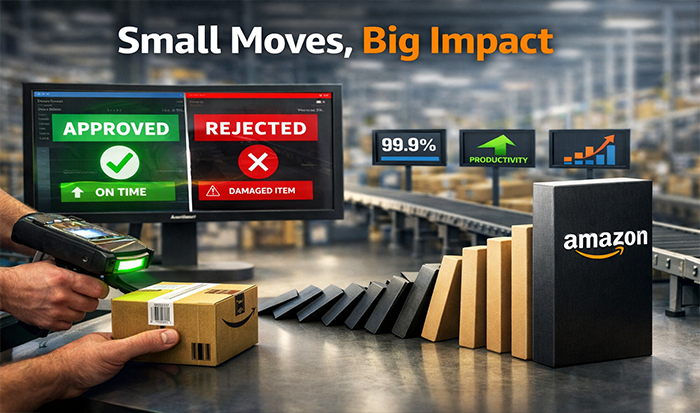
If you’re a seller looking to scale, these challenges are actually your filter. Because Amazon is busy fighting these “big picture” battles lobbying for better regulations and building the warehouses you get to reap the rewards.
- Shared Resilience: When you run an Amazon FBA Business, you aren’t the one worrying about the broken road; Amazon is. You get the benefit of their massive investment in “workarounds.”
- Built-in Credibility: In a price-sensitive market, the “Prime” badge is often the only thing that keeps a customer from jumping to a cheaper, less-reliable site. It provides the “safety net” that local competitors sometimes lack.
How Amazon Overcomes These Challenges
It’s one thing to list challenges, but seeing how a giant like Amazon actually rolls up its sleeves is where the real lessons are. When people ask, “What is Amazon’s Business Strategy for winning in tough markets?”, the answer isn’t “more money,” it’s a radical adaptation. They don’t try to change the country; they change themselves to fit the country.
Here is how they actually turn those “impossible” roadblocks into a roadmap for growth.
The "Glocal" Innovation Playbook
The Amazon Global Business Strategy succeeds because it’s humble enough to learn from the locals. They don’t just build warehouses; they build ecosystems.
- Micro-Warehousing: Instead of just massive hubs, they’ve invested in smaller, local fulfillment centers tucked into the heart of crowded cities. This ensures that an Amazon FBA Business can actually promise “Next Day Delivery” even in places with legendary traffic jams.
- Solving the “Price Wall”: To win over price-sensitive shoppers, the Amazon Business Marketing Strategy focuses on “Lite” versions of their apps and subscription tiers like Prime Shopping Edition. They offer low-cost alternatives that give people the “Prime” experience without the premium price tag.
Why this is a Goldmine for Sellers?
If you are running an Amazon FBA Business, these innovations are your safety net. You aren’t the one negotiating with local transporters or worrying about changing tax laws; Amazon is doing that heavy lifting.
- Leverage the Network: By using FBA, your products are automatically stored in those strategically placed local warehouses.
- Instant Trust: You get to benefit from the Amazon Business Strategy of building deep-rooted local partnerships, giving your brand “local” credibility from day one.
The Final Word

The real Amazon Business Strategy isn’t about being the biggest; it’s about being the most flexible. They win by being the “local” choice in a global market. For any seller, the takeaway is clear: Solve the local friction, and the global scale in business will follow.
FAQs:
1. Can a small seller compete with big brands in a new country?
Yes. With Amazon FBA, customers see the Prime badge not your company size. A product that solves a local need with a relatable listing can compete easily.
2. Why does Amazon offer Cash on Delivery?
In many markets, trust comes first. Cash on Delivery removes buying hesitation by letting customers pay only after receiving the product.
3. Is localization just translation?
No. Localization means adapting to culture, language, festivals, humor, and local context not just translating words.
4. Biggest mistake when going global?
Ignoring the last mile. Delivery challenges in the final few kilometers can make or break reviews and success.
5. Is Amazon FBA still profitable in 2026?
Yes, but margins are tighter. Success now requires real branding, strong visuals, storytelling, and building an audience beyond ads.



 Back to top
Thought Leadership, Tips, and Tricks
Never miss insights into the Amazon selling space by signing up for our email list!
