



Table of Contents
Introduction: Why It’s Time to Expand Beyond Amazon
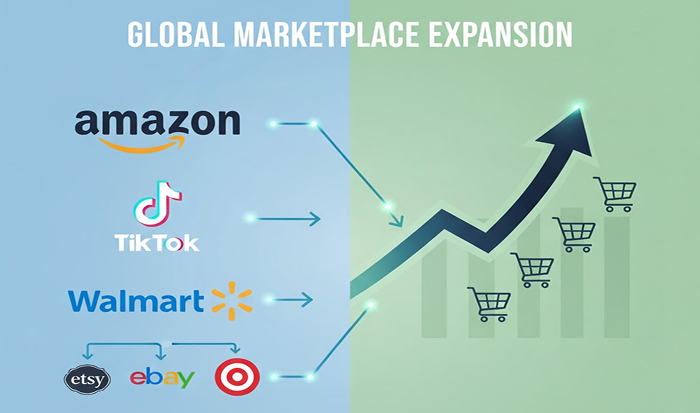
The e-commerce landscape in 2026 has evolved far beyond a single-platform strategy. Amazon, though still the industry giant, no longer defines the full potential of digital commerce. Consumer behavior, social influence, and marketplace innovation have diversified — and so must sellers.
To expand beyond Amazon FBA is no longer optional; it’s a business necessity. Sellers who once relied solely on Amazon’s Fulfillment by Amazon (FBA) ecosystem are now finding growth ceilings, higher fees, and increasing competition.
Meanwhile, emerging marketplaces like TikTok Shop and Walmart Marketplace offer immense new opportunities for traffic, brand visibility, and sales diversification.
Businesses that expand their e-commerce business across multiple platforms are seeing not only better risk distribution but also higher margins and stronger brand equity. In this blog, we’ll explore how to strategically grow beyond Amazon FBA — leveraging TikTok Shop, Walmart, and other rising marketplaces with the help of AI-powered tools like Sellerite.
Understanding the Need for Multi-Channel Selling
In today’s competitive e-commerce landscape, relying solely on Amazon can limit growth and increased risk. Expanding beyond Amazon FBA through multi-channel selling allows brands to reach diverse customer segments, reduce dependency on a single platform, and create multiple revenue streams.
By selling on marketplaces like Walmart, TikTok Shop, and Shopify, businesses can tap into different audiences, experiment with pricing and marketing strategies, and maintain consistent brand visibility.
Multi-channel selling not only drives higher sales but also provides resilience against platform-specific disruptions, ensuring long-term stability and growth.
The Rise of Multi-Marketplace E-Commerce
E-commerce in 2026 thrives on variety. A robust multi-channel e-commerce strategy allows sellers to reach different audiences across platforms, minimizing the risks of algorithm shifts or account suspensions on a single channel.
Diversification reduces risk, stabilizes cash flow, and ensures continuous visibility across customer journeys. By selling on platforms like Walmart, TikTok Shop, and Shopify — alongside Amazon — sellers can expand their e-commerce business while maintaining a balanced sales mix.
Benefits of Selling Beyond Amazon
Reaching new customer segments: Expanding beyond Amazon opens doors to untapped audiences that may not shop on the platform. By selling on channels like TikTok Shop, Walmart, or Shopify, brands can engage different demographics, interests, and buying behaviors. Each marketplace has its unique user base — TikTok connects you with younger, trend-driven shoppers, while Walmart attracts value-focused families. This diversification allows sellers to reach more customers, boost brand visibility, and drive consistent sales growth across platforms.
Reducing dependency on one platform: Relying solely on Amazon can be risky — sudden policy changes, account suspensions, or algorithm updates can disrupt your entire business. By establishing a presence on multiple marketplaces, sellers gain stability and control over their sales channels. Diversification not only safeguards revenue but also gives brands the flexibility to test new pricing, marketing, and customer engagement strategies without being bound by a single platform’s rules.
Challenges in Managing Multiple Channels
Inventory sync, fulfillment, pricing, and brand consistency: When sellers expand beyond Amazon FBA, one of the biggest hurdles is maintaining seamless operations across multiple marketplaces.
Managing inventory levels, order fulfillment, and pricing consistency can become complex when each platform has its own rules and systems. Without proper synchronization, sellers risk overselling, stockouts, or inconsistent pricing that can hurt brand credibility.
Additionally, keeping brand messaging uniform across platforms like TikTok Shop, Walmart, and Shopify requires careful coordination to ensure every customer experiences the same trusted brand identity, regardless of where they shop.
TikTok Shop for Amazon Sellers — The New Frontier
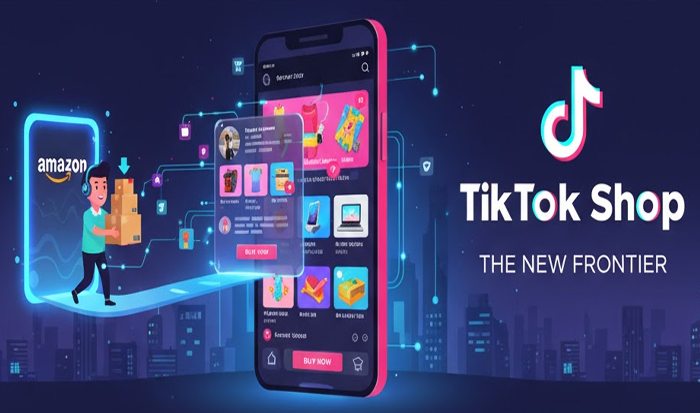
For Amazon sellers looking to expand beyond Amazon FBA, TikTok Shop presents an exciting new frontier. Leveraging TikTok’s short-form, trend-driven content allows sellers to reach highly engaged, younger audiences that may not be active on Amazon.
By combining social commerce with influencer marketing, TikTok Shop enables organic discovery and viral product promotion, complementing traditional e-commerce sales channels.
Sellers can drive traffic, boost conversions, and test new products in real time while building a strong, interactive brand presence. This makes TikTok Shop a powerful tool for diversifying revenue streams and staying ahead in the competitive multi-channel landscape.
What Is TikTok Shop?
TikTok Shop merges entertainment with commerce, offering a built-in ecosystem for product discovery and in-app purchasing. It’s the latest frontier for sellers who want to engage directly with consumers where they already spend hours daily — scrolling through short-form videos.
For Amazon sellers, TikTok Shop is more than just another marketplace; it’s a content-driven sales engine where authenticity, storytelling, and creator partnerships drive conversions. TikTok Shop for Amazon sellers enables quick expansion with low entry barriers and high engagement rates.
How to Start Selling on TikTok Shop
Here’s a simple roadmap for selling on TikTok Shop as an Amazon seller:
- Register your seller account on TikTok Shop Seller Center.
- Integrate product listings from Amazon using tools like Sellerite to avoid manual uploads.
- Create engaging short-form videos showcasing real product use cases.
- Collaborate with TikTok creators through affiliate campaigns.
- Host live shopping events to boost conversions and trust.
TikTok’s algorithm rewards creativity and interactivity, making it ideal for brand storytelling that directly influences sales.
Case Study: A Seller’s Journey from Amazon to TikTok
Consider an apparel brand that began solely on Amazon. Despite strong sales, growth plateaued due to rising ad costs. After launching on TikTok Shop and leveraging influencer partnerships, the brand’s weekly sales grew by 65% within two months.
Short-form videos showcasing “behind-the-scenes” and “unboxing” content generated viral traction, proving how selling on TikTok Shop can revitalize stagnant Amazon brands through authentic engagement
Walmart vs. Amazon Marketplace: The Key Differences
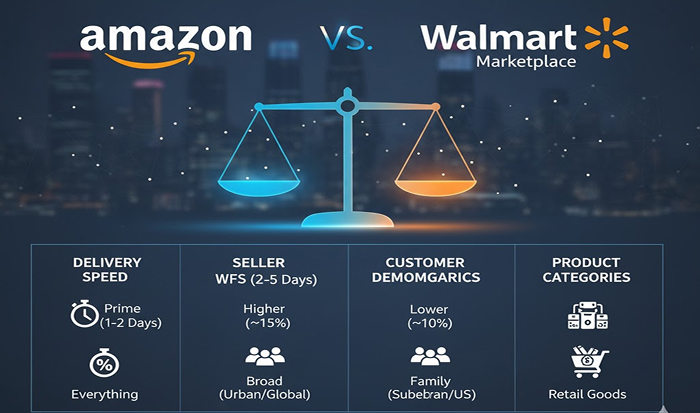
While both Walmart and Amazon are leading e-commerce platforms, they cater to different audiences and operate under distinct business models.
Amazon offers a massive global reach, advanced fulfillment through FBA, and a highly competitive, algorithm-driven marketplace ideal for discovery and repeat purchases.
Walmart, on the other hand, attracts value-conscious shoppers, emphasizing everyday low prices and a more curated product selection. Selling on Walmart often requires stricter onboarding and compliance standards but can provide access to a loyal customer base with less marketplace noise.
Understanding these differences is essential for sellers looking to expand beyond Amazon FBA, enabling them to choose the right mix of platforms for growth, revenue diversification, and long-term brand strategy.
Walmart’s Growing E-Commerce Ecosystem
Walmart has transformed from a retail giant into a full-fledged online marketplace attracting millions of active shoppers monthly. Sellers looking to expand beyond Amazon FBA find Walmart a stable, high-trust ecosystem with faster approval processes and growing consumer reach.
To sell, brands must meet eligibility criteria focusing on fulfillment reliability and product authenticity. But once approved, Walmart offers direct visibility to an audience already primed for value-driven purchases.
Comparing Fees, Audience, and Competition
When evaluating Walmart vs Amazon marketplace, several distinctions emerge:
- Fees: Walmart’s referral fees are often lower than Amazon’s, improving seller margins.
- Audience: Walmart caters to middle-America families seeking value and convenience, while Amazon attracts a broader demographic.
- Competition: Walmart’s marketplace is less saturated, offering early adopters higher visibility.
Brands that expand their e-commerce business to Walmart often see incremental gains in organic sales and reduced reliance on paid ads.
How to Transition or Integrate Amazon Listings to Walmart
Migrating from Amazon to Walmart involves:
- Optimizing listings for Walmart’s search algorithm
- Using Sellerite to share inventory and synchronize pricing
- Adjusting product descriptions to fit Walmart’s tone and layout
This cross-listing strategy helps sellers expand beyond Amazon FBA while maintaining data accuracy and avoiding overselling.
Building a Multi-Channel E-Commerce Strategy
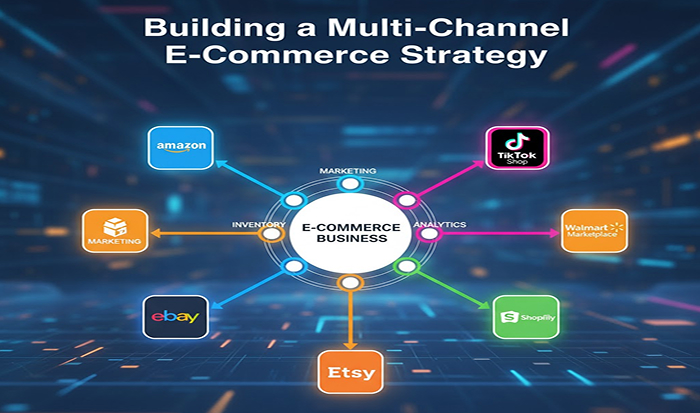
Creating a successful multi-channel e-commerce strategy requires careful planning and execution. When you expand beyond Amazon FBA, centralizing inventory, order management, and fulfillment is critical to prevent stockouts and overselling across platforms like Walmart, TikTok Shop, and Shopify.
At the same time, each marketplace demands platform-specific optimization, customized titles, keywords, and visuals to maximize visibility and conversions.
Maintaining consistent branding across channels builds trust and recognition, while leveraging analytics and automation tools like Sellerite allows data-driven decisions for pricing, inventory, and marketing.
By combining these elements with a gradual, strategic expansion approach, sellers can grow sustainably, diversify revenue streams, and strengthen their overall brand presence.
Choosing the Right Platforms
A successful multi-channel e-commerce strategy begins by evaluating where your target audience shops.
Top choices include:
- Amazon for scalability and logistics infrastructure
- Walmart for trust and retail dominance
- TikTok Shop for social commerce virality
- Shopify and eBay for brand-controlled experiences
Each platform brings unique strengths, and tools like Sellerite integrate them into one streamlined selling process.
Centralizing Inventory and Order Management
Managing multiple channels requires synchronization. Sellers use automation tools to maintain accurate stock levels, unified pricing, and consolidated reporting.
By leveraging Sellerite’s AI-driven inventory control, brands that expand beyond Amazon FBA avoid the pitfalls of stockouts or duplicate listings.
Cross-Platform Marketing and Brand Consistency
To expand your e-commerce business successfully, marketing consistency is essential. Utilize social media, email campaigns, and influencer collaborations to build a unified narrative across marketplaces.
TikTok Shop for Amazon sellers is particularly powerful when paired with branded Amazon storefronts, allowing cross-promotion that strengthens recognition and trust.
Using TikTok and Walmart Together with Amazon
Combining TikTok Shop and Walmart Marketplace with Amazon FBA creates a powerful multi-channel ecosystem that amplifies reach and revenue.
TikTok helps sellers generate viral product awareness through short-form, influencer-driven content, while Walmart attracts a wide base of loyal, value-conscious shoppers.
Amazon, with its fulfillment network, ensures smooth logistics and trust-backed delivery. Together, these platforms balance visibility, credibility, and convenience—allowing sellers to expand beyond Amazon FBA strategically while diversifying sales streams and building long-term brand equity.
Leveraging Traffic Between Platforms
TikTok’s audience can be redirected strategically toward Amazon listings through links in bio, live sessions, or creator mentions. This approach allows sellers selling on TikTok Shop to create a traffic funnel feeding Amazon and Walmart simultaneously.
Creating Synergy Between Marketplaces
Unified analytics and consistent branding help create synergy between multiple channels. Align pricing, visuals, and product descriptions to maintain trust.
A multi-channel e-commerce strategy with unified data reporting ensures cohesive brand storytelling across Amazon, Walmart, and TikTok.
Sellerite Tools to Automate Cross-Platform Growth
Sellerite is built precisely for this purpose. It integrates your Amazon FBA, Walmart, and TikTok Shop accounts — synchronizing listings, automating fulfillment, and analyzing sales data in real time.
Through AI-powered automation, Sellerite enables sellers to expand beyond Amazon FBA with efficiency and precision — freeing them from repetitive manual tasks while optimizing performance on every platform.
How to Expand E-Commerce Business Effectively
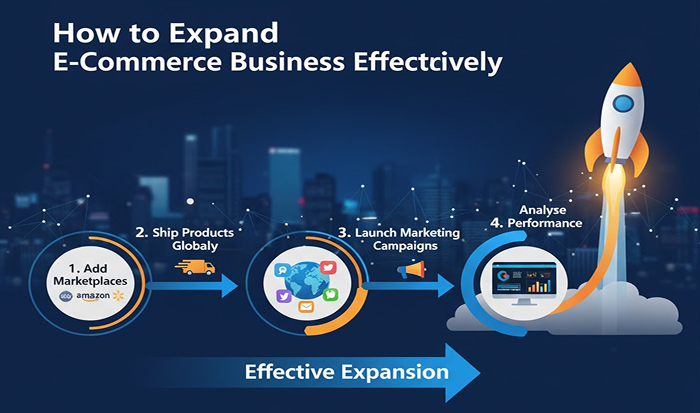
To expand your e-commerce business effectively, start by identifying marketplaces that align with your product niche and audience, such as Walmart, TikTok Shop, or Shopify.
Build a solid foundation on each platform through optimized listings, competitive pricing, and targeted marketing. Use reliable tools like Sellerite to manage inventory, fulfillment, and analytics seamlessly across channels.
Focus on gradual expansion, maintaining consistent branding, and learning each platform’s dynamics before scaling further. A data-driven, multi-channel approach ensures sustainable growth, reduced risk, and stronger brand presence beyond Amazon.
Scaling With Shopify and Other Channels
While marketplaces drive discovery, building a direct-to-consumer (D2C) presence through Shopify helps brands own customer relationships. This dual strategy ensures revenue diversification and brand autonomy.
Sellers who expand their e-commerce business with both marketplace and owned channels gain better control over pricing, customer data, and repeat sales.
Leveraging Data and AI for Smarter Expansion
AI analytics can predict demand, recommend pricing adjustments, and forecast sales trends. Sellerite’s AI engine helps automate decision-making using real-time insights, enabling sellers to prioritize profitable SKUs and platforms.
Long-Term Growth Planning
Future-proofing requires agility. Sellers must continuously optimize listings, monitor competition, and test new channels. Those who expand beyond Amazon FBA strategically today position themselves as multi-channel leaders tomorrow.
Common Mistakes When Expanding Beyond Amazon
Many sellers encounter pitfalls when they expand beyond Amazon FBA, often stemming from overconfidence or lack of strategy. Common mistakes include spreading too thin across multiple platforms too quickly, which strains resources and leads to operational inefficiencies. Others ignore platform-specific optimization, simply copying Amazon listings to Walmart or TikTok Shop, which diminishes visibility and sales potential. Additionally, lacking a unified multi-channel strategy can result in inconsistent branding, fragmented marketing efforts, and missed opportunities for growth. Avoiding these errors through careful planning, tailored listings, and centralized management tools like Sellerite ensures a smoother, more profitable expansion into new marketplaces.
Spreading Too Thin Too Fast
When brands expand beyond Amazon, the temptation to list products on every available marketplace can backfire. Rapid over-expansion stretches resources—inventory, marketing, and manpower—too thin. Instead, focusing on two or three high-potential platforms like Walmart, TikTok Shop, or Shopify allows for controlled scaling. This approach helps sellers master platform-specific operations, build customer trust, and create a strong foundation for long-term, sustainable growth.
Ignoring Platform-Specific Optimization
A common mistake sellers make when they expand beyond Amazon FBA is reusing the same product listings across multiple marketplaces.
Each platform—whether TikTok Shop, Walmart, or Etsy—has unique SEO structures, keyword priorities, and audience behaviors. Ignoring these nuances results in lower visibility and weaker sales performance.
To maximize reach, sellers must customize titles, descriptions, and visuals for each marketplace to align with both algorithmic and audience preferences.
Lack of a Unified Multi-Channel E-Commerce Strategy
Expanding beyond Amazon without a unified strategy leads to disjointed branding and inefficient operations. A multi-channel e-commerce strategy ensures consistent messaging, pricing, and customer experience across all platforms.
Tools like Sellerite enable centralized management of listings, inventory, and analytics, helping sellers make data-backed decisions while maintaining brand harmony. This integration transforms expansion into a structured, scalable, and profitable journey.
Case Study: Sellerite’s Approach to Multi-Marketplace Expansion
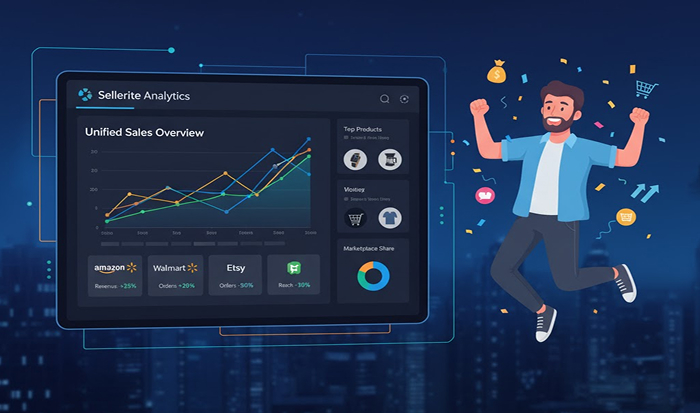
A home & lifestyle brand that began as a small Amazon FBA seller experienced transformative growth by leveraging Sellerite for multi-marketplace expansion.
Within just six months, the brand seamlessly integrated Walmart Marketplace, TikTok Shop, and Shopify, creating a robust multi-channel presence.
One of the most notable outcomes was 45% revenue growth achieved by expanding beyond Amazon FBA. By tapping into Walmart’s loyal, value-conscious audience, TikTok’s viral, trend-driven shoppers, and Shopify’s direct-to-consumer model, the brand reached new customer segments and diversified its sales streams.
Real-time inventory synchronization across all three platforms prevented stockouts and overselling, ensuring smooth order fulfillment and consistent customer experience.
AI-driven pricing adjustments allowed the brand to stay competitive while maximizing profitability, automatically updating prices based on demand, competitor activity, and marketplace rules.
Meanwhile, a unified analytics dashboard tracked all orders, returns, and performance metrics, providing actionable insights for smarter business decisions.
By automating repetitive processes, Sellerite empowered the brand to expand its e-commerce business efficiently, maintaining accuracy, speed, and customer satisfaction across multiple channels, turning multi-marketplace selling from a logistical challenge into a growth-driving strategy.
Conclusion
For Amazon sellers, growth no longer depends on a single platform. Expanding beyond Amazon FBA by exploring marketplaces like TikTok Shop, Walmart, and Shopify opens up new customer segments, diversifies revenue streams, and reduces reliance on one sales channel.
Each platform offers unique advantages, TikTok Shop drives viral discovery and engagement, Walmart provides access to value-conscious shoppers, and Shopify allows full control over branding and customer experience.
By adopting a strategic, multi-channel approach, sellers can maximize visibility, optimize operations, and build a resilient e-commerce business that thrives in today’s dynamic online marketplace.
The e-commerce industry in 2026 demands diversification. Brands that continue relying solely on Amazon FBA risk stagnation in an environment shaped by new consumer touchpoints and marketplace innovations.
To truly expand beyond Amazon FBA, sellers must embrace platforms like TikTok Shop and Walmart Marketplace, supported by a robust multi-channel e-commerce strategy and intelligent automation through tools like Sellerite.
The future of online retail belongs to agile sellers, those who adapt, integrate, and automate. By leveraging emerging platforms and AI-powered management, you not only expand your e-commerce business but also build a brand ready for the next era of global digital commerce.
FAQs
1. How can I successfully expand beyond Amazon FBA in 2026?
Start by identifying secondary platforms aligned with your audience, such as Walmart or TikTok Shop. Use automation tools like Sellerite to centralize listings, manage inventory, and ensure smooth operations.
2. Is the TikTok Shop for Amazon sellers worth trying?
Absolutely. TikTok’s social commerce ecosystem allows direct selling within viral content, making it a powerful revenue channel for Amazon brands seeking higher engagement.
3. What are the main differences in Walmart vs Amazon marketplace for sellers?
Amazon offers massive reach but higher fees and competition. Walmart provides lower costs and growing visibility — ideal for value-oriented sellers.
4. What’s the best multi-channel e-commerce strategy for small sellers?
Focus on 2–3 platforms, optimize listings per platform, and automate inventory management. Use Sellerite to unify performance tracking and fulfillment.
5. How do I start selling on TikTok Shop as an Amazon brand?
Register on TikTok Shop, integrate listings via Sellerite, and create short-form videos showcasing your products. Collaborate with creators for authentic engagement.
6. What are the key steps to expand my e-commerce business beyond Amazon?
Diversify into new marketplaces, leverage data insights, maintain consistent branding, and automate cross-platform operations.
7. How can Sellerite help automate multi-channel expansion?
Sellerite simplifies cross-platform selling by syncing listings, inventory, and analytics across Amazon, Walmart, TikTok Shop, and Shopify — enabling seamless, scalable, and profitable growth.



 Back to top
Thought Leadership, Tips, and Tricks
Never miss insights into the Amazon selling space by signing up for our email list!
YOUR WINNING SOLUTIONS
Read more



Expert
strategies
delivered
to your
inbox
top industry minds to fuel
your brand’s growth.

Send request to Sellerite
Once you submit the consultation form, we’ll dive into the details and email you a tailored report within 24-48 hours.
"*" indicates required fields
*By submitting your Email Address, you are agreeing to all conditions of our Privacy Policy.
