




Table of Contents
Introduction

Many Amazon Sellers consider that the hardest part of the journey is all about launching a product, but in reality, a launch is something that’s only the entry point. The real challenge is all about the real opportunity.
Yes, once it begins the product actually gives you the visibility, and starts the ranking and helps in generating consistent sales.
Most products successfully launch, but they fade in the later weeks. Rankings drop, and ad spend increases. This also leaves sellers keep wondering what went wrong. The answer is not just the same.
The sellers stayed in launch mode for too long and never transitioned into scaling mode. Through this blog, you will understand the shift required to move from launching a product to actually building a scalable, defensible Amazon business.
Understanding How Amazon Launches Work
Amazon isn’t ‘promoting’ your new product out of the kindness of its heart. Think of your product launch like a first date with Amazon’s powerful algorithm.
From the second your listing goes live, the algorithm is watching and collecting data points—it’s asking: ‘Is this product going to make me money and make my customers happy?’ The goal of your launch is simple.
You have to quickly and convincingly prove your product is worthy by generating enough positive signals (sales, clicks, reviews) so Amazon’s brain trusts you and decides to put your product in front of more people.
How Amazon’s algorithm evaluates new products
Products that consistently produce sales and convert well are rewarded with increased visibility. Regardless of the amount of money spent on advertisements, weak signals early on make recovery later on challenging.
Why indexing, relevance, and velocity matter
Relevance uses buyer behaviour and keyword placement to tell Amazon how well your product fits a search query. Demand is indicated by velocity, or sales over time.
Ranking increases during a launch are actually driven by momentum, which is created by strong relevance combined with steady velocity.
The “honeymoon period” and what it really means
This window is for testing. Amazon displays your product to a small group of people in order to gauge its effectiveness. Amazon increases your reach if your click-through and conversion rates are high.
The test ends quickly if they are weak. It is preparation, not luck, that pays off during the honeymoon period.
How reviews, price, and content affect launch success
Why launch prep is more important than launch execution
When you execute something without prior planning, you lose a great deal of time. Offers, sales & advertising just take existing products that don’t have value and make them larger.
A launch strategy won’t change how people find, view or purchase from your listing if it is misfiled, incorrectly labeled or has a low rate of conversion.
When you prepare your listing with keyword research, optimised content, competitive pricing, inventory readiness, and a review strategy, you can be sure that traffic will convert. Rather than during launch week, successful launches are planned weeks in advance.
Pre-Launch Research: Validating a Winning Product
The quickest way to lose money on a product that never takes off is to skip this stage.
Keyword demand validation
- On Amazon, sales don’t magically appear; they are driven entirely by the keywords customers are actively typing into the search bar. Think of Amazon as a vast lake, and your product is the bait. No matter how fancy the marketing, without someone actively searching for that “thing” (and therefore “fishing” for it), there won’t be a sustainable demand for the product. So unless you can identify where the customers are “biting,” you’ll be wasting your time and money by marketing to them.
- First of all, figure out where the fish are biting; you need to use keyword tools such as Helium 10 or Jungle Scout and determine what the primary and secondary keywords (the ‘bait’ customers are using) are. Don’t just look for a single, massive wave of search volume (a ‘seasonal spike’); look for consistent, deep water search volume that comes in month after month.
- “Your goal is to validate that the market has depth. You want to find several related keywords that are all consistently searched for, rather than betting your whole business on one massive term. This confirms that there’s a whole school of fish out there and that your product can thrive for the long haul, not just during a quick initial rush.”
Competitive landscape analysis (pricing, reviews, positioning)
- “The competition for selling a product on Amazon is determined by how many other sellers there are for this product, but more importantly, by how established and hard they have become. Take time to scout out your adversaries before entering the UFC cage.Find the products that are receiving the highest amount of traffic through search engine optimisation (SEO) from main keywords related to your product.
It is important to look at more than just review count. Consider how strong the reviews for these products are in comparison to yours. Examples of this would include:
- Review Count: How many Reviews Do They Have Compared To You? This can give you an idea about the level of customer loyalty that they have compared to your product.”
- Review Velocity: Are they getting new reviews fast? (This shows they’re consistently winning sales.)
- Branding: Are they established, recognizable names?
- Pricing: What is the average price range they’re competing in?
“If the top spots are locked down by listings with massive review counts and powerful brand recognition, that’s a huge barrier to entry.
Identify Areas Where They Are Weak or Areas Where You Can Win Differently: Investigate How Your Competitors Are Positioned Currently.
Are They Competing Primarily on Price (Price War) or Running on Premium Quality, Clever Bundling, Lifestyle Focus, or Other Areas? The Areas Where They Are Not Currently Positioned Are Ideal Places for You to Take Advantage of Their Weaknesses and Compete. If You Can Offer a Value Proposition that is Slightly Better than Your Competitors That is Not Based on Price, You Will Establish Your Own Unique Positioning Without Necessarily Entering Into a Desperate Price Race.
Identifying product opportunities using tools (Jungle Scout, Helium 10)
Tools for researching allow for transforming assumptions into Data. Jungle Scout is useful in determining the potential for revenue, sales consistency, and the number of competitors within a given category or market.
Helium 10 can provide keyword analysis, the ability to track trends, and the ability to analyze a business’s online presence through their listings and the effectiveness of those listings in relation to their industry peers.
Use these tools collectively to find products that have a consistently high demand, moderate competition, and an opportunity for uniqueness.
Concentrate on products that have listings with sub-par photo quality or poor-quality copywriting or have fewer reviews to highlight potential areas where a business’s superior execution can give them an advantage over their competition.
Checking seasonality, trends, and market cycles
Past records may reveal whether or not sales occur consistently throughout the entire year or only during specific, short periods. Fast moving trend-driven items generate considerable and rapid revenue.
However, if demand decreases, these items also carry higher risk. On the opposite side of the spectrum are evergreen (constant) items that deliver predictable levels of revenue over the course of time at a slower rate.
Understanding the market cycle for each type will enable you to create a plan for purchasing, inventory, cash flow and timing of promotions.
Profitability modeling: margins, fees, and break-even ACOS
- Revenue may look good but it is profit that keeps you in business. Before making a commitment to sell on Amazon, it is critical to calculate your costs as if you were an accountant.
- “Determine what it costs to deliver your product to end users. This includes all related expenses (the product itself, shipping, storage/fulfillment, and handling returns) as well as any fees paid to Amazon (referral commission, FBA fees). Then, add any anticipated cost associated with advertising your product through Amazon.”
- “This calculation tells you your Break-Even ACOS: the absolute highest you can spend on ads before you start losing money.
- “If your entire business model depends on miracle conversion rates or impossibly cheap ads, the product is a financial time bomb. A winning product is one that maintains a healthy, comfortable profit margin even when you are spending aggressively on advertising to get the launch momentum started.”
Risk identification (commoditized niches, low barriers, heavy PPC niches)
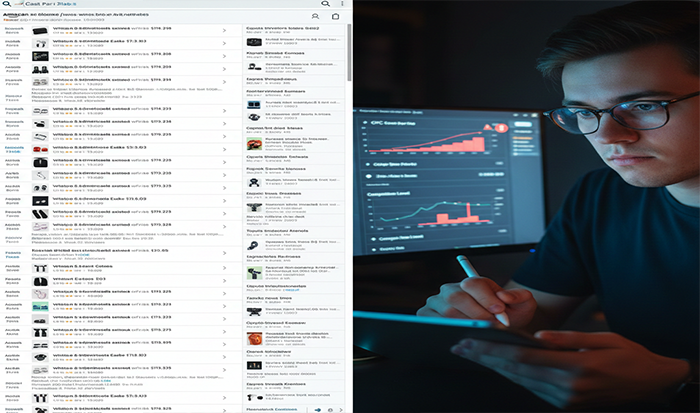
“Some categories are simply too reliant on paid ads, making it nearly impossible to win ‘organic’ shelf space without heavy spending.
“Identify these risks before you launch. Your response to the risk will determine your strength in the category. If you have superior branding, distinct product differences, or an enormous distribution network, you will have a better chance of succeeding than if you do not.
“A winning product doesn’t just look good in a spreadsheet; it’s defensible. It has walls built around it that competition can’t easily break down.”
Crafting the Perfect Amazon Listing Before Launch
A poorly optimised listing wastes launch momentum, while talking about strong compounds it is only about how every visits into sales, ranking growth and sales. This is why listing creation is crucial before any traffic is sent.
Title optimization (keyword + conversion balance)
Avoid keyword stuffing, which hurts click-through rates and readability. This includes a strong highlighting title that has got core benefits, and uses case in a very natural flow. If a human would want to click it, then the algorithm would not reward it.
Bullet points with benefits and differentiators
Instead of listing specifications, your outcomes can also be explained. This includes durability, comfort and savings.
Using bullets to clearly differentiate your product right from competitors by highlighting unique materials. to improving designs and supporting superiors.
Strategic keyword inclusion is all about relevance and in this case the clarity also comes first.
Keyword-rich descriptions
Break content into small paragraphs, using simple formatting tools where possible and naturally incorporating keywords. The goal is not only about visibility.
This is also about reassurance for hesitant buyers and scrolling deeper also for validation.
Backend keywords & indexing strategy
“This space is critical for casting a wide net for discoverability. Use it to catch all the misspellings, alternate names, synonyms, and regional phrases that people might use when searching.”The rules are strict: Never repeat a keyword already in your title or bullet points, and skip all the unnecessary fluff like commas or promotional language.
“Done right, backend optimization instantly makes your product eligible to rank for a much larger set of keywords right out of the gate, giving Amazon’s algorithm more opportunities to test and promote your listing from day one
Image optimization (hero image, infographic, lifestyle)
“The main hero image must be perfect: clean, compliant, and immediately tell the shopper, ‘This is what I am and why you need me.’
“Use infographics to quickly teach the customer—explaining the key benefits, sizing, and specific ways to use the product without them having to read text.
“Lifestyle photos are essential for building desire; they help the customer instantly picture themselves owning and using the product.
“Simply put: Bad images will kill your sales. No matter how fantastic your product is, if the pictures look cheap or confusing, shoppers will leave without a second thought.”
A+ Content and Brand Story for higher conversion
This helps in telling a cohesive brand story. Using well-designed A+ Content helps in improving conversion rates and keeping shoppers engaged, and supporting brand recall. This is crucial especially during a launch when trust is still being built.
Ensuring the listing is fully optimized before sending traffic
Before launching ads, confirm that indexing is complete, in this case images are finalised, copy is polished and pricing is competitive.
Launching traffic on an unfinished listing is one of the most expensive things sellers make.
Common listing mistakes that ruin launches
Inconsistent branding, unrealistic claims erodes trust. Also, most failed launches do not fail due to absence of traffic, but due to listings that do not get converted.
Launch Your Product in 7 Strategic Steps – The Complete Blueprint
Step 1 – Optimize Your Sales Page (A–Z)
Step 2 – Set a Competitive Retail Price
Pricing directly impacts conversion rate and how Amazon’s algorithm indexes your listing. Uncompetitive pricing can push your product to lower search result pages.
Step 3 – Social Media Influencer Activation (Days 1–17)
This strategy helps:
- Expose your product to people who are not yet searching on Amazon
- Drive high-quality external traffic that Amazon values
- Increase engagement and conversion signals
- Support organic review growth over time
- Signal to Amazon that shoppers are genuinely interested in your product
Skipping this step can significantly reduce the overall effectiveness of your launch.
Step 4 – Organic Activity & Review Accumulation (Days 18–25)
Step 5 – Automated PPC Campaign (Days 26–40)
Launch an automated PPC campaign with the following setup:
- Bid range: $1.20–$1.30
- Daily budget: $30
Why run an automated campaign?
- To extract valuable keyword and search term data
- To generate consistent sales activity
Step 6 – Campaign Analysis & Manual PPC Setup (Days 41–44)
If you are new to PPC, you may skip this step. If you are not experienced with PPC, outsourcing can often save time and budget.
Step 7 – Scale with Manual PPC (Day 45+)
Keyword Strategy for Launching & Ranking
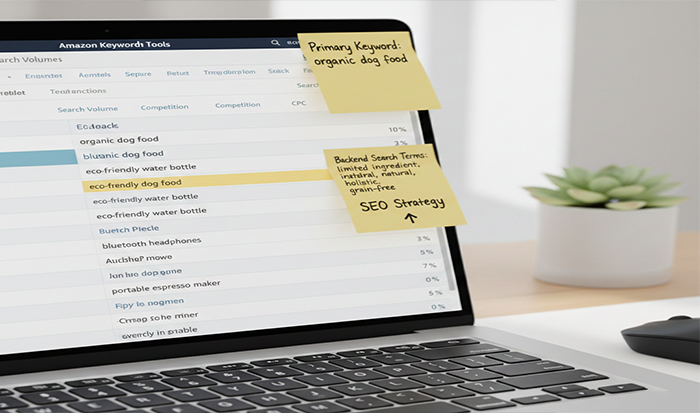
A structured keyword strategy allows you to build relevance, gain early traction, and climb toward competitive terms without burning cash.
Primary, secondary, and long-tail keyword mapping
You should have your primary keywords at the top of the title and throughout the descriptions of your products or services (in short, everywhere!).
Secondary keywords are variations of primary keywords, but from a business perspective provide additional avenues for reaching customers who are interested in using the product or service (via A + Content).
Although the number of searches done on each unique Long-Tail Keyword is much smaller compared to the total number of searches done on that category as a whole, using Long-Tails can help you create an early ranking position.
Each section will map directly to a specific keyword map; doing this will help improve how Amazon indexes your product page while preventing any duplicate content from being created.
Semantic keyword clusters
As an example, keywords that describe the product’s size, material, how they are used, and the benefit they provide together would create a stronger connection between them, allowing Amazon to see that you have a complete collection of products that fill the same category and improve the chance of generating more sales for you.
Search volume vs relevance
Therefore, always make sure you are optimizing for relevance first by using keywords that best match the buyer’s intent and deliver the value proposition for your business.
Once relevance is established, volume becomes a scaling lever. Strong launches build from highly relevant, moderate-volume terms upward, not the other way around.
Prioritizing keywords for PPC vs ranking
Tracking keyword movement during launch
The data above should help you increase budgets on keywords that demonstrate momentum, and to pause those that don’t. Launching decisions should be based on data, not gut feelings.
The role of micro-keywords in early rank wins
PPC Strategy for Product Launches
A well-structured PPC strategy accelerates the algorithm’s learning curve and creates the sales velocity required to climb search results during launch.
Why PPC is the engine of modern launches
This is where the use of Pay-Per-Click (PPC) ads come into play. PPC ads give you immediate control over your visibility and sales during the launch period of your product.
They let you instantly command the quality of traffic and the speed (velocity) of sales for specific keywords.
“Unlike sending outside traffic, Amazon’s ads feed sales data directly into the algorithm, making them the most powerful internal lever for boosting your organic rank.
“During launch, your immediate goal isn’t to be profitable right away—it’s to achieve controlled momentum. Use Sponsored Products as the core engine to build that initial, crucial sales history.”
Sponsored Products: the core of ranking
The highest-ranking signals that can be generated from Exact-Match campaigns target not only your most important keywords but also the most specific, high-intent, multiple-word phrases that you can come up with for your target audience. This sends the clearest message to the algorithm: ‘This product converts for this specific search.’
“Meanwhile, run Auto Campaigns as your ‘scouts.’ They automatically discover new, converting search terms that you didn’t think of. Once an Auto campaign finds a winner, you ‘promote’ that term into a highly controlled manual campaign to fuel your growth.”
Sponsored Brands & Video ads for instant authority
This also includes strong visual engagement. While these things do not drive ranking as efficiently as sponsored products, they help in increasing brand trust and improving CTR, which supports overall conversions, especially important during early testing phases.
Ranking campaigns vs profitability campaigns
Profitability campaigns prioritise efficiency and controlled ACOS, which in turn helps the objectives in creating campaigns and poor data. During the launch, ranking campaigns take priority and while profitability campaigns help protect our cash flows.
How to structure launch PPC (auto, exact, broad)
Exact-match campaigns help in targeting your most important keywords that gets you higher bids to secure top placements. This tiered structure helps you in controlling discovery and scaling independently.
Managing bids, placements, and budgets
Budgets should also be high enough to avoid throttling. There is limited budget stall momentum. Adjusting bids based on conversion data and not emotion helps in showing ranking improvements.
How to monitor TACOS during launch
The key is simply to monitor trends rather than absolute numbers. As organic sales help in increasing, TACOS should naturally decline.
If TACOS rises without ranking improvement. This is a signal to reassess keyword relevance that helps in listing conversion, and pricing.
How to avoid overspending and killing margins
Pause keywords with high spends and no conversions. Avoid chasing broad, low-intent terms that inflate costs without ranking benefits.
Controlling costs with the help of disciplined pruning and not by turning ads off entirely is important.
When to increase or reduce PPC aggression
Launching PPC is a dynamic process. Winners are built by adjusting intensity based on data and not by sticking to a specific spend plan.
External Traffic for Launches
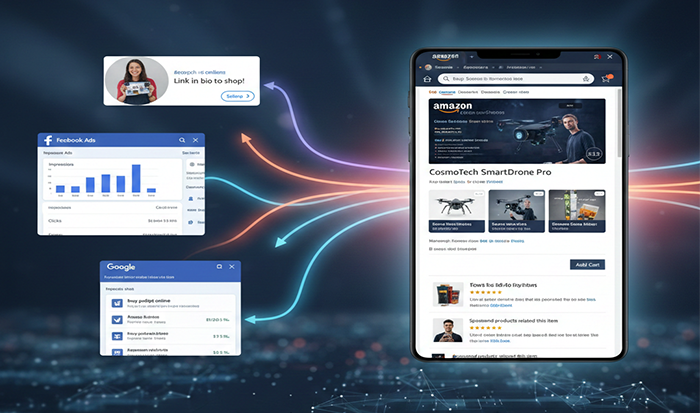
Poorly targeted external traffic damages performance metrics and can stall the ranking growth.
TikTok Shop & influencers
Influencers bring social and trust proof, especially for visual products. The key is alignment. Creators should attract the same audience that would search on Amazon. Viral reach without buyer’s intent is not useful.
Google Ads → Amazon
Landing shoppers directly on your product reduces friction. Google traffic can convert well, but only when the pricing and listing qualities are competitive.
Social traffic campaigns (FB/IG)
They often send low-intent visitors who ‘bounce’ quickly, and those rapid exits hurt your crucial Amazon conversion scores.
“Social ads are best used for retargeting (showing ads to people who already viewed your product) or audience warming (building initial interest). They are great for branding, but for an Amazon launch, use them selectively and watch your metrics like a hawk.”
Amazon Attribution
Attribution data helps determine whether external traffic is actually supporting ranking or simply inflating ad costs.
When external traffic helps ranking
High-quality traffic reinforces Amazon’s confidence in your product and supports organic growth when combined with PPC.
When external traffic damages ranking
Aggressive discount traffic that attracts deal-hunters without purchase intent can also hurt long-term ranking stability.
How to combine PPC + external traffic without breaking TOS
Send traffic to Amazon directly; do not send traffic to Amazon through redirects; the direct send is the most direct and will not violate Amazon’s Terms of Service.
Do not incentivize clicks or use forced methods – the most important rule of thumb is to stay within Amazon’s Terms of Service.
Managing Reviews (TOS-Safe) During Launch
- Why early reviews matter: New listings face skepticism. Even a small number of genuine reviews significantly reduces buyer hesitation. Reviews improve conversion rate, which amplifies the impact of PPC and external traffic.
- TOS-safe ways to receive reviews: Use Amazon’s “Request a Review” button consistently. Follow up with neutral, compliant email sequences that ask for feedback without incentives or pressure. Focus on delivering an excellent product experience—reviews follow satisfaction.
- Amazon Vine: when to use it: Vine can accelerate early review acquisition for brand-registered sellers. It’s best used when the product is polished, packaging is finalized, and inventory is ready. Vine reviews carry credibility but should complement, not replace, organic reviews.
- Organic review patterns: Healthy review velocity is gradual and consistent. Spikes in reviews can trigger scrutiny. A natural mix of ratings builds trust and avoids algorithmic flags.
- Avoiding black-hat methods that risk suspension: No matter how much we promise, incentives, rebates, gifts etc… for reviews are illegal. Do not use review services or have people manipulate reviews for you. Long term survival of your account is worth more than the possible short-term gain from these incentives/rewards.
- Review velocity & distribution: Amazon favors steady review growth tied to real sales volume. Balanced distribution reflects authenticity and supports long-term listing health.
Pricing Strategy for Launch Success
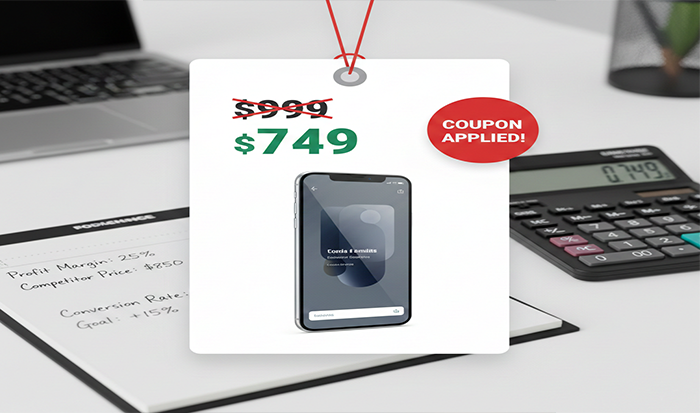
Pricing correctly will boost the ranking of a product and not permanently damage your margins.
Strategic launch pricing vs long-term pricing
By offering an introductory price, you effectively bribe the shopper to click and buy, instantly lowering their resistance.
This spikes your conversion rate, which is Amazon’s favorite signal that your product is validated and in high demand.”You only introduce your true, long-term profitable price after your product has stabilized its organic rank and built up a solid base of reviews.”
How price impacts CTR, CVR, and ranking
“Once they are on your page, attractive pricing acts as the final persuasion to boost the conversion rate (CVR).
“When conversion is high, you get stronger sales velocity, and sales velocity is the single most powerful fuel for moving up the ranks. In competitive niches, even a minor price difference can set off this entire domino effect and dramatically alter your success.”
The “price ladder” method for launches
Once your organic sales level out and your ad spending becomes efficient, you begin the ascent.”Raise your price incrementally, one step at a time.
Each small increase tests how sensitive buyers are and prevents a sudden shock to the algorithm that could tank your rank. This controlled method ensures you hold onto your hard-won momentum while you slowly restore your full profit margin.”
When to raise prices
When lowering price is the correct move
Competitive price positioning
Where you place the price as a reinforcement of your position, you should not find yourself having placed the price as an obstacle against your position.
Tracking & Measuring Your Launch Performance
- Keyword ranking tracking (day-by-day): Track priority keywords daily during launch. Early movement—even from deep pages—signals relevance. Stagnant keywords with high spend require immediate review.
- TACOS and launch profitability indicators: TACOS will be elevated during launch. By looking at your performance over time, you can note if you have had inconsistencies based on short-lived spikes in your performance or whether or not your business is growing functionally healthy. For example, declining TACOS and increasing organic sales are indications that the functional health of your business is improving.
- Click-through rate (CTR) benchmarks: Low CTR suggests pricing, images, or title issues. Strong CTR means your listing is winning the click.
- Conversion rate (CVR) benchmarks: Conversion reveals listing strength. Weak CVR points to trust gaps—reviews, content clarity, or price misalignment.
- Identifying early launch failures: Warning signs include high spend with no rank movement, strong impressions but low clicks, and traffic without conversions. These indicate relevance or listing problems.
- Fixing underperformance quickly: Act fast. Make corrections to pricing, keywords, pictures, and/or the allocation of PPC dollars to allow you to recover from early mistakes. The biggest factor in this process will be speed. Correcting early mistakes will have a significant impact on long-term success.
Maintaining Rank After the Launch
How to avoid post-launch ranking collapse
“Your organic ranking is supported by ongoing sales momentum—think of your PPC ads as the critical support beam. A sudden, dramatic drop in ad spend immediately reduces your visibility, slows your sales, and tells the Amazon algorithm, ‘Demand for this product is declining.’
“Instead, make gradual, controlled reductions to your ad budget. This preserves your hard-won momentum and gives your growing organic traffic the time it needs to fully take over.”
- Organic vs PPC balancing: The ultimate goal should not be to eliminate PPC; however, as your organic sales begin to increase, your PPC spending should be reallocated to include an emphasis on exact-match and branded keywords, as these are the most effective means of defending page 1 positions. Reduce broad exploration but keep coverage on revenue-driving terms. PPC becomes a stabilizer, not a growth crutch
- Inventory availability: Stockouts are instant ranking destruction. Even running out of product for a few hours can completely wipe out weeks of hard-earned progress.”To prevent this, you must obsessively manage your inventory: keep a buffer stock, track how fast you’re selling (sell-through rate), and always reorder early.”Amazon will only trust you with a top rank if it trusts your ability to consistently fulfill every order. If you run out, the algorithm sees you as unreliable and punishes you by handing your spot to a competitor.”
- Price stability: Frequent price changes confuse buyers and destabilize conversion rates. Once your product settles into its post-launch price, maintain consistency. Use controlled promotions rather than abrupt cuts or hikes to protect ranking signals.
- Review accumulation: Ongoing review growth reinforces trust and protects conversion. Continue compliant review requests and focus on customer experience. Stagnant reviews make competitors look more attractive over time.
- How to avoid losing page 1 gradually: Monitor keyword positions weekly. Early declines are easier to fix than major drops. Small bid increases, light promotions, or content refinements can restore stability before rankings slide significantly.
- Maintaining healthy TACOS after ranking: As organic sales grow, TACOS should trend downward. If it rises, reassess PPC efficiency, pricing, or listing strength. Healthy TACOS reflects a balanced, sustainable business.
- Transitioning from launch mode to scale mode: Scaling begins when rankings stabilize. At this stage, expand keyword coverage, test higher price points, optimize for profit, and invest in brand-building. Launch mode ends when growth becomes predictable.
Troubleshooting Failing Launches

A lot of new products will not fail right away but they will slowly lose momentum because they do not have the right fundamental qualities to be successful.
- Signs of a failing launch: Common warning signs include high ad spend with no keyword movement, strong impressions but poor clicks, and steady traffic with weak conversion. Flat sales velocity, rising CPCs, and declining session time also indicate relevance or trust issues.
- Poor listing → how to fix: Listings fail when they confuse buyers. You should review your images first before making any changes. The main image and infographic are two areas where having poor quality items will seriously cost you when it comes to CTR. Also consider simplifying your title, having clear value propositions, and re-writing the bullet points with outcomes rather than features. Eliminate claims that are not necessary and match up your message(s) with buyer intent. A cleaner listing often outperforms keyword-heavy clutter.
- Weak keyword targeting → how to fix: Targeting fails when keywords don’t match buyer intent. Pause broad, low-intent terms and double down on long-tail and micro-keywords with clear purchase intent. Ensure your listing is fully indexed for priority keywords. Ranking follows relevance, not volume.
- Bad PPC structure → how to fix: If campaigns mix ranking and profitability goals, performance suffers. Separate aggressive ranking campaigns from efficiency-focused campaigns. Clean search term reports daily during launch, cut wasted spend, and reallocate budget to keywords showing movement.
- Low CTR → how to fix: CTR problems usually come down to three factors: price, images, and title. Test stronger visuals, simplify titles, and temporarily improve price competitiveness. CTR must improve before any ranking gains can happen.
- Poor conversion rate → how to fix: Conversion issues signal trust gaps. Improve review acquisition, clarify expectations, optimize A+ Content, and adjust pricing. Traffic without conversion weakens algorithmic confidence.
- When to relaunch the product: Prelaunch only after core issues are fixed—listing quality, keyword relevance, pricing, and PPC structure. A prelaunch without corrections is just a repeat failure.
- When to make the decision to pivot or discontinue: If your product has thin margins, there is strong competition for your product, or you do not have unique differentiators for your product then the best business decision may be to get out and preserve your capital to put towards better opportunities for investment.
Real Launch Scenarios & Case Studies
- Successful launch (competitive niche): A home improvement product entered a crowded category by targeting long-tail keywords, aggressive early pricing, and video ads. Micro-keyword ranking created momentum, allowing gradual expansion into high-volume terms within 60 days.
- Successful launch (low-competition niche): A niche accessory with moderate demand achieved page 1 placement using minimal PPC. Strong listing optimization and review consistency allowed rapid profitability with low TACOS.
- Failed launch example + corrections: A generic product launched with broad PPC and weak images. CTR and CVR collapsed. After redesigning images, tightening keyword targeting, and resetting price, rankings recovered within three weeks.
- Launch recovery case study: A stalled launch was revived by cutting wasted spend, focusing on exact-match keywords, and improving A+ Content. Sales velocity returned, stabilizing page 1 placement.
Conclusion

To succeed in launching your product on the Amazon platform, you have to follow a set of very important tasks. These tasks consist of: product validation, product list optimization, the establishment and launch of your pay-per-click advertisement campaign, the selection of an accurate and suitable product price and the subsequent assessment of your product’s effectiveness based on its sales and user reviews, and the implication that following the above-mentioned tasks in order contributes to the effectiveness of your product launch on the platform.
You have to access and make use of the resources provided for your product category and make the relevant judgments based on whether your product will be effective on the platform. Finally, you have to perform each task on your plan meticulously if you’re to succeed as a Seller on the platform.
Once you have successfully launched your product, now it’s time to expand your business into a successful brand. The most important tasks here are to preserve your margin of profit, enhance your customer base to buy from your company, as well as boost your brand value by growing the number of your product sales.
If you remember these factors in your mind to expand your product, then you will successfully market your product to build a successful business out of it.

 Back to top
Thought Leadership, Tips, and Tricks
Never miss insights into the Amazon selling space by signing up for our email list!
Read more

Expert
strategies
delivered
to your
inbox
top industry minds to fuel
your brand’s growth.

Send request to Sellerite
Once you submit the consultation form, we’ll dive into the details and email you a tailored report within 24-48 hours.
"*" indicates required fields
*By submitting your Email Address, you are agreeing to all conditions of our Privacy Policy.
