



Table of Contents
Client Background and Core Challenges
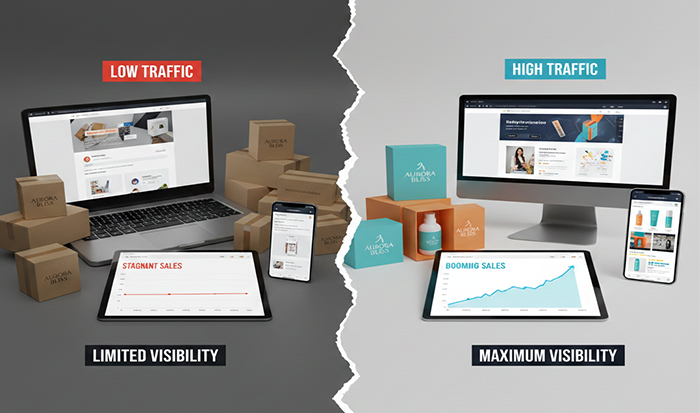
The client in this story is a mid-sized consumer brand selling home and lifestyle products primarily on Amazon, with a small but growing DTC site. Their Sponsored Products and Sponsored Brands campaigns were already well-optimized, but sales had plateaued and new-to-brand growth was slowing down despite increased ad spend.
Internally, the marketing team, led by performance director Clara Jensen, felt they were only visible to shoppers already searching for similar items. They had limited reach higher up the funnel, very little off-Amazon presence, and no structured way to retarget people who viewed their product pages but never purchased.
Why the Brand Chose Amazon DSP Management
After an audit, Sellerite recommended an integrated Amazon DSP Management approach to complement the existing Sponsored Ads strategy rather than replace it. Amazon DSP (Demand-Side Platform) would allow the brand to run display and video ads both on Amazon and across third-party sites and apps, using rich first-party audience data.
The deciding factor for the brand was that DSP Amazon campaigns can target shoppers at different stages of the customer journey, including audiences who had viewed similar products, competitor detail pages, or even related categories but never made it to their listings. With Sellerite managing the Amazon DSP program end-to-end, the brand could get advanced capabilities without hiring an in-house DSP specialist.
Sellerite’s Amazon DSP Management Approach

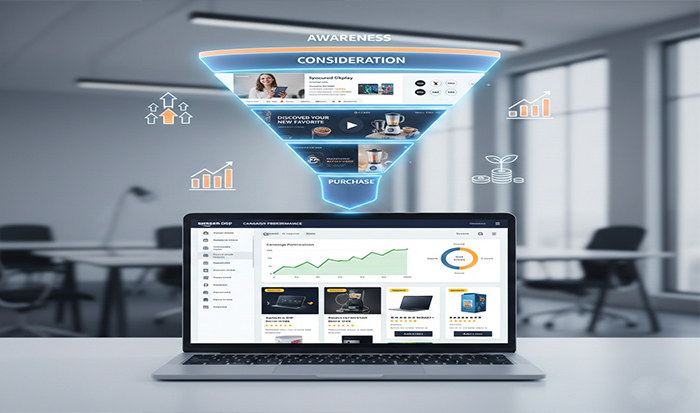
Sellerite built a structured, full-funnel Amazon DSP Management framework that connected awareness, consideration, and conversion campaigns under one strategy. Instead of launching isolated Amazon DSP ads, the team mapped specific goals to every stage: reach, engagement, add-to-cart, and purchase.
The management model included four core pillars: audience strategy, creative strategy, media mix and placements, and measurement and optimization. Each pillar was aligned with the brand’s revenue targets and ROAS guardrails so that the Amazon DSP advertising efforts could scale responsibly without diluting profitability.
Audience Strategy: From Broad Reach to Precision Targeting
The first step was to design DSP Amazon audiences that mirrored the real shopper journey instead of relying on a single broad segment. Sellerite combined Amazon’s in-market, lifestyle, and contextual segments with custom audiences built from product viewers, past purchasers, and people who interacted with similar categories.
Key audiences included:
- Upper-funnel in-market and lifestyle segments interested in home décor, organization, and interior design to build awareness.
- Mid-funnel audiences who had viewed the brand’s product detail pages or competitor listings but had not purchased.
- Lower-funnel retargeting pools of cart abandoners and recent viewers, designed specifically to push them back into purchase consideration.
Creative and Messaging Framework
The Sellerite team worked closely with the client’s brand manager, Markus Weber, to develop a creative framework tailored to each stage of the funnel. For awareness campaigns, Amazon DSP ads focused on lifestyle imagery and clear value propositions, positioning the products as stylish yet practical solutions for improving everyday spaces.
Mid- and lower-funnel creatives zoomed in on proof points and urgency, such as customer ratings, bundle savings, and limited-time promotions without overusing discount messaging. Video units were used for storytelling and brand education, while display ads emphasized quick scannability and strong calls to action pointing to specific product detail pages.
Media Mix, Placements, and Inventory
Sellerite’s Amazon DSP Management plan deliberately mixed on-Amazon and off-Amazon inventory to maintain consistent exposure at an efficient cost. On Amazon, the brand leveraged placements on product detail pages, home page modules, and Fire TV inventory for high-impact reach.
Off Amazon, DSP Amazon placements appeared across premium publisher sites and apps where audiences were contextually aligned with home and lifestyle interests. The media plan balanced frequency caps to avoid ad fatigue and allocated more budget to environments where historical DSP reporting showed strong view-through conversions and high-quality traffic.
Implementation Phases and Timeline

Sellerite rolled out Amazon DSP Management in three phases over a 90-day period to reduce risk and learn quickly. Each phase had clear hypotheses, KPIs, and optimization rules so that Amazon DSP advertising decisions could be made with confidence.
The phases were:
- Phase 1: Audience validation and baseline performance
- Phase 2: Full-funnel integration and scaling
- Phase 3: Advanced optimization with deeper Amazon Marketing Cloud insights
Phase 1 – Audience Validation
In the first 30 days, the focus was on testing core audiences and establishing performance baselines for CPM, CTR, and initial ROAS. Sellerite launched small-budget campaigns targeting in-market, lifestyle, and custom product viewer audiences with a mix of static and lightweight video creatives.
During this phase, Sellerite identified that in-market audiences created around home renovation and décor outperformed general lifestyle segments by a wide margin in both engagement and view-through conversions. Early learnings also showed that product viewer retargeting had strong ROAS but required careful frequency caps to avoid overserving ads to the same people.
Phase 2 – Full-Funnel Integration and Scaling
Once priority audiences were validated, the second month focused on building a cohesive full-funnel strategy that connected Amazon DSP Ads to the existing Sponsored Ads structure. Sellerite synchronized messaging so that shoppers who first saw upper-funnel display or video units later encountered Sponsored Products or Sponsored Brands campaigns keyed to the same themes and products.
Budget allocation shifted toward the best-performing Amazon DSP audiences, while brand protection and competitor conquesting tactics were layered in to capture incremental demand. As more shoppers became aware of the brand through DSP Amazon impressions, Sponsored campaign performance also improved, with higher click-through rates and better conversion rates on branded search terms.
Phase 3 – Advanced Optimization with AMC
In the final 30 days of the initial rollout, Sellerite began using Amazon Marketing Cloud data to refine its Amazon DSP Management strategy further. Path-to-purchase insights showed how many touchpoints shoppers needed before purchase and which combinations of DSP and Sponsored Ads generated the best blended ROAS.
This allowed Sellerite to adjust lookback windows, attribution assumptions, and reallocation of budget to the most influential upper- and mid-funnel tactics. The team also used AMC insights to build new custom segments based on real journey behavior, improving the precision of Amazon DSP advertising without increasing the overall budget.
Results After 90 Days of Amazon DSP Management

After three months, the impact of Sellerite’s Amazon DSP Management was visible across both DSP and Sponsored campaigns. The client saw growth not only in immediate DSP-attributed revenue but also in overall marketplace performance and brand health metrics.
The brand’s leadership moved from viewing DSP Amazon as an experimental channel to considering it a core part of their always-on media mix, managed continuously by Sellerite. With the right reporting, they were able to defend investments with clear data instead of relying on vanity metrics like impressions alone.
Key Performance Metrics
Over the 90-day period, the brand’s Amazon DSP Ads and integrated media plan delivered meaningful improvements across several KPIs. While exact numbers will vary by brand, the directional outcomes were consistent with how high-performing Amazon DSP programs behave in other case studies.
Headline results included:
- Significant increases in new-to-brand orders driven by Amazon DSP remarketing and competitor targeting.
- Higher overall return on ad spend when evaluating Sponsored Ads and Amazon DSP advertising together rather than in isolation.
- Notable lifts in detail page views, units sold, and total sales, driven by a broader and more engaged audience pool entering the funnel.
Impact on New-to-Brand Customers
One of the main objectives of investing in Amazon DSP was to break out of the existing audience bubble and reach shoppers who had never interacted with the brand before. By combining in-market and lifestyle targeting with carefully structured retargeting, Sellerite helped the client significantly expand its new-to-brand customer base.
Higher-funnel Amazon DSP Ads introduced the brand to people still researching options, while lower-funnel retargeting converted that initial curiosity into concrete purchases. Over time, this improved the efficiency of Sponsored campaigns as branded searches became more frequent and more likely to convert.
Brand Visibility and Long-Term Lift
Beyond immediate performance, Sellerite’s Amazon DSP Management improved the brand’s visibility across Amazon’s ecosystem and beyond. Shoppers began seeing the products in multiple contexts: browsing Amazon, consuming content on partner sites, or streaming via Fire TV and other Amazon-owned properties.
This repetition helped establish the brand as a familiar option rather than a generic commodity, which is critical in crowded categories. Even when shoppers did not click immediately, view-through conversions and assisted conversions rose as more people chose the brand later in their decision process.
What Made Sellerite’s Approach Different
Several factors set Sellerite’s Amazon DSP Management apart from a simple “set and forget” approach. The team treated DSP Amazon as a strategic extension of the broader Amazon advertising stack rather than a siloed display channel.
First, Sellerite prioritized transparency, giving the client clear visibility into spend, performance, and how each audience contributed to outcomes. Second, the team continuously refined the Amazon DSP program using AMC insights and DSP reporting instead of sticking to the initial setup.
Collaboration with the Client Team
Throughout the engagement, Sellerite met regularly with Clara and Markus to align on creative direction, promotional calendars, and category trends. This collaboration ensured that Amazon DSP Ads matched seasonal moments and product launches rather than running generic messaging year-round.
The client’s internal team also received education on how Amazon DSP advertising works, what metrics matter, and how to interpret upper-funnel performance in context. That shared understanding made decision-making faster and helped both sides stay focused on measurable growth, not just impressions.
Lessons for Brands Considering Amazon DSP Management

This case shows that Sellerite’s Amazon DSP Management can be a powerful lever for brands that already have solid Sponsored Ads performance but want to unlock the next level of growth. Amazon DSP is not a quick fix; it is most effective when treated as a strategic, always-on program tied to clear goals and supported by strong creative and data.
Brands that succeed with Amazon DSP advertising typically:
- Combine Sponsored Ads and DSP Amazon tactics instead of thinking in silos.
- Use first-party audience data, in-market segments, and AMC insights to drive precise targeting.
- Partner with a team that can manage, optimize, and explain the Amazon DSP program in business terms, not just media jargon.
With the right Amazon DSP Management partner, sellers can turn their ad spend into a full-funnel engine that reaches the right shoppers, at the right moments, across Amazon’s vast media ecosystem and beyond.



 Back to top
Read more case studies
How Sellerite’s Amazon DSP Management Unlocked Full-Funnel Growth for a Mid-Sized Brand

Inside Sellerite’s Amazon Product Launch Journey

Using AI Tools for Amazon Sellers: A Case Study of Real Results

Increased Amazon Profits by 14% with Sellerite’s Profit Margin Calculator

Amazon Review Analyzer Case Study: Turning Customer Feedback Into Growth
How Sellerite’s Amazon Keyword Generator Revived Oliver Grant’s Failing Listings
Expert
strategies
delivered
to your
inbox
top industry minds to fuel
your brand’s growth.

Send request to Sellerite
Once you submit the consultation form, we’ll dive into the details and email you a tailored report within 24-48 hours.
"*" indicates required fields
*By submitting your Email Address, you are agreeing to all conditions of our Privacy Policy.
