




Table of Contents

Introduction
Selling something on Amazon is not just the same as selling something on another marketplace. The scale, search-driven buying behavior, algorithm-first ecosystem, and intensely competitive environment require sellers to operate with clarity, data, and precision.
Winning here isn’t about having a good product; it’s about mastering the systems that control visibility, conversions, and long-term profitability.
Every successful journey on Amazon goes through a predictable funnel, which is: Research → Launch → Optimize → Scale.
Each stage demands a different mindset and a different set of skills. Research focuses on identifying opportunities. Launch is about generating momentum. Optimization strengthens your organic position and profitability.
Scaling expands your reach, systems, and brand footprint. Sellers who understand these phases — and the strategies behind them — build businesses that last.
This guide breaks down every part of that funnel in a structured, actionable way. You’ll learn how to evaluate product opportunities with real data, build listings that convert, rank keywords sustainably, design PPC systems that protect profitability, bring in external traffic the right way, maintain spotless account health, and manage the operations required to grow a strong Amazon brand.
The section here highlights how modern tools, especially Sellerite, helps in streamlining research. This also includes automating workflows, and reducing decision fatigue.So, by the end you will have an exact blueprint that improves every stage of your Amazon growth engine and will help in turning your store into a scalable business.
Amazon Business Foundations
To succeed profitably on Amazon, you need to understand how its engine actually runs. Behind every sale, ranking jump, or ad result sits a tightly connected system built around customer experience, accurate data, and smooth operations.
At the heart of this system are two fulfilment paths—FBA and FBM.
Most brands lean toward FBA because it unlocks Prime shipping, faster deliveries, and stronger Buy Box chances. Amazon takes care of heavy lifting—storage, packing, shipping, returns, and customer service. So, in this case you can focus on building your product and brand.
FBM works better for bulky, oversized, or tighter-margin products. It gives you full control over your logistics, letting you manage shipping on your own terms.
Let me know if you want it even shorter or more conversational.
Some sellers also use a blended approach, switching between FBA and FBM based on stock availability or seasonal demand.
Understanding fees is equally important. Amazon’s fee structure can feel like a maze—referral fees, fulfillment charges, storage costs, optional program add-ons, and of course, advertising spend. If you don’t keep a close watch, these expenses can quietly eat into your margins. That’s why experienced sellers calculate their landed cost and real profit before launching a product, not after they’re already invested.
Behind the scenes, Amazon’s search engine (often referred to as A9/A10) decides where your product shows up. The exact formula is never fully disclosed, but the core principles are well-known: relevance, conversion rate, sales velocity, pricing, and customer experience. Listings that perform well move up; those with weak engagement or operational issues drop down. It’s as simple—and as unforgiving—as that.
Once you understand how the ecosystem behaves, every decision you make becomes sharper. You start to see why keyword-optimized listings matter, why late deliveries impact rankings, why PPC is tied so closely to organic growth, and why customer experience is the real driver behind long-term success. With this thing in mind, you can make use of the tools in a better way.
Essential Seller Tools: Jungle Scout, Helium 10 & Sellerite

Jungle Scout – for product research, sales estimates, and validating demand.
Key advantages:
- Accurate sales estimates to evaluate potential revenue and demand.
- Opportunity Score that blends competition, demand, and seasonality.
- Supplier Database for finding verified manufacturers.
- Product Tracker to monitor price trends, inventory patterns, and competitor velocity.
For sellers in the early stages of the funnel — especially during research — Jungle Scout acts as the foundation for determining what to sell and whether a product idea is worth pursuing.
Helium 10 – for keyword research, competitive analysis, and listing intelligence.
Helium 10 is the industry standard. This tool is known for keyword analysis, SEO, competitor tracking, and listing intelligence. Sellers use it extensively from launch through optimization.
Core strengths include:
- Magnet & Cerebro for high-quality keyword research using reverse ASIN lookups.
- Frankenstein & Scribbles for transforming keyword lists into structured, SEO-optimized content.
- Listing Analyzer for scoring listings against competitors.
- Market Tracker & Trendster for studying niche maturity and seasonal patterns.
- Alerts for hijackers, suppressed listings, and Buy Box changes.
Helium 10 ensures your listings stay relevant, competitive, and fully optimized for Amazon’s algorithm — especially during the launch and ranking phases.
Sellerite – for full-funnel Amazon growth with AI tools, expert support, optimization systems, and end-to-end operational efficiency.
Sellerite goes beyond traditional tools by supporting the entire Amazon growth ecosystem — not just research or SEO. It’s designed for sellers who want streamlined operations, smarter decisions, and faster scaling.
Where it stands out:
- AI-powered listing optimization that helps in the creation of keyword-rich titles, bullets, and descriptions.
- Advanced keyword generator for discovering ranking opportunities others miss.
- PPC optimization systems that reduce wasted spend and improve ROAS/TACOS.
- Profit calculators that factor in all fees, logistics, and real margins.
- TOS checker to ensure your listings and ads remain compliant.
- Operational dashboards for case log tracking, inventory alerts, reimbursement auditing, and workflow automation.
- Expert support for strategy, troubleshooting, and launch consulting.
Sellerite is built for sellers who want a central command hub — one platform to manage research, SEO, optimization, PPC, analytics, and operations without juggling multiple tools or wasting time on manual tasks.
Product Research & Launch Strategy
A strong product isn’t just something that “sells” — it should have steady demand, reasonable competition, solid margins, and a clear angle that makes it stand out.
When you pick the right product from the start, every step that follows—your launch, your optimization, your scale—becomes far easier and far more predictable.
Identifying Winning Products
- Steady demand: Search volume is stable across months without extreme seasonality.
- Gaps in competition: Existing listings have weak images, poor reviews, or outdated designs.
- Healthy margins: After all Amazon fees, shipping, and manufacturing, there is enough space for your marketing and profit.
- Differentiation potential: In this case, you can solve a customer pain point better than competitors.
Tools like Jungle Scout, Helium 10, and Sellerite make it easier to check all these factors. They show you real sales trends, keyword demand, competitor strengths and weaknesses, and help you confirm whether a product is truly worth pursuing.
Validating Ideas with Keyword & Demand Data
- Monthly search volume
- Number of competitors indexed
- Relevance to customer intent
- Organic conversion rates of current top sellers
Demand validation should be built on verifiable data — not assumptions.
Competitor & Niche Analysis
- Rating averages
- Review patterns (complaints become opportunities)
- Pricing behavior
- Listing quality
- Packaging and product features
This analysis helps you position your product in a way that stands out. The goal is not to copy competitors — it’s to outperform them where they’re weak.
Launch Timelines & Planning
- Pre-launch (2–4 weeks): Finalize keywords, create optimized listings, prepare A+ Content, shoot images, and map PPC structure.
- Launch week: You should start with aggressive but controlled PPC campaigns, In this case, secure initial reviews through compliant methods, and focus on ranking core keywords.
- Post-launch (Weeks 2–6): In this case, you can optimize bids, monitor keyword movement, improve images, and adjust pricing based on performance.
Having a clear plan prevents wasted spend and protects ranking momentum.
When to Use PPC, Giveaways & External Traffic:
- PPC: Your primary ranking engine. Use auto + broad for discovery and exact match campaigns for ranking.
- Giveaways (TOS-safe): Offer coupons or discounts within Amazon’s policies to drive controlled velocity.
- External traffic: TikTok, influencers, or Google Ads can help when the listing is already optimized. Early-stage listings benefit from internal Amazon traffic first.
The goal is controlled velocity, not explosive but unsustainable spikes.
Most Common Launch Mistakes:
- Starting PPC without fully optimized listings
- Ignoring keyword research or using guesswork
- Underestimating inventory requirements (stockouts kill rank)
- Pricing too low or too high at launch
- Failing to track keyword ranking daily
- Using black-hat ranking tactics
- Not analyzing competitor weaknesses
A launch is a calculated process. When done correctly, it builds long-term ranking strength and sets the groundwork for profitability.
Listing Optimization & Conversion
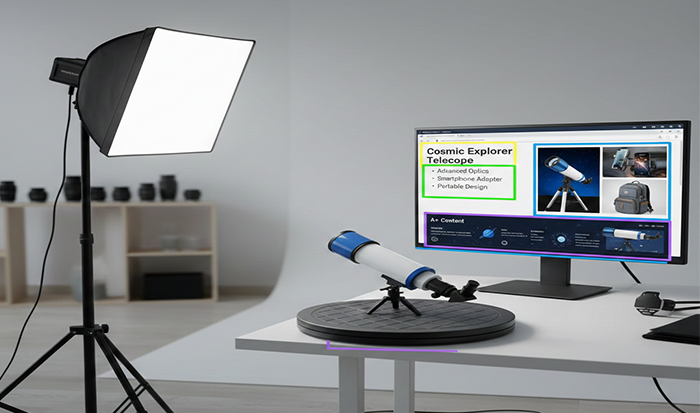
Amazon SEO structure (title, bullets, description)
- Title: The most influential on-page SEO element. Include your primary keywords naturally while maintaining readability.
- Bullet Points: Focus on benefits and features backed by secondary keywords. These influence both ranking and conversions.
- Description / EBC (if not using A+): Reinforce brand story, clarify usage, address objections, and embed long-tail keywords.
The goal: ensure the algorithm understands your relevance while giving shoppers enough clarity to make a decision.
Writing for humans + algorithm
- Lead with benefits, not features.
- Address frustrations customers mention in competitor reviews.
- Use simple, scannable language.
- Add social proof elements like certifications, guarantees, or real-world use cases.
The algorithm determines visibility; humans determine conversions. You need both.
Image optimization
- A crisp main image with professional lighting and contrast
- Lifestyle shots showing real usage
- Infographics explaining features and dimensions
- Comparison charts highlighting your advantage
- Packaging images to build perceived value
Shoppers should understand the product fully through images alone — many don’t read text.
A+ Content best practices
- Side-by-side comparison charts
- Problem-solution layouts
- Lifestyle visuals with clear messaging
- Brand story panels that reinforce trust
A+ reduces bounce rate, increases dwell time, and can boost conversions by 5–12%
CRO (conversion rate optimization) methods
- Test different main images
- A/B test titles for clarity versus keyword density
- Use coupons or badges to improve click-through rate
- Optimize pricing using psychological price breaks
- Add FAQs to eliminate buying friction
- Analyze heatmaps (from external tools) to understand user behavior
Small improvements in conversion rate generate exponential gains in ranking and ad efficiency.
Indexation enhancement
- Proper backend keyword usage
- Avoiding duplicate terms across listing sections
- Ensuring keywords appear in high-weight zones (title, bullets)
- Frequently updating content during the first 30 days to signal relevance
- Running light PPC campaigns to force quicker indexation for priority terms
Full indexation ensures your listing has maximum ranking potential.
Amazon SEO & Keyword Ranking

How keyword ranking truly works
Amazon’s ecosystem revolves around one core principle: the faster and more efficiently your listing converts for a keyword, the higher it ranks for that keyword.
The ranking system monitors:
- Click-through rate (CTR)
- Conversion rate (CVR)
- Order velocity
- Price competitiveness
- Customer satisfaction
- Relevance of your listing content
High conversions signal that customers found exactly what they were searching for.
As a result, Amazon pushes your listing upward to maximize revenue. Low conversions — especially during launch — cause rankings to stall or drop.
Keyword research framework
A strong keyword research system identifies the terms that hold both demand and ranking opportunity. The ideal framework includes:
- Primary keywords: High-volume terms directly describing the product.
- Secondary keywords: These are termed as Medium-volume, highly relevant terms, and they support indexing and conversions.
- Long-tail keywords: They are termed as low-volume but easy-to-rank phrases. These are often associated with higher buyer intent.
- Competitor keywords: Terms competitors rank for but are underutilizing.
- Semantic keywords: Words the algorithm associates with your category.
Helium 10, Sellerite’s keyword tools, and reverse ASIN analysis make this process precise and data-driven.
Backend keywords: best practices
A strong keyword research system identifies the terms that hold both demand and ranking opportunity. The ideal framework includes:
- Primary keywords: High-volume terms directly describing the product.
- Secondary keywords: These are termed as Medium-volume, highly relevant terms, and they support indexing and conversions.
- Long-tail keywords: They are termed as low-volume but easy-to-rank phrases. These are often associated with higher buyer intent.
- Competitor keywords: Terms competitors rank for but are underutilizing.
- Semantic keywords: Words the algorithm associates with your category.
Helium 10, Sellerite’s keyword tools, and reverse ASIN analysis make this process precise and data-driven.
Backend keywords: best practices
- Monitoring daily keyword movement
- Maintaining healthy stock levels to avoid rank drops
- Keeping pricing competitive
- Using exact-match PPC to reinforce ranking signals
- Improving listing visuals and A+ content to sustain conversions
- Responding to reviews and addressing common complaints
A ranking strategy fails quickly when sellers forget that operational consistency influences SEO.
Indexation improvement
Your listing must be indexed for a keyword to have any chance of ranking. Improve indexation through:
- Adding missing keywords to titles, bullets, or backend fields
- Running low-bid PPC campaigns to force indexation
- Making small listing edits over time to refresh relevance
- Removing suppressed content or keyword stuffing
- Ensuring variations are correctly connected and indexed
Without indexation, organic ranking becomes impossible.
Ranking without overspending on PPC
You can rank efficiently with controlled spend by focusing on:
- Tight exact-match PPC for priority keywords
- Using coupons or discounts to increase conversion and velocity
- Organic ranking for long-tails before attacking high-volume terms
- Leveraging influencer traffic during the early ranking phase
- Optimizing your listing before increasing ad spend
- Gradually scaling PPC instead of aggressive early bidding
The goal is sustainable ranking — not burning capital.
PPC, DSP & Advertising Strategy

Today, Amazon works like a pay-to-play marketplace, and the sellers who learn how to run smart ads are the ones who scale the quickest.
A solid ad strategy doesn’t just chase clicks. It helps you control your spending, lift your organic rank, and create steady, predictable growth. The goal isn’t to spend more.
It is about spending in a way that actually earns you profit. With the right data and structure behind your campaigns, your ads become a long-term growth.
Sponsored Products, Brands, and Display (SP/SB/SD)
Sponsored Products (SP)
The most impactful and widely used format. SP influences both ranking and sales velocity.
Use it for:
- Ranking new products
- Targeting high-intent keywords
- Protecting your brand against competitors
Sponsored Brands (SB)
Banner-style ads that showcase your brand with a headline, logo, and product lineup.
Best for:
- Increasing brand awareness
- Highlighting collections or bundles
- Driving traffic to your Storefront
Sponsored Display (SD)
Audience-based ads that go beyond keyword targeting.
Ideal for:
- Retargeting viewers
- Competitor conquesting
- Cross-selling between your products
A blended strategy across SP, SB, and SD ensures coverage at every stage of the customer journey.
PPC structure and campaign types
A clean PPC structure prevents wasted spend and improves optimization speed. The most effective setups include:
- Auto campaigns: For discovery and keyword harvesting.
- Broad match: For variations, synonyms, and long-tail identification.
- Phrase match: For controlled expansion.
- Exact match: For ranking and protecting profitable terms.
- ASIN targeting: For competitor listings and similar products.
For each product, build a tiered funnel:
- Discovery campaigns (auto + broad)
- Research campaigns (phrase + ASIN targeting)
- Ranking campaigns (exact match high-priority keywords)
This system ensures controlled visibility with minimal guesswork.
Scaling PPC the right way
Most sellers try to scale by increasing bids or budgets, but this often leads to higher ACOS without real growth. Smart scaling follows key principles:
- Scale keywords that show consistent conversions, not just traffic.
- Increase budgets only after stabilizing CVR and CPC.
- Add new keywords gradually, based on data harvested from winning search terms.
- Strengthen your listing before scaling — higher conversions reduce ad costs.
- Prioritize profitable ASIN targeting to capture existing demand.
Scaling should feel smooth and predictable, not chaotic.
How to improve ROAS and TACOS
To improve ROAS:
- Clean up wasted spend from non-converting search terms.
- Tighten match types to reduce irrelevant traffic.
- Improve CTR with better main images and coupons.
- Use negative keywords aggressively.
To improve TACOS:
- Strengthen organic ranking for key terms.
- Optimize listing content to increase conversion.
- Manage pricing intelligently — small changes impact PPC efficiency.
- Protect Buy Box stability.
The lower your TACOS, the healthier your account becomes.
DSP overview for growing brands
Amazon DSP (Demand-Side Platform) serves advanced advertisers who want precise audience targeting beyond Amazon’s keyword ecosystem. DSP allows you to:
- Retarget shoppers across Amazon and external websites
- Build custom audiences based on behavior
- Reinforce brand memory with display and video ads
- Reach high-intent buyers who abandoned carts or detail pages
DSP is most effective when you already have stable PPC performance and are ready to expand brand awareness.
Creative best practices (video, SB headline ads)
- Keep videos fast-paced and informative within the first 3 seconds.
- Highlight 3–5 top features clearly.
- Use strong lifestyle visuals for SB ads to increase credibility.
- Test multiple headlines — clarity often outperforms creativity.
Good creatives cut your ad costs dramatically by improving CTR.
How to avoid wasted ad spend
- Regularly adding negative keywords
- Pausing unprofitable ASIN targets
- Lowering bids on high-click, low-conversion terms
- Monitoring search term reports weekly
- Ensuring stock availability (ads continue even when you’re about to run out)
- Checking for suppressed or inactive variations
Tight controls ensure every dollar spent strengthens ranking, not drains margin.
External Traffic & Growth Channels
TikTok Shop
Use TikTok Shop when:
- You have visually appealing products that demonstrate well on camera
- Your niche aligns with impulse buying
- You want influencers to drive both content and traffic
Integrate it with Amazon by offering promo codes or redirecting warm audiences to your Amazon listing for full-price purchases.
Google Ads for Amazon
- Branded traffic
- Specific problem-solving products
- High-ticket or niche items
Use targeted search campaigns with Amazon Attribution links to track performance and identify profitable queries. Google helps bypass Amazon’s competitive ad auctions for certain keywords.
Influencers
- Drive large bursts of early velocity
- Generate user-generated content (UGC) for your Amazon listing
- Support ranking campaigns with external visits
- Build long-term brand loyalty
Collaborate with micro-influencers for cost-efficient conversions and viral-style content.
Attribution
- Understand which channels are profitable
- Optimize cross-platform spend
- Improve ranking without blind spots
- Track ROAS for each external source
Attribution ensures your external strategy is built on data, not guesswork.
When external traffic helps ranking
External traffic boosts ranking when:
- Your listing is already optimized
- Conversion rates are stable
- Inventory is sufficient
- You’re launching or pushing a hero keyword
External traffic helps Amazon interpret higher demand and rewards you with stronger organic placement.
When external traffic hurts performance
- The listing is weak or unoptimized
- Conversion rates drop due to cold audiences
- Inventory is low or unstable
- PPC isn’t structured well
This leads to lower CVR, which can suppress organic ranking instead of improving it.
Account Health, Policy & Compliance

A stable Amazon business depends on strong account health and consistent compliance with Amazon’s policies. Even a top-performing listing can come crashing down overnight if there’s a compliance issue — which is why this area is so important for long-term success.
Amazon keeps a close eye on every seller through strict rules, automated checks, and performance metrics. When your account stays clean, you enjoy steady sales, stronger Buy Box control, and quicker support when you need it.
To understand Amazon’s policies, start with one simple truth: the platform puts buyer trust above everything else. That’s why rules around product safety, authenticity, intellectual property, restricted categories, and listing accuracy are taken so seriously.
These aren’t not just the guidelines, infact they are the necessities. A single violation in areas like claims, prohibited ingredients, or incorrect categorization can trigger suppressions or account flags.
Staying updated with these guidelines helps sellers avoid accidental breaches and unnecessary operational downtime.
Account health metrics form the foundation of your seller reputation. These include Order Defect Rate (ODR), Cancellation Rate, and Late Shipment Rate, all of which must stay within Amazon’s required thresholds.
Performance metrics such as customer feedback, return reasons, and buyer-seller interactions also contribute to Amazon’s assessment of your reliability.
The tiny details often trip up many sellers-violations for unclear product descriptions, keyword stuffing, restricted claims, or a sudden increase in customer complaints are common.
Amazon may suspend a listing based. In this case, it is based on these warning signs or any other factors. And this might jeopardize customer trust. If that happens, the only thing you can do is find the real reason for this as quickly as possible and fix it.
This can be done by sending a clear Plan of Action explaining what went wrong, what you’ve fixed, and how you will make sure that it doesn’t happen again.
Avoid emotional or defensive explanations. Amazon is looking for facts, proof, and long-term fixes. Whether the issue is with IP rights, missing safety documents, or inaccuracies in the listing, Amazon wants to see that you have put reliable systems in place, not excuses.
How you communicate with Seller Support also matters. You can avoid misunderstandings and save days of back-and-forth with brief and clear messages, attaching the appropriate documents and escalating through the appropriate channels where necessary.
Strong account health serves as the sound foundation for growth and protects your company against unexpected disruptions. Once compliance is managed effectively, the next step is to introduce efficiency through automation.
Automation, AI Tools & Efficiency
Modern ecommerce sellers are leaning heavily on automation and AI to stay ahead — especially when dealing with large volumes or fast-turnover stock like Amazon return pallets.
Automation isn’t just about saving time; it removes guesswork, improves accuracy, and helps new sellers avoid expensive mistakes.
One of the biggest advantages comes from AI-powered product evaluation tools. These tools scan the titles, images, and descriptions in your pallet manifest and instantly estimate resale value, market demand, and competition levels.
What would normally take hours of manual checking gets turned into clear insights within minutes. This helps you focus on the items that offer the best margins and get your listings ready much faster.
AI-driven pricing tools make your daily work a lot simpler. They watch the market in real time and automatically update your prices based on demand, what competitors are doing, and seasonal shifts.
You don’t have to keep checking Amazon, eBay, or Facebook Marketplace again and again — the system adjusts everything for you, keeping your prices competitive without the constant manual effort.
This not only maximises profit but also ensures products move quickly, reducing storage costs — a key factor when dealing with bulk pallets.
Automation also plays a significant role in listing creation. Many AI listing tools can generate product titles, descriptions, and keyword-optimised copy based on a single image or UPC code.
For beginners who struggle with writing compelling product content, this creates a clean, professional store presence effortlessly. When paired with automated photo enhancement tools that remove backgrounds and correct lighting, even returned items look more polished and trustworthy online.
Inventory tracking and fulfilment systems add another layer of efficiency. Automated barcode scanners, stock alerts, and replenishment reminders make inventory management far easier.
They help prevent overselling and ensure you don’t lose track of profitable items that might be sitting untouched in storage. For resellers sorting through dozens or even hundreds of mixed products from a single pallet, this kind of organisation is incredibly helpful.
AI chatbots and automated customer-service tools also take a big load off your plate. They handle routine questions, order updates, and return requests, so you’re not stuck replying to the same messages all day.
That frees up your time to focus on the work that actually moves your business forward — sourcing items, preparing them, and getting orders out the door.
In the end, automation and AI turn what could be a chaotic pallet of mixed goods into a streamlined, manageable process. Every stage — from evaluating items to reselling them — becomes smoother, more predictable, and far more profitable.
Profitability, Pricing & Financial Management
ACOS, TACOS, and CVR act like the pulse of your business. ACOS shows how well your individual ad campaigns are performing. TACOS reveals how advertising affects your overall sales over time. CVR tells you if your listing is actually convincing shoppers to hit “buy.”
By focussing on these numbers , you can make smarter decisions — tweak bids, refine listings, and avoid wasting money — so your profits stay strong and predictable.
The profit leaks appear in multiple forms — inefficient PPC campaigns, storage fees from overstocked inventory, unnecessary refunds, poorly negotiated supplier prices, or missing reimbursements Amazon owes you.
Sellers often overlook reimbursement recovery, even though Amazon frequently charges or mishandles inventory by mistake. Regular audits can uncover hidden losses and reclaim a surprising chunk of profit, giving your net margins a real boost.
Just as important is knowing your true landed cost — everything from the product itself to shipping, duties, packaging, and Amazon fees. Without a clear picture of these costs, pricing becomes guesswork, and your profits can swing wildly.
Pricing strategy is another crucial driver. Competitive pricing does not always mean lowering prices; it means positioning your product smartly based on demand, seasonality, and competitor behaviour.
Dynamic pricing tools can help maintain the ideal balance between sales velocity and margin retention. When paired with promotional strategies — coupons, lightning deals, and targeted discounts — pricing becomes a tool for growth rather than a race to the bottom.
Sellers who understand elasticity within their niche can scale more predictably, especially when they track how small price changes impact conversion and ranking.
Inventory planning plays a major role in the stability of your finances. Overstock ties up cashflow and racks up storage fees, while stockouts damage ranking and force higher advertising costs during relaunch.
Demand forecasting tools and weekly sales velocity reviews prevent both extremes. Managing cash flow is just as important as driving sales—many profitable Amazon businesses stumble simply because funds aren’t reinvested wisely.
Setting aside money for reorders, advertising, emergencies, and expansion keeps the business steady, even during sales spikes or slower periods.
Long-term financial stability comes from building systems rather than reacting to problems. Track every expense, review your ad performance regularly, maintain a clear reorder schedule, and protect your margins using real data, not guesswork.
Amazon rewards sellers who run their business with discipline, and strong financial management is the foundation for sustainable, lasting growth.
Scaling, Operations & Long-Term Growth

Scaling an Amazon business isn’t just about adding more products—it’s about building stronger systems that keep everything running smoothly.
You know you’re ready to scale when the core parts of your business—product sourcing, PPC, listing optimization, inventory management, and customer service—are reliable, profitable, and repeatable.
When your top-selling ASINs consistently generate demand with healthy margins, and your supply chain can handle bigger orders without hiccups, it’s a clear sign you’re ready to take the next step.Scaling requires a mindset change-from working in your business day in and day out to working on your business strategically.
Operational systemization is fundamental to scaling for long-term growth. The documentation of SOPs on every repetitive task, such as listing creation, keyword research, PPC adjustments, inbound shipping, customer support, and reporting, makes the business easier to delegate and less prone to mistakes.
Well-trained VAs can perform tasks such as listing upload or case logs, while agencies can handle PPC or brand-building tasks where much deeper experience is needed.
Expanding into other marketplaces is another great strategy for scaling. Places such as the EU, UAE, Canada, and Australia usually face less competition and have great buyer intent, especially if a product has been proven.
International expansion may bring its new challenges in regard to product compliance, local fees, VAT, and shipping rules, but can significantly pay off. The aim would be to only expand when your main marketplace-usually the US or India-has become stable and profitable.
This includes the optimization of the listing for local keywords, adjusting product images, and crafting messaging that really resonates with the region’s preferences to maximize success.
Breaking through growth plateaus takes a mix of innovation and careful optimization. Sometimes it means adding complementary products, improving existing listings, testing fresh ad creatives, or refining pricing strategies.
Regular audits can reveal hidden bottlenecks—like slow-moving inventory, gaps in keyword coverage, or wasted ad spend. Growth rarely follows a straight path, so flexibility and adaptability are essential.
For sellers thinking about eventually selling their business, preparation is key. Clean financial records, predictable revenue, strong customer reviews, and a well-recognized brand all make your store more valuable and attractive to buyers.
Buyers will pay more for businesses whose systems are sound and dependence on the owner is minimal. It’s systems—and not hustle—that, in the long term, create lasting value.
Conclusion

Constructing a successful Amazon business is not about shortcuts. Infact, it is more about understanding each and every journey. In that case, you have to apply a great strategy at a great time.
Right from product research and launch to ongoing optimisation, every step needs discipline, clarity and informed decision-making. With the help of the right systems and tools you can transform a product into a sustainable brand. The aim is not just to survive, but it is to thrive with a smart, data approach.
This is where Sellerite comes into the action. It helps in supporting sellers at every stage of life, giving more AI-Optimised operational support.
With the help of the right tools and systems, sellers can transform a product into a sustainable high-growth brand. The aim is to thrive through Amazon’s marketplace.
So, if you are ready to take your Amazon business to the next level, then explore Sellerite’s tools and services. So, just book your consultation now and kickstart your great journey.

 Back to top
Thought Leadership, Tips, and Tricks
Never miss insights into the Amazon selling space by signing up for our email list!
Read more

Expert
strategies
delivered
to your
inbox
top industry minds to fuel
your brand’s growth.

Send request to Sellerite
Once you submit the consultation form, we’ll dive into the details and email you a tailored report within 24-48 hours.
"*" indicates required fields
*By submitting your Email Address, you are agreeing to all conditions of our Privacy Policy.
