




Table of Contents
Introduction

Why Amazon listing optimization is crucial for sellers
Because it directly affects how easily customers find and interact with their products, Amazon listing optimization is essential for sellers. Even top-notch products may be lost in search results if they are not properly optimized.
How it impacts Amazon SEO and conversions
By providing customers with lucid, captivating content that fosters trust and encourages purchases, it also helps increase Amazon conversions.
What is Amazon Listing Optimization?
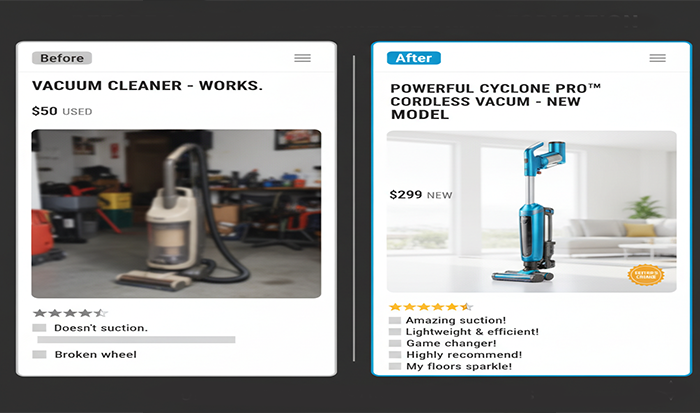
Defining the process and its role in Amazon’s A9 algorithm
By doing this, sellers improve their product listings on Amazon to conform to Amazon SEO guidelines, which raises their visibility in search results and draws in more potential customers.
Difference between SEO (visibility) and conversion optimization (sales)
Keyword Research for Amazon SEO Success
Why keywords are the foundation of visibility
Tools for Amazon Keyword Research (Helium 10, Jungle Scout, SellerApp)
Tools like Helium 10, Jungle Scout, and SellerApp make keyword research efficient and precise. They help sellers discover high-ranking keywords, enabling Amazon SEO strategies that improve product visibility and performance.
Where to Place Keywords (titles, bullets, backend)
Properly integrating keywords throughout Amazon product listings maximizes Amazon SEO impact and drives better conversions.
Optimizing Amazon Product Titles

Title Structure Formula – Brand + Main Keyword + Feature + Benefit.
A tried-and-true strategy to make your Amazon listings stand out is to use a clear title structure formula: Brand + Main Keyword + Feature + Benefit.
This strategy is essential for Amazon SEO and listing optimization for the following reasons:
Brand: Including your brand name helps in building recognition and trust. Shoppers search specifically for brands they know, which directly impacts your Amazon SEO rankings, For example, XYZ as a brand signals authority and reliability in search results.
Main keyword: The main keyword is the thing many shoppers use when searching for your product. Placing it early in the title helps in ensuring your listing appears in relevant searches, thus increasing visibility and boosting Amazon product listing optimization. For example, if selling a wireless mouse, “Wireless mouse should be used in a good way.
Feature: Highlighting a key feature helps in communicating what makes your product look unique. Features such as Ergonomic Design, or Long battery life not only helps in attracting attention, but also improves the listings relevance for long tail keyword searches, a critical aspect of Amazon SEO.
Benefit: Mentioning the benefit helps in conveying the value to the customer, which increases conversions. For example, “Reduces wrist strain” explains how the feature improves the user’s experience. Benefits help in enhancing readability, making your title more persuasive and aligned with Amazon listing optimizing best practices.
Title Optimization Checklist (length, readability, keyword placement).
Optimizing your title is not just about including keywords, it is also about balance, strategic placement, clarity and maximising Amazon SEO and product conversions. So, here is a detailed checklist:
Title Length
- Keep titles within Amazon’s recommended character limit (typically 150–200 characters).
- Avoid overly long titles that get truncated in search results.
- Well-sized titles improve readability and ensure your main keyword and brand name remain visible.
- For Amazon listing optimization, concise titles with relevant keywords maintain search ranking strength and attract more clicks.
Readability
- Make titles easy to read for humans, not just algorithms.
- Use natural language, capitalize the first letter of each word, and avoid keyword stuffing.
- Readable titles improve user experience, which indirectly influences Amazon SEO by increasing click-through rates (CTR).
- A clear title conveys the product’s features and benefits, immediately letting buyers understand the value.
Keyword Placement
- Place your main keyword near the beginning of the title for maximum visibility in search results.
- Secondary keywords (supporting keywords) can be integrated naturally in the middle or towards the end.
- Strategic keyword placement ensures your listing is discoverable through relevant searches while avoiding penalties from keyword stuffing.
This improves your Amazon product listing optimization and aligns your title with search intent, boosting both traffic and conversions.
Relevance and Accuracy
- Ensure your title accurately describes the product. Misleading titles may increase bounce rates, hurting Amazon SEO.
- Highlight features and benefits that truly differentiate your product, reinforcing trust and encouraging purchases.
Test and Iterate
- Monitor performance metrics like CTR and conversions after publishing your title.
- Adjust keyword placement, feature emphasis, or benefit wording to optimize Amazon product listings continually.
Crafting Bullet Points That Convert
In addition to emphasizing features, well-written bullet points direct readers to make a purchase, which directly increases Amazon conversions.
Why Bullet Points Drive Conversions
- Enhance Product Understanding – Clear bullet points tell buyers exactly what the product offers, reducing confusion and increasing confidence. This clarity is a major factor in Amazon listing optimization because search algorithms favor listings that match shopper intent.
- Highlight Features and Benefits – Bullet points allow you to present both the features (what the product has) and benefits (how it helps the buyer). Combining these in each bullet improves readability and relevance, boosting your potential to improve Amazon conversions.
- Influence Purchase Decisions – Strategic bullet points appeal to shopper emotions, addressing pain points and demonstrating value. Well-written points make your product more compelling, converting casual browsers into buyers. This is a key technique for Amazon listing optimization that drives measurable results.
Formatting Tips for Bullets – emotional appeal, caps for lead words.
- Start with Caps for Lead Words – Capitalize the first few words of each bullet to immediately highlight the feature or benefit. For example: “Ergonomic Design: Reduces wrist strain during long hours of work.” This draws attention and improves scannability, which is crucial for Amazon listing optimization.
- Use Emotional Appeal – Connect features to emotional benefits that resonate with shoppers. For example: “Stay Energized All Day: Our natural supplement boosts focus without caffeine crashes.” Emotional language increases engagement and can significantly improve Amazon conversions.
- Keep Bullets Concise – Each bullet should communicate one idea clearly in 2–3 lines. Avoid unnecessary fluff. Concise bullets improve readability, helping shoppers quickly grasp why your product is the best choice, which supports Amazon listing optimization and drives higher conversions.
- Include Relevant Keywords – Naturally weave your main and secondary keywords into bullets. For example, “Durable Stainless Steel: Perfect for everyday kitchen use” includes a feature with a keyword relevant to searches. This helps your listing rank better and attract more buyers, boosting Amazon SEO and conversions.
- Prioritize Key Information – Place the most compelling features or benefits at the top. Shoppers often skim bullets, so highlighting the strongest selling points first increases the likelihood of clicks and purchases. This technique strengthens Amazon listing optimization and directly impacts your ability to improve Amazon conversions.
Optimizing Product Descriptions & A+ Content
When done right, they not only enhance the visual appeal and credibility of your listings but also improve search visibility, helping you optimize Amazon product listings and improve Amazon conversions.
Why A+ Content Matters – boosts trust & sales
Shoppers are more likely to purchase when they understand the product fully and feel confident in its quality. By investing in Amazon A+ content optimization, you demonstrate authority and reliability, which leads to higher sales and stronger Amazon listing optimization.
Checklist for Amazon A+ Content Optimization (lifestyle images, storytelling, comparison charts)
- Lifestyle Images – Include high-quality lifestyle images that show your product in real-life scenarios. These images help shoppers visualize using the product in their daily lives, making the listing more relatable and persuasive. Incorporating lifestyle images is a key step in Amazon A+ content optimization and can significantly improve Amazon conversions by connecting emotionally with buyers.
- Storytelling – Use storytelling to highlight your brand’s journey, mission, or the problem your product solves. Engaging narratives create an emotional bond with shoppers, building trust and increasing purchase intent. Effective storytelling not only enhances the aesthetic and informational quality of your listing but also supports Amazon listing optimization by keeping shoppers engaged longer on your product page.
- Comparison Charts – Display comparison charts that highlight your product’s unique features and advantages over alternatives. Shoppers often use comparisons to make decisions quickly, and presenting this information clearly can reduce hesitation and boost confidence. Including comparison charts is an important tactic in Amazon A+ content optimization to differentiate your product, increase trust, and improve Amazon conversions.
Amazon Listing Images Best Practices
Types of Images to Use – main image, infographics, lifestyle
Infographics simplify complex information by emphasizing important aspects, dimensions, or advantages. Lifestyle photos help customers envision how to use the product and increase trust by showcasing it in authentic settings. Higher conversions are directly impacted by using the proper image combination, which is crucial for Amazon listing image best practices.
Image Optimization Checklist – resolution, compliance, clarity
To prevent listings from being rejected, abide by Amazon’s compliance guidelines, which include background checks and prohibited items. Keep pictures simple and product-focused to preserve clarity.
By using this checklist, you can improve your listing’s appeal and increase Amazon conversions by adhering to best practices for listing images.
Backend Search Terms & Hidden Keywords

One crucial tactic for improving Amazon product listings and boosting organic visibility is the appropriate use of backend keywords.
Why backend search terms matter for Amazon SEO
Best practices: synonyms, long-tail, no duplicates
Pricing, Reviews & Ratings – Boosting Conversions Beyond SEO
Competitive Pricing Strategies
Generating Reviews Ethically – Vine, follow-up emails
Comprehensive Amazon SEO Checklist

Recap all optimization elements (title, bullets, A+, images, backend, reviews)
Case Study: Seller Success After Amazon Listing Optimization
The Problem: Underperforming Listing
Because of the listing’s weak Amazon SEO—which included poorly written titles, scant descriptions, and a dearth of pertinent keywords—clicks were not generated.
This highlighted a critical need for Amazon listing optimization to enhance both discoverability and appeal. Even potential customers were unlikely to interact without adequate optimization, which reduced sales potential and kept the seller from reaping the rewards of well-optimized Amazon product listings.
Optimization Steps Taken
Because of the listing’s weak Amazon SEO—which included poorly written titles, scant descriptions, and a dearth of pertinent keywords—clicks were not generated.
This demonstrated how important it is to optimize Amazon listings in order to improve discoverability and appeal. Even potential customers were unlikely to interact without adequate optimization, which reduced sales potential and kept the seller from reaping the rewards of well-optimized Amazon product listings.
Results: Better Rankings & Conversions
In addition to improved Amazon conversions, which resulted in more visitors becoming buyers, engagement and click-through rates also rose.
The power of Amazon listing optimization was shown by the combination of improved content and increased visibility, demonstrating that well-executed listing enhancements can result in quantifiable increases in traffic and sales.
Common Mistakes to Avoid in Amazon Listing Optimization
Keyword stuffing
However, overloading listings with repetitive or irrelevant keywords makes the content hard to read and diminishes its persuasive power.
Customers may get confused or disengaged, reducing click-through rates and conversions. Effective Amazon listing optimization balances keyword inclusion with natural, informative content that communicates value while still improving search visibility.
Poor-quality images
Following Amazon listing images best practices—including high-resolution photos, multiple angles, lifestyle images, and zoomable features—ensures the product looks trustworthy and appealing.
Quality images not only enhance Amazon SEO indirectly (by improving engagement metrics) but also significantly boost conversion rates, helping sellers turn visitors into buyers.
Poor-quality images
Proper Amazon listing optimization ensures that titles, bullet points, descriptions, and images are mobile-friendly. Following Amazon listing images best practices for mobile—such as using vertically aligned images and concise visuals—improves usability, engagement, and ultimately improves Amazon conversions across all devices.
Advanced Strategies for Scaling Amazon Listings

A/B Testing with Amazon Experiments
This data-driven approach not only strengthens Amazon SEO but also helps improve Amazon conversions by highlighting what resonates most with buyers.
Leveraging Brand Analytics
By identifying high-performing keywords and customer preferences, these insights directly contribute to improving Amazon conversions and maintaining a competitive edge.
Adding Product Videos
Videos also significantly improve Amazon conversions, as buyers can better visualize the product and feel confident in their purchase decision.
Conclusion

For expert optimization, consider using Sellerite’s tailored services to transform your Amazon business.
FAQs
1. How do I optimize my Amazon product listings to rank higher?
2. What is the best Amazon listing optimization strategy for new sellers?
3. How does Amazon listing optimization increase conversions?
4. What are the top checklist items for Amazon listing optimization?
5. Does Amazon A+ content help with SEO and conversions?


 Back to top
Thought Leadership, Tips, and Tricks
Never miss insights into the Amazon selling space by signing up for our email list!
Read more


Expert
strategies
delivered
to your
inbox
top industry minds to fuel
your brand’s growth.

Send request to Sellerite
Once you submit the consultation form, we’ll dive into the details and email you a tailored report within 24-48 hours.
"*" indicates required fields
*By submitting your Email Address, you are agreeing to all conditions of our Privacy Policy.
